

Don't Keep All Your Eggs in One Basket
All it takes is just one stock to go to the moon, and that's it, you're set for life, right? Well, if it were only that simple. You see, concentrated investing, or keeping your eggs in one basket, seems to work until it doesn't.
Now, make no mistake, concentrated investing isn't all that bad. In fact, notable investor Warren Buffett is known to have made lots of money decade after decade because he takes big bets.
Even so, concentrated investing isn't for everyone.
In fact, if you were to personally ask the Oracle of Omaha for investment advice, he'd likely tell you to buy a diversified basket of stocks that tracks the S&P 500 index and simply hold on to your investments for the long haul!
And why would a sage investor give such seemingly conflicted advice?
Well, that's because Buffett knows that concentrated investing cuts both ways. You see, on the one hand, you could score big under the right circumstances or find yourself desperately holding onto a failing position that wipes away your life savings when fate turns against you.
Indeed, whether you've intentionally placed all your eggs in one basket or are simply trying to figure out what to do with your restricted stock or stock options, then having a plan is essential to preventing unfavorable outcomes.
And this approach starts with checking for concentrated holdings, assessing your risk tolerance to manage such a position, and then understanding how to rebalance away or hedge risk when necessary.
Understanding Concentrated Investment Positions
So then, how can you tell if you're holding on to a concentrated position in your portfolio or otherwise? Well, there are several straightforward methods to figure this out.
The first approach involves evaluating your portfolio's asset allocation. And, as you'll likely recall, your asset allocation refers to the mix of stocks and bonds, US and International holdings you might hold in your investment portfolio.
Now, a portfolio heavily weighted towards a single investment or a given sector or industry is typically indicative of a concentrated position. For example, a general rule of thumb is that if more than 20% of your portfolio is allocated to one stock or sector, then that's likely considered a concentrated investment.
Now, this sort of concentration typically happens when you have restricted stock units (RSUs) that vest, and you haven't decided what to do with your equity, so you just let it sit in your employer's stock plan account. Or, it can happen when you decide to exercise and hold your stock options but don't have a strategy in place for your equity now that you own it.
Now, another method for evaluating whether or not you have a concentrated investment position involves reviewing your exposure to a single asset or sector relative to a benchmark index.
And, what are we talking about here?
Well, let's say your portfolio has 30% invested in the tech sector while your equity benchmark has a 20% weighting in the sector itself. In this situation, you're likely to find yourself with a concentrated position from the perspective of owning more of a sector than you would otherwise like.
And finally, when it comes to determining whether you have a concentrated investment position, you should look at your holdings from the perspective of a worst-case scenario. For example, heading into the Global Financial Crisis, many employees of Wachovia Bank had their retirement savings stored up in company stock, which ultimately led to an unfortunate outcome.
That's because, when the bank failed, the value of their holdings was effectively wiped out, which canceled the retirement plans of many of the bank's former employees. So then, the moral of the story here is that if the failure of a single investment would lead to a significant loss that would severely affect your future financial plans, then you likely have a concentrated position.
Evaluating Your Risk Tolerance for Concentrated Investments
Alright, so now that you understand what it means to have a concentrated investment holding, the big question now is, "do you have what it takes to hold on to that concentrated position for the long-haul?"
And this question is so essential because, as you likely very well know, the road of investing is long and winding, with pitfalls and windfalls alike. It's like a journey where your risk appetite can significantly influence the trajectory and the destination of your investment returns.
And so, what do we mean here by risk tolerance?
Well, to be clear, risk tolerance refers to your ability and willingness to bear losses in exchange for potential gains, especially when a large portion of your net worth is potentially ebbing and flowing with the whims of the markets.
So then, for those of you out there considering or already maintaining concentrated positions, it's essential to have a deep understanding of not only your concentrated holdings, but also of how these investments are affected by market trends, narratives, and principles alike.
And why's that?
Well, it's one thing to know everything about your company stock. But to understand what Mr. Market might also think is a powerful money management skill. Indeed, financial acumen, paired with a disciplined approach, is often what separates successful investors from those who experience significant losses.
To be sure, for those of you out there who have studied market cycles or have simply lived through them, you likely already understand that downturns are inevitable and, more often than not, unpredictable.
Now, if you're a seasoned investor with a high tolerance for risk, then you're likely to remain steadfast in your investment strategy during periods of heightened market volatility because you understand the broader economic and market factors at work and anticipate the longer-term investment play at hand.
With all of that said, holding onto a concentrated position in market ups and downs isn't always as simple as understanding the technical of market or economic factors.
And why's that?
Well, that's because investing can, and often is, an emotional journey. To be sure, when market volatility picks up, and your net worth starts swinging to and fro, it can bring about strong emotional responses, like fear during downturns and euphoria during market rallies.
So then, within the context of investment risk tolerance, your emotional fortitude is a crucial trait to consider in these scenarios. Indeed, in these situations, you have to be able to resist reactive decision-making and stick to your long-term investment plan no matter what's ahead of you.
This approach is especially true when a large portion of your wealth is tied up in your company's stock, and so you'll need to be able to hold on without panicking during periods of negative news or poor earnings performance.
So then, how can you tell if you're fit for holding concentrated investment positions? Well, the first thing you'll want to do is to evaluate your inclination towards maintaining your financial acumen in your given investment holding.
More specifically, you'll need to ask yourself not only whether you're well-versed in the intricacies of a given sector of the market or your company's financials but also whether you have the mental bandwidth and time to stay on top of all the changes in both.
Remember, more often than not, all it takes is one lousy report to send an investment plummeting, so you'll need to stay on top of key developments so you can make wise decisions.
Next, you'll want to assess whether you have the intestinal fortitude to deal with a single large holding and its potential impact on your wealth. More specifically, you'll need to determine whether you can endure periods of market turbulence without making rash decisions. For example, if you're tempted to sell investments or simply move to the sidelines entirely during periods of heightened market volatility, then managing a concentrated position may not be the right fit for you.
And, when it comes to evaluating your risk tolerance within the context of managing a concentrated investment holding, you'll want to consider your broader financial position. More specifically, you'll want to look beyond your investments and evaluate your entire balance sheet.
That's why it's essential to take some time to ask yourself whether you have the ability to absorb potential losses when markets go against your holdings without it impacting your lifestyle or financial goals. And, if you don't have the financial flexibility to weather market downturns, then managing a concentrated position may not be for you.
Strategies for Managing Concentrated Investment Risk
Alright, so now that you understand what a concentrated position looks like, and have evaluated your own risk tolerance, what else can you do if you have concentrated investment risk that you can’t just walk away from, but you need to address in the present?
Well, managing concentrated investment risk often requires a strategic, multi-faceted approach that draws on a range of financial tools and principles to grow your wealth in a mindful way.
Indeed, when it comes to managing a concentrated position, you'll need to consider several factors, from complex things like tax consequences to finding the right trade-off between risk and reward to make prudent choices with your holdings.
Diversification, Asset Allocation and Rebalancing to Manage Risks
And so, how do you go about managing these risks?
Well, to start, let's come back to the first principles of diversification. Indeed, history has shown that, over the long term, you can reduce the overall risk in an investment portfolio when you spread your money across multiple holdings. To be sure, by investing in a broad range of assets, you reduce the risk associated with the poor performance of any one single investment.
And so, how do you achieve this outcome? Well, that's where a solid asset allocation strategy comes into play.
Remember, diversification is achieved by adding different asset classes (like stocks and bonds) to your portfolio, by investing in different sectors or countries, or by utilizing mutual funds or exchange-traded funds (ETFs) that offer instant diversification.
Now, asset allocation, on the other hand, involves determining how much to allocate to these various investments, and more often than not, will be determined by your investment goals, risk preferences, and time horizon.
Alright, with all that said, a common question that typically comes up with respect to diversifying a concentrated position is whether you should sell all of your holdings at once and just be done with it or whether to do so over an extended period of time?
Well, you could sell everything today, but there's a host of factors at play, including tax consequences and the potential for missing out on investment gains to consider as well.
And so, depending on your situation, this is where portfolio rebalancing comes into play.
Now, portfolio rebalancing is a proactive risk mitigation strategy that involves periodically buying or selling assets in your portfolio to maintain your desired asset allocation.
And, in your situation, this could mean reducing a concentrated position by selling some of your investment holdings and then using the proceeds to invest in other underrepresented sectors or asset types.
So then, by taking this approach, what you’re doing is preventing your portfolio from becoming overly concentrated in a single investment while ensuring it aligns with your investment goals and risk tolerance.
Okay, so now that you understand that to reduce concentration risk, you'll need to spread it out across various assets, the next question is, "over what time period?"
Well, if you have a long enough investment horizon, meaning that you don't need to tap into the proceeds from your concentrated position for quite some time, then you might be able to bear the short-term volatility associated with a concentrated position with the expectation of higher returns in the long run as you begin diversifying away this position.
With that said, however, if your investment horizon is short, meaning that you'll need to tap into those investments sooner rather than later for, let's say, a home purchase or for your early retirement, then an extended diversification strategy might be too risky since you likely won't have sufficient time to recover from a potential market downturn when unexpected volatility hits.
Hedging as a Way to Manage Risks
Now, outside of rebalancing as a way to mitigate the risk of a single investment holding, another way to deal with a concentrated position involves hedging.
And what do we mean here?
Well, hedging involves a rather deliberate process of making intricate investment decisions to transfer the risk of adverse price movements in a concentrated asset.
You're still with me, right?
Well, to put this process more simply, to achieve your desired outcome, what you're going to do more often than not is use financial derivatives like options and futures to transfer risk (or hedge against) a potential decline in the value of your concentrated position.
Now, this concept can get pretty technical rather quickly, so let me give you an example to explain here.
Let's assume that you anticipate that the value of your company stock is likely to decline in the months ahead for any number of reasons. Well, in this situation, you could enter into a contract to buy put options, which gives you the right (but not the obligation) to sell a portion of your concentrated position at a locked-in price in the future.
It's like an insurance policy if the value of your concentrated position falls significantly, but it comes with its own set of costs and trade-offs and is helpful in specific situations.
Either way, when it comes to managing a concentrated investment position, you have several options to consider. And so, what's critical to take away here is that if you do decide to hold onto a large position for the long-term, it's essential to find a strategy that works for you and ultimately stay committed to it.
Don't Keep All Your Eggs in One Basket
You know, when it comes down to it, the road to successful investing, especially when it involves concentrated positions, requires a mix of self-awareness, emotional resilience, and strategic execution. Indeed, managing a concentrated investment position is like trying to balance on a high wire where the rewards may be as significant as the risks.
Make no mistake, however, managing a concentrated investment position is often a full-time job, and likely one reason why Warren Buffett encourages individual investors to buy a diversified basket of investments early and often.
Even so, the risks are far from impossible, so long as you're armed with the right tools and strategies, like knowing when you're in a concentrated investment position and appreciating the risks and potential rewards of such positions.
And when it comes to successfully managing your concentrated investment position, understanding your investment horizon, portfolio rebalancing, and hedging strategies can help guide you through the often turbulent seas of investing.
To be sure, with these tools in hand, you'll not only be better equipped to navigate the often stressful but many times rewarding path of investing, you'll also be able to take one step closer to becoming the master of your own financial independence journey.


Risk Mastery: The Key to Sustaining Wealth
What comes to your mind when you think of the word, “risk?”
Maybe when you hear the word “risk”, you think of the word danger, or the potential for of an undesirable outcome to your health, wealth or time.
Or maybe when you hear the word, “risk”, you think of all the possibilities associated with potential outsized financial gains as you put some of your money on the line for a solid investment.
Either way, whether you see it as a danger keep away from at all costs or an opportunity to make money, moving through risk carefully can open up a world of opportunities for you when approached thoughtfully.
Indeed, risk is like a powerful and unpredictable ocean wave faced head on by a skilled surfer. And, just like that surfer, when you skillfully navigate it, harness its energy and ride it skillfully, you can experience an exhilarating surge that propels your life forward, allowing you to reach new heights that you otherwise wouldn’t have been able to experience.
However, if you underestimate its strength or fail to maintain your balance on life’s surfboard, then that same wave can quickly overpower you, pull you underwater and humble you in an instant.
Indeed, just like riding the waves of your own life, sometimes you need to know which risks to take and which to avoid, how to prevent unnecessary losses when you do take risks as well as being prepared for when life throws you an unexpected curveball.
That’s why when it comes to achieving and maintaining financial independence, being able to master the way you prepare for risks is key to sustaining the wealth you build along the journey.
Knowing Which Risks to Avoid
Alright, so then how can you approach risk in a way that allows you to get around significant financial derailers? Well, one of the first ways is to know which risks to avoid in the first place.
And how do you do this? Well, imagine yourself standing before a steep cliff.
In this situation, risk avoidance is like choosing not to approach the cliff at all, and instead sidestepping the potential danger completely. Here what you’re doing is making a conscious decision to avoid the situation that poses a risk, thereby eliminating the risk from your reality.
Now, it’s crucial to note that on the one hand, this method completely removes the possibility of a risk event occurring, but at the same time, it eliminates the potential benefits that may come with it.
Avoiding High Risk Investments
For example, picture yourself facing a host of investment opportunities as you get ready to put your money to work. Now, the potential for profit is vast, but so is the risk, right? And so, does that mean you stay out of the markets entirely if you want to avoid risk?
Well, not necessarily.
Instead, when you know which risks to avoid, you might choose to stay away from certain investment vehicles known for their high volatility or uncertainty, like speculative stocks or cryptocurrencies, even if their potential returns are substantial. That’s because the goal here is to shield your hard-earned money from potentially devastating losses, and thereby opting for stability and security rather than unpredictable high gains.
Prudent Borrowing and Risk Avoidance
In a similar way, you can think of risk avoidance as an approach for thoughtfully using debt. For example, as a tech professional or business owner, you may be tempted to leverage debt to accelerate your wealth-building journey. And this could come from using margin to boost investment holdings.
Now, in this situation, while you have the potential for a massive gain in the markets based on a speculative bet, in many situations, excessive leverage is fraught with risks, including increased financial strain and the potential for bankruptcy. That’s because all it takes is one big market move in the wrong direction and that’s it, a margin call puts you out of business.
That’s why when you practice risk avoidance, what you’re doing is opting to maintain a prudent borrowing level with your investments, which ensures that even in worst-case scenarios, such as a market or economic downturn, you can stay in the markets without crippling your financial future.
Risk Avoidance in Business Ventures
And for you business owners out there, you’re likely to face numerous risks that can lead to operational setbacks in the best situations, and potential lawsuits in the worst. So then, in this situation practicing risk avoidance means choosing not to engage in potentially risky ventures or taking on clients that could jeopardize your business.
And what are we talking about here?
Well, a crucial part of effectively managing your business is knowing when to accept a client and when to walk away. You’ll have to accept that not all clients are beneficial to your business, and, in fact, some may even pose considerable risks.
For example, consider a scenario where a potential client consistently has trouble paying their bills on time. In this situation, you might be tempted to accept the job, considering the potential for increased revenue down the road. But the reality is that this relationship could lead to cash flow issues in your business when their payments are delayed or, worse yet, never arrive. Therefore, by having a process to identify such problematic clients in the first place, and choosing not to work with them, you’re proactively avoiding unnecessary financial risks.
Either way, risk avoidance isn't about dodging all financial decisions that carry any risk. Instead, it's about making informed choices that limit your exposure to unnecessary, potentially catastrophic decisions. To be sure, as a high earner, risk avoidance is a fundamental principle that you should be familiar with as a way to ensure that your financial health remains strong, regardless of what may come in uncertain market, economic or business conditions.
Preventing Unnecessary Losses
Alright, so, now that we’ve discussed how avoidance can help you side step unnecessary risks, let’s talk about risk prevention.
And how is risk prevention different from risk avoidance?
Well, as we highlighted earlier, risk avoidance is like seeing a cliff and choosing not to approach, right? Well, risk prevention is the process of putting barriers around the cliff, which allows you to approach without getting too close to the edge. Here again you're not avoiding the cliff entirely, instead, you're implementing measures to stop the risk from taking place in the first place.
And what are we talking about here?
Strategically Reviewing and Adjusting Investments
Well, when thinking about investments, risk prevention means more than just wisely choosing where to put your money, or which sectors of the markets to avoid. Indeed, risk prevention also involves regularly reviewing and adjusting your portfolio based on market trends and your personal financial goals.
For example, if you’ve experienced a period of strong market gains, and anticipate a significant market downturn, you may want to rebalance your portfolio by reducing holdings where you’re overallocated, or adding to positions where you’re underallocated relative to your strategic asset allocation decisions. And why is this important? Well, by rebalancing your portfolio, what you’re doing is preventing potential losses from being overexposed before an inevitable market downturn takes place.
Proactive Debt Management
And when it comes to borrowing money, risk prevention is about being proactive about the way you manage your debt by putting measures in place to address the unexpected.
So then, if you do decide to use margin to boost your overall investments, this might mean understanding this historic volatility of the asset you’re borrowing against, exploring worst-case volatility scenarios, and knowing how to size your positions before putting your money to work.
Implementing Safety Protocols in Business
In the context of a business, risk prevention might mean putting in place protocols to prevent potential financial risks before they turn into real problems. And what do we mean here?
Well, you’ll likely recall in our earlier example how we discussed the benefits of avoiding risky clients altogether. Now, if you do decide to work with clients who might seem risky, it's important to establish clear, contractual agreements that spell out the expectations and responsibilities of both parties.
For example, let’s say that you're dealing with a client with a history of delayed payments. So then, one way to mitigate this risk includes strict payment terms in your contracts, like requiring a substantial deposit upfront from risky clients or implementing a policy to charge additional fees when your payments are late. These sorts of provisions, while not always perfect, may help to incentivize prompt payment and protect your business from significant cash flow issues down the road.
Either way, risk prevention is about setting up guardrails, or putting processes in place, that allow you to take certain risks without getting burned.
Prudently Dealing with Unavoidable Risks
Alright, so we’ve talked about avoiding and preventing risks, what do you do in situations where a potential loss is going to come your way no matter how much you try to avoid or prevent it?
Well, that’s where risk mitigation comes into play. And what is risk mitigation?
Well, risk mitigation is like looking at that cliff, and, with the right equipment and safety gear, choosing to descend it ever so carefully. Indeed, in this situation, you’re aware of the risk, yet you decide to engage with it in a measured and calculated way.
Indeed, risk mitigation enables you to reduce the severity of a potential loss, without removing the risk entirely. In this situation, what you’re doing is accepting that the risk is there but you’re taking steps to lessen its potential impact on your overall financial well-being.
How so?
Well, this might mean taking out insurance, establishing contingency plans, or allocating resources strategically to reduce risk.
And what does this look like?
Investment Diversification and Hedging
Well, from an investment perspective, risk mitigation might mean strategically spreading your investments across different asset classes, like stocks, bonds, real estate, and others to diversify your investment portfolio.
And this approach can help reduce your vulnerability to a single concentrated stock, and minimize potential losses when markets head south without necessarily compromising on potential gains.
What’s more, you could consider hedging strategies for your investments that further allow you to protect investment holdings as you work your way towards diversification.
Professional Liability Insurance for Risky Ventures
And for you side hustlers or business owners out there, if you do decide to work with otherwise risky clients, you should consider insurance policies to help defray potential financial costs associated with these sorts of engagements.
More specifically, in this situations like these, what we’re talking about is professional liability insurance, also known as errors and omissions insurance, general liability insurance, and in some cases, specific coverage like malpractice insurance for healthcare providers or legal professionals.
And why would you want this kind of insurance?
Well, let’s imagine for a moment that one of your clients claims that an error in your service caused them financial loss and decides to sue you. In this case, your professional liability insurance would typically cover legal defense costs, as well as any damages or settlements that you're otherwise required to pay, up to the policy limits.
And how does this help when working with high-risk clients?
Well, high-risk clients often have more at stake, are more demanding, or are more likely to resort to legal action if something goes wrong. That makes them a liability risk. For example, you might be a freelance software developer working on a significant project for a high-profile client. If there's a delay in delivery or a bug in the final product that causes the client to lose revenue, they could sue you for the losses.
So then, in this situation, having professional liability insurance would be crucial in protecting you from the potentially massive costs of a lawsuit.
In a similar way, if you're a consultant giving advice to clients, and one of them claims that following your advice led to a business loss, professional liability insurance would step in to cover the costs associated with defending against such a claim and any resulting judgment or settlement.
Therefore, by having professional insurance, you create a safety net for your business. And, it gives you the confidence to take on higher-risk clients, knowing that if something goes wrong, you have some sort of financial protection in place. Now, with all that said, it's crucial to note that you need to understand the coverages, limits and exclusions of your insurance policy to ensure it aligns with your business needs and risk profile. So then, if you haven’t already, be sure to check out our recent discussion on buying insurance like a pro.
Risk Mastery: The Key to Sustaining Wealth
Now, when it comes down to it, mastering risk is the key to sustaining the wealth you’ve accumulated along your journey to financial independence. To be sure, whether risk evokes thoughts of danger or opportunity for you, approaching it with care and thoughtfulness can nevertheless unlock a world of possibilities. And like a skilled surfer riding a powerful wave, navigating risk skillfully can propel your life forward, allowing you to reach new heights. But with that said, underestimating its strength and losing your balance can lead to being overwhelmed and financially humbled in an instant.
That’s why, to become the master of your financial independence journey, it is crucial to know which risks to avoid. Remember, risk avoidance isn’t about dodging all risky financial decisions, but rather, it’s about making informed choices that limit exposure to unnecessary and potentially catastrophic risks. It could mean sidestepping certain investment vehicles known for high volatility, avoiding excessive leverage, and for you entrepreneurs out there, being selective with clients who pose considerable risks to your business.
At the same time, you’ll want to take into consideration risk prevention, which, just like navigating a cliff’s edge involves putting barriers in place and adjusting your strategies to avoid being too close to the edge. This might involve frequently reviewing and rebalancing your investment portfolio based on market trends and conditions. It could also mean establishing clear contractual agreements, maintaining open communication with clients, and utilizing risk prevention measures to safeguard your business and prevent adverse events from materializing.
And finally, there will be inevitable risks that cannot be avoided and this is where a solid risk mitigation strategy comes into play. Remember, mitigation involves accepting the presence of risk while taking measured steps to reduce its severity. And from an investment perspective, these strategies include diversifying your investment portfolio and employing hedging techniques. And from a business perspective, professional liability insurance, can protect you and your business against claims and financial repercussions arising from errors or omissions when working with risky clients.
Either way, risk doesn’t have to be something that keeps you up at night if you know when to avoid, prevent or mitigate them. Indeed, the process of mastering the risks in your life allows you to take one step closer to becoming the master of your own financial independence journey.

Asset Location vs. Asset Allocation: The Winning Formula for Wealth
Have you ever wondered why your savings aren't growing even though you're contributing to an investment account? It may be because you haven't set your investment strategy.
That's what happened to Mariam.
Now, Mariam knew the importance of investing and that her bank account wouldn't cut it when it came to satisfying her long-term financial independence goals. But, like many uninitiated investors, Mariam misunderstood the concept of investing and believed that simply opening an investment account would guarantee high returns.
Sound familiar?
Well, in Mariam's case, she opened a Roth IRA, because that's what she's heard she's supposed to do. In fact, Mariam believed that her Roth IRA was all she needed, not realizing that the account itself was just a vessel for her investment strategy.
And how many of us have ever made that same mistake?
Well, everything changed when Mariam discovered that her Roth IRA wasn't performing as well as she had hoped. And it turns out that her account was all sitting in cash and not actually invested. That's when she realized that she had focused too much on the account itself and not enough on the underlying investment strategy.
So, what did she do?
Well, frustrated with her situation, Mariam took the time to track down resources and professional assistance that helped her discover that focusing solely on her Roth IRA may not have been a solid strategy from the start.
To be sure, Mariam discovered that the key to a solid investment strategy begins with putting her savings not only in suitable buckets, but also in choosing an ideal mix of stocks, bonds, and other assets that align with her near- and long-term life and savings goals.
Now, with a renewed sense of confidence, Mariam implemented her new investment strategy. And it was at that point that she knew she was making informed decisions and using all available savings vehicles, like her brokerage, employer retirement plan, and her IRA in an orderly manner.
So, what's the moral of the story here? Well, to build real wealth, it's essential to not just put money in an investment account, but also to understand the difference between asset location (that's the types of investment accounts) and asset allocation (or your investment strategy) and use them effectively within your overall financial plan.
Understand Your Investment Account Options
Indeed, understanding the difference between asset location and asset allocation is just as crucial as knowing which type of account to stash your cash in and how to make that money work for you once it's saved.
Account Asset Location
So, what is asset location? Well, this approach refers to placing your savings contributions into different savings buckets, or types of accounts based on their tax treatment. Now, these accounts might include taxable accounts, tax-deferred accounts (like a 401k and traditional IRA), and tax-free accounts (like a Roth IRA).
And, what's the whole point of asset location? Well, the point of asset location is to maximize the tax efficiency of your investment portfolio. And while you're likely aware of some of the immediate tax benefits of putting your money into these various accounts, the real focus should be on how your investments will be taxed when the money comes. That's because not being aware of your tax location could mean having less money to cover your living expenses when you need it the most.
So then, how does asset allocation differ from asset location? Well, asset allocation is the art of spreading your investments across various asset classes like stocks, bonds, cash, and other investments. The goal here is to build a balanced and diversified portfolio that vibes with your risk tolerance, time horizon, and financial goals.
Indeed, a well-diversified portfolio keeps your overall risk in check since your investments are spread across different assets, which react differently to market ups and downs. Now, before we talk about how to invest your savings, let's discuss the various savings buckets, or account types, and what they're typically used for.
Brokerage Accounts
Let's begin by taking a look at brokerage accounts. Now, a brokerage account is the most basic type of investment account that you'd open at a firm like Schwab, Fidelity, or Vanguard. And you can think of a brokerage account as your flexible platform for chasing various financial goals, like growing your wealth, saving for retirement, or funding major life expenses.
These accounts let you buy and sell various assets, like stocks, bonds, mutual funds, and ETFs, which promotes portfolio diversification and long-term growth.
Now, unlike retirement accounts such as 401ks and IRAs, brokerage accounts don't offer tax-deferral benefits. This means that you fund these accounts with after-tax dollars, and you'll likely have to pay taxes on your capital gains, dividends, and interest in the year they are earned. Now, it's possible to reduce these tax burdens through various investment strategies, but we'll save that discussion for a future report.
For now, what's essential to note here, though, is that while brokerage accounts don't have the same tax perks as other tax-advantaged accounts, they still allow you to put your savings to work for the long-term while giving you the flexibility to pull your money out penalty-free anytime you need it.
Retirement Accounts (401k, 403b, IRA)
Now, retirement accounts like 401ks, 403bs, and IRAs are tailor-made to help you save for your golden years. Now, when it comes to retirement accounts available through your employer, what’s essential to note is that in most cases these account types allow you to make contributions on a pre-tax basis, which means that you're putting more money to work before Uncle Sam gets his share of your earnings.
And in the case of Traditional IRAs, after-tax contributions can be tax deductible in certain circumstances. Either way, money in these accounts grow tax-free until you’re ready to take the money out.
Sounds good so far, right? What's the catch, you ask?
Well, the catch is that you typically can't access these accounts penalty-free until age 59 1/2, and when you do, you'll likely be taxed at ordinary income tax rates. Even so, because more money is going in on a pre-tax basis in the early years as far as your contributions are concerned, the more money you're putting to work and allowing to compound over time.
Now, one caveat to note here when it comes to retirement accounts is the Roth IRA. A Roth IRA is an account that you typically set up with a brokerage firm (or Roth 401k if your employer offers it), and is funded with after-tax dollars. While you generally can't access the funds penalty-free until age 59 1/2, the benefit of a Roth IRA is that the money grows tax free, and you typically pay no tax when you take the money out.
Education Savings Accounts (529 Plans)
Now, education savings accounts, like 529 Plans, are another kind of savings bucket designed to help families save for future education expenses. And they're useful because these accounts offer a tax-advantaged way to invest and grow funds for educational purposes.
That's because earnings in a 529 Plan grow tax-free, and withdrawals for qualified education expenses don't get hit with federal income tax. What's more, some states offer tax deductions for 529 Plan contributions, which make them a compelling savings vehicle in certain situations.
Health Savings Accounts (HSAs)
And finally, health savings accounts (or HSAs) allow you to save and pay for qualified medical expenses while offering some nice tax advantages.
In fact, HSAs offer a triple tax advantage and that's because 1) contributions are made on pre-tax basis and lower your taxable income; 2) earnings grow tax-free; and 3) withdrawals for qualified medical expenses are also tax-free. And these combined tax perks make HSAs an attractive option for healthcare expenses.
So, to sum it up, there are plenty of investment accounts designed to address specific savings goals, each with its own unique tax advantage. Brokerage accounts, for example, serve as a flexible platform for pursuing various financial goals, while retirement accounts, like IRAs and 401(k)s, are all about helping you save for your retirement, offering tax-deferred growth and, in some cases, tax-deductible contributions.
Asset Location in Action
And so, why is it important to understand the difference between taxable and tax-advantaged accounts?
Well, in the book, "The Bogleheads' Guide to Investing," the authors highlight the importance of asset location in maximizing after-tax investment returns. They point out that different investments are subject to different tax treatments, and placing them in the right types of accounts can significantly impact your overall tax bill.
The authors suggest prioritizing tax-advantaged accounts, like 401(k)s and IRAs, for tax-inefficient investments, such as actively managed mutual funds and real estate investment trusts (REITs). These investments generate more taxable income, so holding them in tax-advantaged accounts can potentially shrink your overall tax bill.
On the flip side, tax-efficient investments, like broad-based index funds and municipal bonds, might be best held in taxable accounts. These investments generate less taxable income, so holding them in taxable accounts can potentially reduce your overall tax liability.
Taken together, understanding these investment accounts and their respective tax benefits can empower you to make informed decisions that align with your unique financial goals and help optimize your savings strategies.
Understand How Asset Allocation Puts Your Money to Work
Okay, so now that you understand where your savings should go and why, let's discuss how you can actually put your money to work through asset allocation.
And, what is asset allocation?
Well, as we mentioned earlier, asset allocation refers to the process of dividing your savings among different asset classes in order to balance risk and return. Again, these assets include stocks and bonds, and US and international investments. And we take this approach because what we're trying to do is not only grow your savings, but reduce the chance for losses by diversifying risk across various assets.
The Power of Asset Allocation
So how much does asset allocation matter? Well, years ago a group of financial researchers led by Gary Brinson, Ralph Hood, and Gilbert Bebower wanted to figure out which factors influenced the returns investors earned from their portfolios.
So, to do this, they looked at the performance of a big group of pension funds. And what they found was that there are generally three main factors that determine the returns earned by the funds themselves, including security selection, market timing, and asset allocation.
Now, when it comes to security selection, this process refers to the act of choosing individual investments held in a portfolio, like which stocks or bonds to buy. And what the researchers wanted to understand was whether fund performance was driven by terrific stock picking, or some other factor.
And, so what did they find? Well, what the researchers found in their study was that stock picking was actually the least important factor in determining a portfolio's long-term returns.
In fact, the researchers found that the asset allocation decision was the most critical factor in determining a portfolio's returns. Indeed, the paper shows that even trying to time the market was less important than getting the asset allocation right.
And why's that?
Well, that's because different types of investments have different levels of risk and return. For example, stocks are generally riskier than bonds, but also have the potential for higher returns. Cash, on the other hand, is less risky but also has lower returns.
And the fact is that, over the long-term, markets typically don't move up, or down, in a straight line. Therefore, by choosing a mix of investments that matches your goals and risk tolerance, you can maximize your chances of earning solid returns over the long run. Indeed, trying to time the market or pick individual investments is less important in the grand scheme of things than holding a diversified basket of investments.
The Benefits of Diversification and Risk Management
So, what makes asset allocation the most important decision when it comes to long-term investors? Well, when it comes down to it, as the old adage goes, it doesn't matter how much you make but how much you keep.
Indeed, Benjamin Graham, once a professor at Columbia Business School and regarded as the father of value investing, says that "the essence of portfolio management is the management of risks, not the management of returns."
Indeed, if we were to boil down the purpose of asset allocation to its essence, it could be encompassed in that single quote from Graham. Now, I know what you're likely going to say at this point and that's, "doesn't a diversified portfolio produce returns that are less than those of a single stock, or highly concentrated investment position?"
And, well, the answer here is, "it depends…"
The fact is that asset allocation is not so much about optimizing returns as it is about managing risk so you can stay in the investing game when markets inevitably fall, allowing you to achieve your long-term savings goals.
What do we mean here? Well, let me give you an example from the perspective of workers who concentrated their retirement savings in employer stock.
Now, in 2008, Wachovia, one of the largest financial institutions here in the US, suffered significant losses due to its exposure to toxic mortgage assets which ultimately led to its failure. Now, at its peak, the company had over 3,400 retail banking branches and employed more than 120,000 people.
Even so, a few bad business decisions combined with a perfect storm that was the Global Financial Crisis, led to a steep decline in the value of Wachovia's stock, ultimately wiping out the retirement savings of many of its workers.
More recently, many tech investors who had jumped on board the tech stock rally that took place between 2020-2021 ultimately saw their savings diminished after inflation, war tensions and aggressive rate hikes led to a notable tech stock selloff in 2022. Indeed, remember all of the unicorn IPOs and SPACs that were supposed to make many millionaires? Well, there are likely many unfortunate souls out there who decided against diversification in exchange for diamond hands, and are now paying the price of holding onto their concentrated positions.
Make no mistake, diversification and risk management are essential elements of successful investing. That's because diversification helps investors spread their risk across different types of investments, while risk management helps minimize losses and maximize returns. And, by understanding the benefits of diversification and risk management, you can build an investment portfolio that is well-positioned to weather market volatility and help you achieve you long-term financial goals.
Risk Management's Role in Asset Allocation
Alright, now that we've covered the basics, let's talk about how asset allocation and asset location work together to put your money to work in a tax-efficient manner.
To this end, you'll recall that asset allocation is all about putting together your investment dream team. It's like picking players from all the different asset classes like stocks, bonds, and other risk assets. Then, by spreading your money across these various options, you're tapping into their unique strengths and making sure market ups and downs don't mess with your overall life and savings goals.
Sounds like a winning strategy, right?
Well, before you can put this money to work, you'll need to determine where your investments will hang out. More specifically, you'll need to determine how much of your investments are held in taxable accounts, tax-deferred retirement accounts, or tax-exempt places like Roth IRAs. Remember, each account type has its own set of tax advantages and distribution setbacks.
The trick here is to be savvy about which investments go where, so you get the biggest bang for your tax buck. That means putting tax-inefficient investments in tax-advantaged accounts and tax-efficient investments in taxable accounts. This way, you keep more of your hard-earned money and preserve it for the long-term.
For example, you can stash tax-inefficient investments, like high-yield bonds, in tax-deferred accounts, and tax-efficient investments, like index funds or municipal bonds, in taxable accounts.
How to Put Asset Allocation and Location to Work for You
So then, now that you know why asset location and asset allocation are essential investing decisions, the next big question that you likely have is, "where do I start?"
Saving in the Right Buckets
Well, the first decision in any disciplined investment strategy is to identify what you're saving for, and how much you need to have saved. Now, you'll likely recall that this is a topic that we've covered at length in previous reports, so we won't go into it here today. Even so, be sure to check out our previous posts if you need help on figuring out how to calculate your savings need.
Alright, so once you figure out how much you need to have saved, then the next thing we need to do is to determine which accounts need to be funded to meet your savings goals.
As you'll recall, you have three investment buckets to which you can contribute your savings, and these are taxable, tax-exempt and tax-free accounts. The key difference between these account types is the tax treatment of the investments held in each account and how gains are taxed when they occur.
Remember, in taxable accounts, for example, you could be subject to taxes on any income or capital gains generated by the investments, which can reduce your overall investment return. In tax-exempt and tax-free accounts, however, you're likely not subject to taxes on the income or gains generated by the investments, which can result in higher overall returns if you have a long enough savings horizon.
Now, to this point, when making asset location decisions, Larry Swedroe, in his book, "The Only Guide You'll Ever Need for the Right Financial Plan", recommends that you prioritize first making contributions to your tax-advantaged accounts, such as your 401(k)s, IRAs, and HSAs. That's because these accounts provide tax benefits, such as tax-deductible contributions, tax-free growth, and employer-matching contributions. Therefore, it makes sense to take advantage of these benefits as much as possible whenever you can.
Swedroe also suggests that you should consider holding tax-inefficient assets, like bonds or REITs, in your tax-advantaged accounts. By doing so, you can allow these investments to grow tax-free and reduce your tax burden on the income generated by them.
On the other hand, it may be better to hold tax-efficient assets, like stocks or ETFs, in your taxable accounts. Again, these types of investments generate less taxable income and therefore have a lower tax impact on your overall investment returns.
What's more, Swedroe believes that prioritizing tax efficiency in your asset location decisions is essential because taxes can significantly eat away at your investment returns over time. And by following a disciplined asset location strategy, you can maximize your after-tax returns and achieve your financial goals more efficiently.
Identify Your Risk Tolerance
Alright, so now that you've identified the ideal buckets to contribute money into, you're ready to invest, right?
Not so fast.
Before your money goes into your taxable, tax-exempt or tax-free account, the next decision in any disciplined investment strategy is to identify your risk tolerance.
And what is risk tolerance, you ask?
Simply put, risk tolerance reflects the amount of money you're willing to put at risk over a period of time for a given amount of gain. As the saying goes, the higher the risk, the higher the reward.
Now, in his book, "The Little Book of Common Sense Investing", Vanguard founder Jack Bogle talks about how you can identify your own investment risk tolerance by evaluating your time horizon, financial goals, comfort with volatility, and prior investment experience.
For example, when it comes to your time horizon, the longer you're willing to hold onto your investments before selling, the higher your risk tolerance. On a similar note, if you made it through the recent market selloffs without batting an eye and can handle taking short-term losses with the hope for longer-term gains, then that may be a sign that you're more risk-tolerant.
On the other hand, if your investment goal is to save for the down payment on a house, or retire in less than five years, then you may likely have a lower tolerance for risk than someone who otherwise has life goals that are years down the road. And if you're still not sure about your risk tolerance, you can complete a questionnaire to help provide you with a better gauge of where you stand.
And what is a risk tolerance questionnaire?
Well, a risk tolerance questionnaire typically consists of a series of questions about your financial situation, investment goals, time horizon, and comfort level with various investment risks. And based on your responses, the questionnaire generates a risk profile that suggests an appropriate asset allocation strategy for your investment portfolio.
Either way, Bogle believed that you should be honest with yourself about your risk tolerance, as it can be a crucial factor in determining your investment strategy. And by understanding your own risk tolerance, you can make more informed decisions about asset allocation and portfolio diversification.
Find Your Ideal Asset Allocation Framework
Now, once you have a better understanding of your risk tolerance, it's time to identify your ideal asset allocation framework. Now, you'll recall that asset allocation refers to the ideal mix of stocks and bonds held in a portfolio that reflects, in addition to your risk tolerance, your overall investment goals, income needs, and savings time horizon.
Now, generally speaking, securities like bonds have lower risk than stocks do. Therefore, if you have a low-risk tolerance, you'll likely have an investment portfolio with more bonds than stocks. Alternatively, if you have a higher risk tolerance or a longer savings horizon, you'll likely have a higher allocation to riskier assets like stocks in your portfolio.
So, how do we put these pieces together? Well, let me illustrate these two points about varying asset allocations by sharing Warren and Rebecca's story.
Now, Warren was a seasoned investor, who had spent decades building his wealth. Now on the verge of retirement, his focus was on preserving his capital and generating a steady income to support his golden years. He spent his days evaluating his portfolio, seeking out stable income-generating assets, and reminiscing about the financial lessons he had learned over the years.
Rebecca, on the other hand, still had years to go in her investment journey. To be sure, with many years ahead of her until retirement, she was keen to grow her wealth and embrace the power of compounding. That's why Rebecca spent her nights researching high-growth opportunities and learning from experienced investors like Warren.
Now, one day, Warren and Rebecca decided to learn from each other's investment strategies by sharing their insights and experiences.
That's when Warren, with his retirement just around the corner, explained to Rebecca how he crafted his own conservative asset allocation strategy. He emphasized that his strategy centered on the importance of low-risk assets such as government bonds, blue-chip stocks, and dividend-paying stocks. That's because he wanted to ensure that his investments were safe from market volatility and so his portfolio could provide a steady income stream.
Rebecca, on the other hand, shared her perspective on taking advantage of her long investment horizon. She explained to Warren that her strategy involved a more aggressive asset allocation, focusing on high-growth opportunities. She allocated a significant portion of her portfolio to emerging markets, small-cap stocks, and disruptive technology start-ups. And, she believed that the potential for outsized returns outweighed the risks, because she had plenty of time to recover from any short-term losses.
Now, as months passed, the two friends watched the markets move in different directions. Warren's portfolio, with its emphasis on stable investments, slowly but steadily gained in value. He knew that his primary goal was capital preservation and income generation, rather than chasing high returns.
Rebecca's portfolio, however, experienced substantial fluctuations, soaring to new heights one day, only to plummet the next. And throughout the year, they continued to share their experiences and insights, learning from each other's successes and failures. And by the end of the year, they discovered that both of their portfolios had performed quite well overall.
Indeed, Warren's cautious approach had provided the stability and income he needed for his impending retirement, while Rebecca's bold strategy had produced some impressive gains, setting her up for long-term wealth accumulation.
Overall, they each realized that their different investment horizons had led them to different asset allocations, and ultimately, different paths to success. Warren’s conservative approach was well-suited to his impending retirement, while Rebecca's growth-oriented strategy was ideal for her long investment horizon.
Don’t Forget About Your Investment Strategy
Warren and Rebecca’s story illustrates how different investment horizons and risk tolerances can lead to distinct asset allocation strategies, each tailored to an investor's unique circumstances and objectives. But more importantly, the big takeaway here is that by understanding the differences between various account types and their tax implications, you can avoid a common mistake of confusing account contributions with an investment strategy.
And this knowledge is essential because it can help you create personalized, effective financial plans that align with your unique goals and circumstances. And, when you understand the distinction between accounts and strategies, you can better allocate your financial resources, choose appropriate investments, and monitor their progress toward your financial goals. More importantly, having this understanding and actually doing the work can put you one step closer to becoming the master of your own financial independence journey.

Don't Confuse Budgets and Cash Flows
Cash is the lifeblood of your finances. Without it, you would be hard-pressed to pay your debts, cover your living expenses and prepare for essential savings decisions.
With cash flows being a critical component of household finances and the primary path to securing financial independence, various surveys suggest that between half and three quarters of Americans don't have a process for keeping track of their cash flows!
What's more, the data show that about half of working Americans are living paycheck to paycheck, and about that same number can't cover a $1,000 emergency expense.
Make no mistake, many of us are well aware of how essential staying on top of our cash flows from one month to the next is to maintaining financial health.
And while the rigor of sticking to a budget may not be for everyone, the truth is that you need to have some way to track and manage your cash flows if you want to increase your chances of securing your path to financial independence sooner rather than later.
Certainly, you’ve likely heard that a budget is useful in helping you keep your finances in order, but a cash management plan is also a vital component of a well-crafted financial plan.
Cash Flow Management vs. Budgeting
Now, it's critical to make a key distinction between budgeting and cash flow management. A budget is an estimate of what you believe you will spend and save over a given period of time. Cash flow management, on the other hand, is the process of allocating your cash resources to spending and savings decisions.
So, what's the difference between the two?
Well, a budget is a static measure of where your money ideally should go over a week, month, or year. Cash flow management, on the other hand, is a dynamic process that involves actively deciding where your money goes in real time. What's essential to note here is that budgeting and cash flow management are not mutually exclusive. And the two often go hand-in-hand, with a budget providing a benchmark of where your money should go, and cash flow management is how you allocate your money accordingly.
Now, the trouble with cash flow management and budgeting is that what you should do is often tied to black-and-white logical thinking, while our emotions largely influence how we spend money. Indeed, many studies over the years have demonstrated a psychological connection between our money choices and our current emotional states.
And with cash being so important to getting the things we need throughout our life, staying on top of where your money is going is critical to achieving your goals. That’s because an inevitable emergency, like a furnace that needs replacing, the need for a new car, or a last-minute visit from out-of-town family members, can derail a budget. But a proper cash management plan can help you decide the best course of action when unexpected events arise.
Defining Your Cash Flow Management Strategy
That's why when it comes to managing your money, focusing on your cash flow management process should likely take priority over your budget. Indeed, a well-defined cash flow management process should include a few critical components, including:
- How often you review your financial accounts
- Which financial accounts you need to check
- The time and place that you're reviewing your cash flows
- Understanding your savings and spending decisions
What You Should Track
Now, at its most basic level, your cash management plan should give you an idea of how you spend your income from one pay period to the next. And while a casual glance at your bank account balance can be helpful, not understanding what that balance represents, especially if you anticipate further expenses or spending to come through in between pay periods, can quickly put you off track.
That's why you should evaluate your cash flows, at the very least, on a weekly basis. For most individuals, this process can take just a few moments to less than 30 minutes per week. But the benefit of taking this step is immediately gaining peace of mind knowing where you stand financially.
Another step you can take to stay on track of your bank account balances is to take advantage of your financial institution's text, email, and app alerts. Many financial institutions will send you daily updates on the available balances in your various bank accounts. Receiving these alerts can provide you a way of keeping track of changing balances from one day to the next without having to take the time to log into your accounts.
This approach is extremely useful should you see a sudden change in one of your daily cash balances, as it will allow you to get ahead of potential cash flow issues well in advance of them becoming a more significant problem down the road.
So with that said, which accounts should you keep track of?
Well, to begin, you'll likely want to take a step back and determine your primary sources of spending. For example, ask yourself if most of your essential regular spending is flowing through your bank accounts or credit cards? If there's a mix of cash and credit card spending that is paid off at the end of the month, what does that mix of spending look like?
While we'll have more to say about the benefits and drawbacks of using credit cards to fund your daily spending decisions, for now, we'll focus on your cash bank accounts. That's because while credit spending can be a helpful stopgap in the near term, a shortfall in your cash accounts could have a cascade effect on your overall savings and spending decisions over the long term.
Remember, it's the nickels and dimes that will get you.
So, as you log in to your bank accounts and look over your current transactions, your eyes likely will be drawn to large dollar transactions. While it's vital to stay on top of total dollar spending, take a moment to review the frequency of spending, not just from day to day but also from vendor to vendor perspective. What you want to do here is get a feel for the trends to understand not just where you're spending your money, but also how often you’re spending at those specific locations.
After a time evaluating your expenditures, you should have an intuitive sense of whether your spending trends from the past week are higher or lower than expected. For example, are you spending more than usual this past Wednesday compared to last week? If so, what changed? Was it that business trip or an unexpected visit from a friend or family member? Maybe work is stressing you out, and you needed to spend a little extra this week to compensate.
Whatever the case may be, look for trends in the frequency of your spending, and take some time to evaluate why you may have spent more money on a given day or with a particular vendor, and if so, understand what may have triggered those expenditures.
Finally, take some time to review your finances in a place that is conducive to the review. As we mentioned in a previous post, your environment plays a critical role in how you relate psychologically to the process of evaluating your finances.
Indeed, reviewing your money can be emotionally stressful because it may remind you of the sometimes less than ideal choices you may have made in the past.
That's why priming your mind for a financial review is essential to getting a handle on your cash flows and to avoid becoming emotionally activated or emotionally shutting down altogether.
To do this, find a quiet time and place to complete your weekly cash flow management review. If you have children, ideally, this time could be in the early morning before they wake up or late in the evening after putting your kids to bed.
Either way, align your positive ideation with the process of reviewing your finances. And if your stress related to your financial review is coming from a place of shame or guilt, your best course of action is to practice self-compassion and self-forgiveness before you begin reviewing your numbers.
And finally, stick to the process no matter how uncomfortable it might feel. While procrastination can give you a sense of bliss, you'll likely find that the very act of simply looking at your accounts can immediately reduce your stress levels because now you know what you have to deal with, rather than worrying about what could potentially be waiting for you when you come back to it.
Spending within Your Means
So, now that you’ve prepared yourself to review your cash flows and understand what to look for from a transactional perspective, you need to give your review a purpose. And so, from this perspective, a key question you'll likely need to answer here is whether you're spending within your means.
Now, if you make a lot of money and are not sure where it all goes each month, then this approach will likely help you identify in short order where exactly your money is going. Put simply, ask yourself if your total expenses are less than your take-home pay each month?
Off hand, you will likely know whether this is the case if you find yourself dipping into savings or resorting to credit cards to supplement your spending on an ongoing basis. With that said, however, an ideal way to determine whether you're consuming within your means is to tabulate your spending and compare it to your paycheck deposits.
You can accomplish this using a spreadsheet, tracking software, pen, and paper or mobile banking tools. The whole point is to group each line-item spending in categories to help better understand where your money is going.
Whatever your preferred tool to track your spending and savings might be, be sure to categorize each spending item consistently each month. This way, you can go back and accurately compare your consumption trends from one month to the next.
And, as you move forward with your spending and savings evaluation, ask yourself if your net consumption is positive, meaning that you spend less than you bring home each month.
If so, congratulations!
The next step here is to evaluate whether you're leaving enough room to pay yourself and fund your savings goals. Now, if there's not enough cash left over at the end of the month to build up that emergency reserve or fund your child's 529 savings plan, now might be a good moment to take a step back and evaluate your spending categories for opportunities to reduce consumption or to increase your savings rate.
And if your net consumption is negative, meaning that you draw down on your savings account or use your credit cards to supplement your spending, take a few moments to evaluate which spending categories are taking up most of your cash flows. Here again, you'll want to not just look at the absolute dollar values of expenditures, but you'll also want to get a good idea of the frequency or how often you spend at a given vendor or in a particular lifestyle category for opportunities to free up cash flows.
Finally, now may be an excellent time to evaluate whether a budget might be a helpful means to managing your money. Now, make no mistake, sticking to a budget can be arduous, and as we pointed out before, it's a static practice that in many ways does not reflect the dynamic nature of our lives. Even so, a budget is a valuable yardstick for evaluating how you're spending and where it goes each month.
And here's the thing: there's no right or wrong way to create a budget. Ultimately, your budget should act as guide to show you how your expenses and savings should net out to zero versus your cash inflows from one pay period to the next.
Know When It’s Time to Create a Budget
And, so, how do you know whether it's time to create a budget for yourself? Well, here are a few ways to tell whether it’s time to create a budget.
First, if you find yourself struggling to make ends meet even when you’re bringing in a lot of money, then a household budget can help you identify areas where you might need to cut back on expenses or save more money. By tracking your spending, you can prioritize your needs over wants and ensure you're putting money toward your financial goals.
Next, if you have you don’t have an emergency fund, then that might be your sign that it’s time to create a budget. Indeed, unexpected expenses can arise anytime, and so it's essential to have a cushion to fall back on when you need that money. And so if you don't have an emergency fund, a household budget can help you save money specifically for that purpose.
Another sign that it’s time to create a budget is when you’re overly reliant on credit cards. That’s because credit card debt can quickly spiral out of control, leading to higher interest charges and fees. And by creating a household budget, you can identify areas to reduce expenses and allocate more money away from credit and to pay off accumulated debt.
If you’re a high earner but don’t have enough money to contribute to your retirement plan, that might be another sign that it’s time to create a budget. Now, it's never too early (or too late) to start planning for retirement. And a household budget can help you find ways to set aside more money for retirement and ensure you're on track to meeting your financial goals.
Finally, if you have no idea where your money is going, then that might be your sign that you need a budget. If you need to figure out where your money is going each month, a household budget can help you identify areas where you may need to spend more wisely. And by creating a baseline against which to tracking your expenses, you can make informed decisions about allocating your money and working towards your financial goals.
Now, creating a household budget may seem like a daunting task, but it doesn't have to be. There are numerous online tools and resources available that can help simplify the process. But remember, once you have a budget in place, it's essential to stick to it. And, when an emergency arises, that’s when you can lean on your cash management process to help navigate life’s inevitable curveballs.
Tools to Create Your Budget
Well, so far, we've discussed how essential it is to track your expenses and why you may want to go about creating a budget. To be sure, a household budget can help you track your income and expenses, identify areas where you can save money, and set financial goals.
But, how should you go about setting a budget?
To begin, you'll want to evaluate the critical components in your budget. You can start by identifying all sources of income, including salary, bonuses, investment income, or side hustles. Be sure to base your budget on your net income or the amount of money you take home after taxes.
Next, identify your fixed expenses. This is the spending that likely will remain consistent each month, such as rent or mortgage payments, car payments, insurance, and utilities.
Then, calculate your variable expenses. These are the costs that fluctuate each month, such as groceries, gas, entertainment, and dining out. These expenses can be more challenging to predict, but it's crucial to have an estimate.
You’ll also want to factor in how much you should be saving each month. Indeed, your savings should reflect how much you’ll need to set aside for emergency savings, retirement, and other big-ticket purchases throughout the year.
And finally, don't forget about your debt payments. Make a list of all the creditors you owe money to, then login to your financial institution’s website and identify your minimum payment due. Now, an important caveat here is that if you’re carrying a credit card balance, your minimum payment may fluctuate from one month to the next. That’s why it’s essential to monitor all of your financial accounts from one month to the next.
Now, as you build out your budget and consider where to allocate your income each pay period, think about it in terms of where your priorities lie. Start by separating out fixed costs from variable costs. Then, figure out how much money to allocate to each category by evaluating your spending over the past three months.
Budgeting Tools
Now, when it comes to actually creating your budget, there are a number of approaches you can take to establish a benchmark for your cash flows, savings and spending goals. However, the process of creating a spending plan can be overwhelming, especially if you're not sure where to start.
Luckily, there are various methods available to help individuals create a spending plan, including the use of spreadsheets, software, mobile banking tools, and handwritten methods. So, let’s take a moment to review each of these approaches and their pros and cons.
Spreadsheets
To start, spreadsheets are an excellent tool for creating a spending plan. They're flexible, customizable, and in many ways are easy to use. By creating a spreadsheet, you can develop a detailed plan that includes your income, expenses, and savings goals on one easy to use page. The added benefit of using a spreadsheet is that you can create formulas to calculate your spending and savings goals automatically.
Some other benefits of this approach include that they’re customizable to your specific financial situation, often easy to understand and can be accessed from any device with spreadsheet software.
Now, some of the drawbacks of using a spreadsheet is that it’s going to require manual input of the data, including categorization of spending and complex financial planning likely will require an advanced understanding of the software.
Budgeting Software
That’s why budgeting software is also a popular choice for some individuals who prefer an automated approach. These programs can categorize your spending automatically, create reports on the fly, and set reminders for upcoming payments.
They're often web-based or installed on your computer. It also allows you to aggregate accounts from your various financial institutions and can be a great option for those who want a more comprehensive approach.
Now, some of the downsides of using budgeting software is that there are often costs associated with their use. While there are free apps out there, you often don’t know who created those apps or whether they’re vulnerable to data breaches. And finally, there’s often a learning curve involved that can be a major turnoff if you’re looking for a simple tool to create a basic budget.
Mobile Banking Tools
Another approach to creating a budget is using your bank’s online planning tools. Indeed, many financial institutions offer mobile banking tools that can also help you create a spending plan with just a few taps.
These tools allow you to track your spending in real time and see where your money is going, all from the convenience of your mobile phone. You can also set up alerts to notify you of upcoming payments or potential overdrafts.
And while these tools are useful, they may only provide limited functionality compared to other methods. For example, not all mobile banking tools allow for account aggregation, which could mean that you’d need to use one tool for each financial institution you bank with.
Handwritten Methods
Finally, some individuals prefer to create a spending plan using traditional handwritten methods, such as a pen and paper or a physical planner. This method can be helpful for those who prefer a more tactile approach and want to see their spending plan written down.
While this approach is useful, it may also be less organized than digital methods. Hand written planning also makes it more difficult to update or make changes to your spending plan given that it’s all a manual process.
Overall, however, it’s essential to note that various methods exist to create a spending plan, each with its own pros and cons. Either way, it's vital to choose the method that best fits your personal style for evaluating your saving and spending decisions. Regardless of which method you choose, the most important thing is to stick to your spending plan, review it regularly and update it as your financial situation changes.
Avoiding Common Budgeting Setbacks
Now, as you go about preparing your budget, it's critical to be prepared to deal with pitfalls common to the budgeting process. For example, it's easy to overestimate your income, especially if you rely on bonuses or commissions. That’s why, if your income is inconsistent, be sure to base your budget on your lowest month of income to ensure that you can afford your expenses.
Another common setback is failing to account for all of your expenses from one pay period to the next. That’s why you should make sure you track every expense, no matter how small, to gain a clear understanding of where your money is going each month. Also, be mindful of those expense items that occur less frequently, like quarterly utility payments, semi-annual insurance or medical outlays, or annual tax, home or auto expenses.
And as your life circumstances change, you'll want to ensure that your budget is adapting along with those changes as well. For example, if your expenses increase because you recently got married or had a child or your income decreases because your bonus or equity comp did not come through as expected, be sure to adjust your budget accordingly to avoid overspending.
And remember, simply creating a budget is not enough. While it’s ideal to track your spending weekly, at the very least, try to compare your spending and savings against your budget on a monthly basis to ensure that you're hitting the mark.
Keep Your Mental Game Straight
Now, what if you've tried budgeting and it hasn't worked for you in the past and what can you do if overspend or undersave? First, give yourself some grace and understand that you're not alone.
To be sure, many individuals struggle with staying on track with their spending plans. And when this happens, it often leads to financial setbacks and feelings of frustration. Now, if you're one of the many individuals who have tried to create a household budget in the past but have failed to stick to it, there are steps you can take to prepare yourself psychologically for financial setbacks, motivate yourself to get back on track, and avoid overspending.
To start, set realistic expectations. Setting unrealistic expectations is one of the most common reasons why budgets often failure. That’s because when creating a household budget, you might be tempted to set overly optimistic spending allocations with the hope that you're finally on track to getting your financial house in order.
Inevitably, however, a larger-than-expected utility bill in the winter or a surprise tax bill in the spring could quickly derail your best-laid plans.
That's why it's essential to set goals that are attainable and realistic for your financial situation. And along these lines, you'll likely need to acknowledge to yourself that building healthy financial habits takes time. Indeed, it's crucial to be patient and understand that success may not happen overnight.
That's why rewarding yourself for reaching financial goals can help motivate you to stick to your household budget. Small rewards, such as a night out at your favorite restaurant or a movie night, can provide the positive reinforcement you need to keep going, especially as you develop new money habits.
And, so, what should you do if you experience a financial setback?
Well, start by acknowledging your emotions. There's no doubt that financial setbacks can be stressful and emotionally draining. That's why it's crucial to recognize these emotions and work to manage them effectively to avoid making impulsive financial decisions. And after a financial setback, take a moment to revisit your goals.
Indeed, revisiting your financial goals can be a powerful motivator. That’s why you’ll likely want to take time to remind yourself why you created your household budget in the first place and what you're working towards. And as you're working on establishing new money habits, find an accountability partner to help keep you on track. Indeed, sharing your financial goals and progress with a trusted friend or family member can provide you with the accountability you need to become the master of your financial independence journey.

Year-end Planning: 20 Things You Can Do to Organize Your Finances
It's November and there’s not better time than the present to get your financial house in order. Indeed, we're in that sweet spot before things begin to wind and just ahead of a busy holiday season.
While preparing a comprehensive financial plan is essential to financial independence mastery, today we're talking about doing the simple stuff: reviewing and making last-minute retirement savings contributions, fine-tuning your investment portfolio, reviewing your spending plan, and some general housekeeping regarding your equity compensation.
Taking a few minutes to check these items could put you on track to starting 2023 on the right track.
Here are 20 things you can do to organize your finances before the end of the year:
- Rebalance Your Investment Portfolio
- Top Off Your Child's 529 Account
- Maximize Your IRA Contributions
- Consider a Backdoor Roth Conversion
- Rollover Your Old 401k/403b
- Tax Loss Harvesting
- Review Your Restricted Stock Concentration
- Review Equity Compensation Tax Withholding
- Review Expiration Dates for ISOs
- Sell ISOs that are Down in Value
- Evaluate Your Expenses and Create a Spending Plan
- Review Your Fixed Income Needs
- Look Over Your Credit Report
- Set a Budget for Holiday Spending
- Review your Employer Benefits Statement
- Spend Down Your Flexible Spending Account
- Review Your Estate Plan
- Update Your Designated Beneficiaries
- Review your Insurance Policies
- Review Your Emergency Savings Need
1. Rebalance Your Investment Portfolio
If you still need to do so, now may be a good time to rebalance your investment portfolio. To start, ensure that you've appropriately evaluated your risk tolerance and identified a suitable diversified asset allocation strategy that suits your goals, needs, and objectives.
With your long-term strategy in mind, sell investment holdings above your target allocation, and use the proceeds to add to positions where your holdings are underweight.
Doing so may ensure that you're not taking more investment risk than you're already comfortable with while ensuring that your overall portfolio is aligned with your long-term investment goals.

2. Top Off Your Child's 529 Account
Depending on your circumstances, a 529 account may be an excellent way to save for a child's college education expenses. If extra cash is available, try topping off your child's 529 if you still need to maximize contributions for the year.
While there is no limit for annual contributions, the gift tax exclusion for the year is $16,000 per child ($32,000 for couples).
3. Maximize Your IRA Contributions
If you've maxed out your 401k/403b and still have some cash in savings, consider contributing money to your IRA. Putting money in an IRA allows your money to grow tax-advantaged, potentially boosting the overall value of your account compared to a taxable brokerage account.
In 2022, your total contribution limit to traditional and Roth IRAs can be at most $6,000 ($7,000 if you're age 50 or older). And be mindful of income limits before making contributions.
4. Consider a Backdoor Roth Conversion
If you've maxed out your 401k/403b and are otherwise not eligible to contribute to a Roth IRA this year, consider a Backdoor Roth Conversion.
As you'll recall, the way a Roth conversion works is that the government gets its share of your money now (compared to being taxed when funds are withdrawn years later), allowing investments in a Roth to grow tax-free. When it's time to take the funds out of the account, the money comes out tax-free.
What's more, a Roth account is not subject to required minimum distributions (RMDs), reducing unnecessary cash distributions in retirement.
5. Rollover Your Old 401k/403b
If you've left a job this year, go back and ensure you have a plan for that old 401k or 403b. Generally, you have two options for your money with an old employer retirement savings plan.
First, if your new employer's plan allows it, you can move the funds from your old retirement plan into your new plan.
Your second option is to open an IRA with a trusted advisor and transfer the funds over to your individual account. As long as the transfers are custodian-to-custodian, and you avoid holding back funds from the withdrawals, the transfer likely will be treated as a non-taxable event.
6. Tax Loss Harvesting
We've experienced arguably one of the most volatile financial markets since the Global Financial Crisis in 2008. As a result, you're likely holding onto losses in your investment portfolio that could provide you with a tax benefit this year. And that's where tax loss harvesting comes in.
Tax loss harvesting is the process of offsetting long-term capital losses against gains. This process applies to taxable investment accounts and involves identifying and selling holdings in a loss position to offset gains in other holdings. Before you implement tax loss harvesting in your portfolio, beware of wash-sale rules that could disqualify you from recognizing the benefit of tax loss harvesting.
7. Review Your Restricted Stock Concentration
Do you have a plan for your restricted stock? It's quite common for restricted stock recipients to simply allow their vested awards to accumulate in their employer plan's brokerage account.
Market volatility this year, particularly in tech-related sectors, is an important reminder of why investment diversification is essential to preserving your wealth for the long term. That's why you'll likely want to take a moment to review your company stock holdings and develop a plan to reduce your risk exposure.
8. Review Expiration Dates for ISOs
If you've recently left a job where you had ISOs, or are approaching your ten-year anniversary with an employer who has offered this benefit to you, now may be the time to evaluate the expiration date for your stock options.
Review expiration dates for outstanding stock options and deadlines for option exercises. If you've left a job in the past year, go back and review your previous benefits and ensure that you're not leaving money on the table.
9. Sell ISOs that are Down in Value
If you have vested ISOs that have fallen in value this year, now may be an excellent time to exercise those options. Remember, if you plan to hold your company stock for the long term, you may be subject to the Alternative Minimum Tax (AMT) when you exercise your options and don't immediately sell your holdings.
One way to lower your AMT due is to exercise your options when your ISOs' fair market value (FMV) declines, narrowing the spread between the FMV and strike price of the option.
10. Equity Compensation Tax Withholding
Review your withholding rate for equity compensation, such as restricted stock or stock options. If your employer has set your flat withholding rate for supplemental income (equity compensation) at the 22% standard rate, you'll likely need to come up with cash to pay taxes due this coming April.
Nevertheless, to avoid underpaying taxes next year, you can change your withholding rate by updating your W-4 form through your employer's HR system.
11. Evaluate Your Expenses and Create a Spending Plan
With the holiday season just around the corner, now may be a good time to review your spending trends to evaluate whether your spending is aligned with your long-term financial planning goals.
More specifically, take a close look at your discretionary spending (outside of insurance, mortgage, utilities, etc) and look for areas where your spending may be inconsistent with your overall plan for the year.
12. Review Your Fixed Income Needs
If you're already Financially Independent and living off of your savings, now may be a good time to review your anticipated spending need for the coming year. This evaluation is crucial given that inflation has run well above its 2% average over the past year.
This means that your living expenses will likely be higher in the coming year, and so you'll want to ensure that your current savings distribution is sufficient to meet your lifestyle needs without derailing your retirement plans.
13. Look Over Your Credit Report
A best practice we recommend around here is reviewing your credit report no fewer than once per year. And there's no better time than year-end to check your credit report. Pulling your credit report will not affect your credit score, and you can typically download a copy of your credit report for free from either of the three major credit reporting services (Equifax, Experian, and Transunion).
You want to look for suspicious activity, like a new account that you may not have opened or balances on cards that may have been dormant. If you find inconsistent activity on one or more of your accounts, call the reporting institution (bank, credit card company) to get more information. If you feel that the activity reported is inaccurate, you can file a dispute with each reporting agency to get your report corrected.
Either way, check your credit report to gain some peace of mind that your financial accounts are secure and in good order.
14. Set a Budget for Holiday Spending
With Christmas and the holidays right around the corner, many individuals may be tempted to put all spending on their credit cards and deal with the balances in the new year. More often than not, however, spending blindly might leave you with debt that you have to deal with all of next year.
That's why it's essential that, before heading into your holiday spending routine, you set limits you're your spending. One way to do so is to list all the people you want to purchase gifts for this year.
Track this list on your phone, in a notepad, or in a spreadsheet. Then, set a budget for each individual. Tally up the total amount you plan to spend this year and ask yourself, "do I feel comfortable spending this much money?" If the answer is no, consider revising your list. Either way, move forward with a spending plan and stick to your budget.
15. Review your Employer Benefits Statement
The end of the year is typically when most employers offer their annual enrollment period. As you head into this time, consider whether you've experienced life changes or anticipate major life changes in the coming year.
Then, take a moment to review your elections and evaluate whether your medical/dental/vision plan, related deductibles, and out-of-pocket expenses are consistent with your current lifestyle.
You'll also likely want to review your group insurance benefits. For example, your employer may offer optional life or disability insurance coverages above and beyond the basic plans you may already be enrolled in.
Many employers offer an opportunity to make last-minute changes in December if you missed your window to change your benefits elections. Either way, review your benefits to understand your coverages for the upcoming year.
16. Spend Down Your Flexible Spending Account
A flexible spending account (FSA) is a limited savings vehicle offered by some employer-sponsored medical plans that allow workers to set aside funds to pay for medical expenses on a pre-tax basis.
While the tax benefits give you more money towards paying for doctor's visits or supplies, the downside is that the account is typically a use-it-or-lose-it situation.
If you have a good chunk of change in your FSA, now may be the time to schedule a visit with a care provider for a check-up, buy a new pair of glasses, or stock up on medical supplies before the money is lost for good.
Here's one list of FSA Eligible Expenses: https://www.wageworks.com/takecare-mynewfsa/healthcare-fsa-carryover-overview/eligible-expenses/

17. Review Your Estate Plan
Estate plans aren't just for the mega-rich. They're relevant to most individuals and, at the basic level, include a Will, Healthcare, and Financial Powers of Attorney.
At this time of the year, you'll want to consider putting together your estate plan. Preparing your estate plan can be as simple as answering:
- where will your assets go should you and your spouse pass unexpectedly and
- who will be responsible for managing your financial affairs when you're unable to do so yourself.
If you already have an estate plan, now is an excellent time to look it over. Ask yourself whether you've experienced any life changes that may warrant an update to your estate plan.
At the same time, review your designated agents (executor, powers of attorney) and determine whether the individuals you've elected to manage your financial affairs are still appropriate, given your current circumstances.
18. Update Your Designated Beneficiaries
You can designate beneficiaries for your various financial accounts outside of an estate plan. Such designations include elections in your employer-sponsored retirement plan (401k/403b), IRA, and life insurance policies.
Additionally, titling your bank account with your spouse or partner can help you shorten the estate planning process and simplify financial choices when needed. Take the time to review the beneficiaries of your various financial accounts and make updates where necessary.
19. Review your Insurance Policies
Got a few extra minutes on hand? If so, now may be the time to evaluate your property and casualty premiums and shop around for some savings.
For example, many firms offer discounts for package policies that include homeowners and auto policies combined at one insurance company. As you shop around, ensure that your coverage limits reflect your assets and lifestyle. While you don't want to be underinsured, you may be paying for coverage already offered by an existing plan, like your employer's group policy.
Also, take the time to evaluate other coverages you may have yet to consider. For instance, if you have children, a term life insurance policy could be beneficial to providing your family extra financial protection and peace of mind. An Umbrella Policy can also help you avoid the financial setbacks related to potential lawsuits if someone were to get injured on your property.
20. Review Your Emergency Savings Need
Do you have money saved for a rainy day? Maybe you do, but do you have enough money saved to cover an unexpected loss of income?
Whether your furnace goes out or if your car is out of warranty and you have an unexpected expense, ensure that your savings are adequate to cover unexpected expenses.
How much should you have saved? The actual amount likely will vary from household to household, but one rule of thumb we use is having enough money saved to cover six months of living expenses.
At the very least, use this time to ensure that you have set aside enough money to cover the unexpected as you look ahead into the new year.
Next Steps
Certainly, there are many things to keep you busy heading into the holiday season. Nevertheless, before things get hectic in the coming weeks, my challenge to you is to identify at least three of the above items to tackle before the holiday hustle distracts you from your financial goals. You can spend as few as 90 minutes over the coming month working through these items. And yet every little step moves you one step closer to mastering your journey to financial independence.

Does Crypto Belong in Your Retirement Portfolio?
Life changing money. That's what happened to John Ratcliff. In 2013 the software developer from Colorado purchased 150 Bitcoin. Today, his $15,000 bet is worth millions as the price of cryptocurrencies (crypto) skyrocketed. Another individual who also came into life-changing money this year is Vitalik Buterin. The 27-year-old college dropout and co-founder of Ethereum is now the world's youngest crypto billionaire as Ether went from $130 in 2020 to over $4,000 in 2021.
Stories like Ratcliff's and Buterin's have led to a crush of demand for the popular new asset class. To be sure, rapid price appreciation in crypto over the past year has prompted heightened media attention and arguably is fueling frenzied behavior among some market participants in tokens like Bitcoin, Ethereum, and even Dogecoin for fear of missing out.
But what exactly are cryptocurrencies? And more importantly, do they belong in a retirement portfolio?
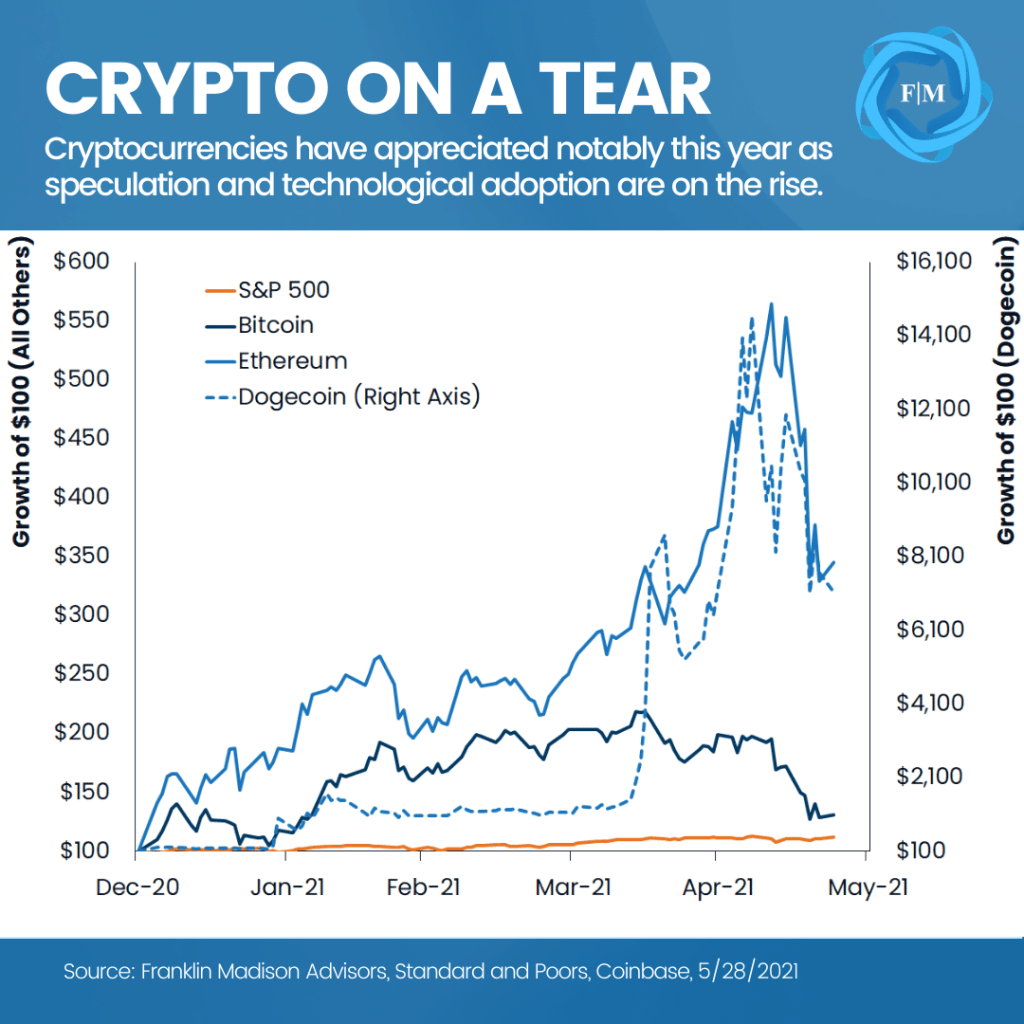
What is crypto?
Merriam-Webster defines crypto as "any form of currency that only exists digitally, that usually has no central issuing or regulating authority but instead uses a decentralized system to record transactions and manage the issuance of new units, and that relies on cryptography to prevent counterfeiting and fraudulent transactions." In other words, crypto is created by a collection of independent actors rather than a central government.
So, where does crypto come from?Well, in many cases, these virtual currencies are produced out of thin air by computers that solve cryptographic puzzles. This activity called is called mining. As more puzzles are solved, the more crypto an individual or collective earns as payment for their mining efforts on various blockchain networks.
Another essential point to understand about crypto is that they're unregulated and don't flow through traditional financial channels like the euro, yen, or U.S. dollar. Rather than being stored in a bank, these virtual assets are stored in digital wallets, currently limiting their use in the broader economy.
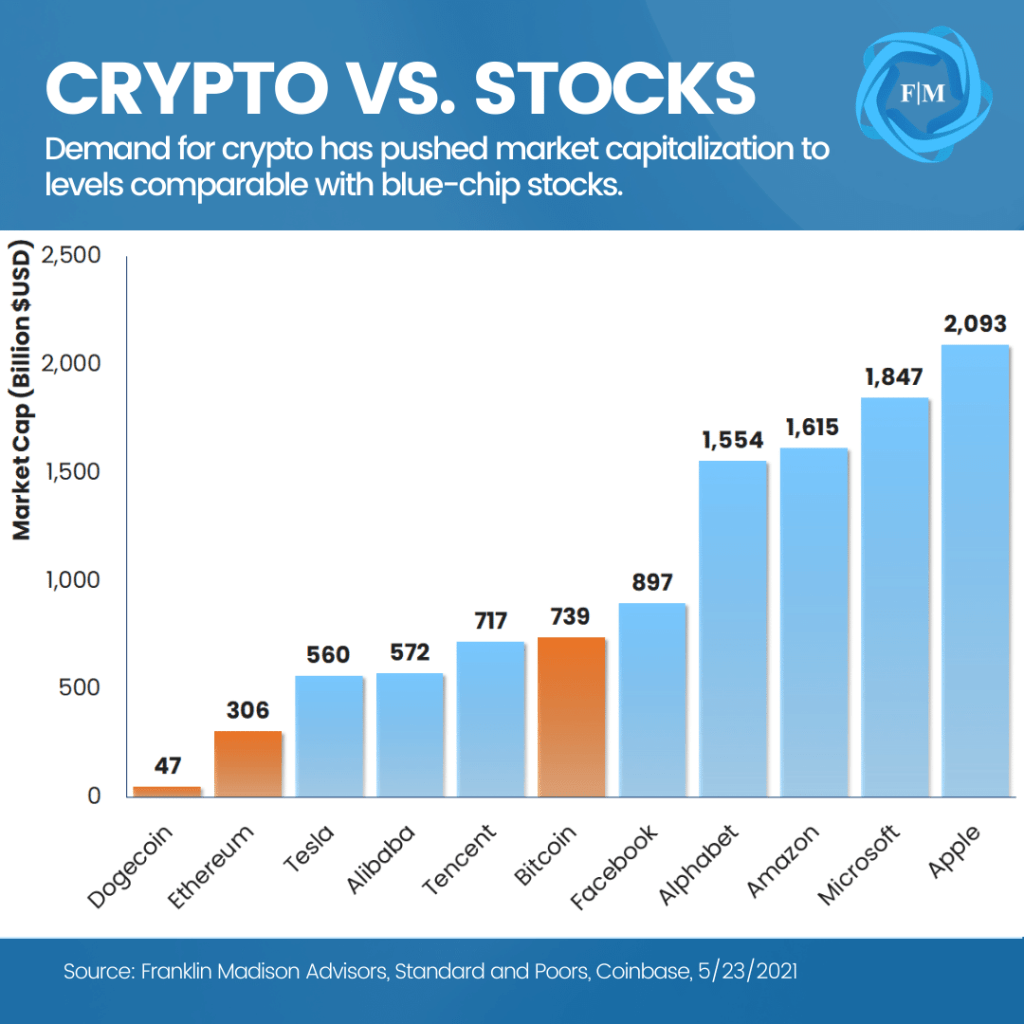
Is crypto just a lot of hype?
For many disciplined investors, it's hard not to see what's happening in the crypto space and ask whether another Tulip Mania, South Sea Bubble, Dot-Com Frenzy, or Housing Bubble is in the works. Even so, various indicators suggest this technology is more than a passing fad as blockchain technologies are increasingly seeing mainstream adoption in both public and private sector applications.
For example, the Federal Reserve announced in May that the central bank will publish a paper exploring the potential for its own Central Bank Digital Currency (CBDC). Meanwhile, the People's Bank of China is already testing a digital Yuan.
From the private sector perspective, Visa, Mastercard, Paypal, and Apple have recently expressed their intent to actively participate in the virtual currency space. So, it's safe to say that crypto, for the time being, may be more than simply a flash in the pan.
What's the outlook for cryptocurrencies?
While blockchain networks have been around for over a decade, the technology remains in its infancy. Even so, a key potential use for blockchain technology and crypto is in Decentralized Finance (DeFi). More specifically, crypto could be used to transform the way large transactions are settled between institutions and private individuals.
For example, a traditional high-dollar international wire can take several days to complete. Blockchain technologies supporting digital currency transfers, however, could offer a means to settle large transactions in minutes instead of days and at a substantially lower cost. For payment processors, this is big news and a key reason why Visa and Mastercard have entered the space.
To be sure, blockchain adoption might also find its way into widespread merchant payment processing services. Whereas banks and other intermediaries often charge around 2% to settle merchant card transactions, blockchain technologies might promote greater payment processing competition, leading to lower fees and higher profits for small and large businesses alike.
Does crypto belong in your retirement portfolio?
There's a case to be made for the blockchain technology but does crypto belong in your retirement portfolio? While rapidly appreciating tokens have led to life changing money for some individuals, we believe that disciplined investors should view crypto as a long-term speculative investment that could go to zero for two key reasons.
First, the jury is still out on long-term token adoption. While Bitcoin remains the largest network, Ethereum is gaining mainstream popularity. That’s because Ethereum’s network is about to dramatically lower its energy usage, increase processing capacity and potentially end Bitcoin’s blockchain dominance. Either way, leadership in the space is likely to change a number of times in the coming years, making it that much harder to pick a winning cryptocurrency in the short-term.

Regulatory risk is another reason we view crypto as speculative near-term investments. Recently, the Chinese government enacted measures to curb bitcoin mining. This is important because the country accounts for 65% of the world’s Bitcoin mining hashrate. Similarly in May, U.S. policymakers hinted at the need for more crypto regulation. What’s more, central banks globally are in the process of developing their own digital currencies.
To be sure, crypto token investor should be comfortable with the idea of their investments going to zero. Nevertheless, blockchain likely will play a transformative role in finance, presenting a long-term thematic investment opportunity. From this perspective, we view a diversified allocation to traditional companies that facilitate blockchain adoption as an attractive component of a retirement portfolio.

What Are the Essentials of Crafting a Solid Financial Plan?
Many of us know that having a financial plan is a sensible place to start when it comes to achieving essential life goals. But what exactly is a financial plan, and more importantly, what makes for a solid plan? A financial plan is a strategy that lays out a set of actions that you need to take today to achieve your future life goals.
To be sure, a plan identifies a path that aligns available financial resources with your intended life destination. Therefore, the essentials of a solid financial plan should include clearly defined objectives, outcomes relevant to your current life situation and should also thoroughly reflect your entire financial position. Not considering these factors may lead your plans off course and to an unintended destination.
Crystallize Your Goals
If a financial plan lays out how you can bring about your life ambitions, then being sure about your aim is central to hitting your intended mark. For this reason, the basis of a solid plan often begins with clearly defined financial objectives that align your financial plan with your goals. So, what are financial objectives?
Well, the table below illustrates how clearly defined objectives bring precision to your overall plan. To be sure, financial objectives get at the heart of why your financial plan exists. What's more, they can also be used as a reference point later on down the road to gauge whether your plan recommendations are moving you toward (or away) from your intended target.
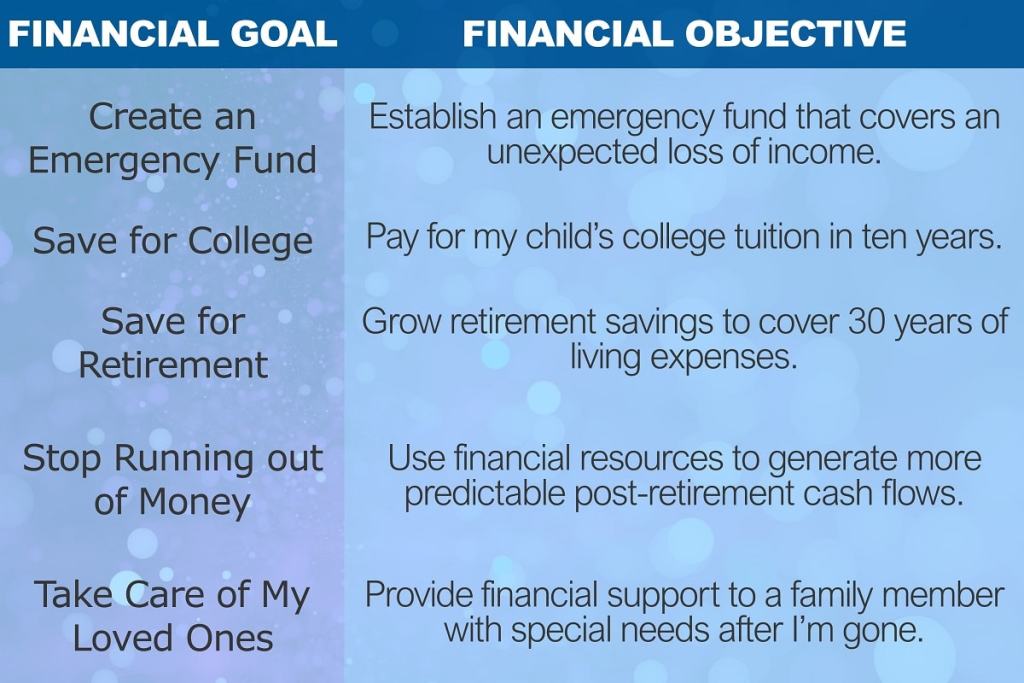
Getting Help with Defining Objectives
What can you do if you have a general sense of your goals but are uncertain about articulating your specific objectives? That's where a conversation with a financial advisor can help. For example, let's say that you're a few years away from retiring but don’t know how to start planning for retirement.
During a discussion with your trusted advisor, you may discover that your retirement ambitions may include nuanced intentions like relocating closer to family, traveling the world, or wishing to be more charitable. In this situation, while your overall goal is retirement planning, the objectives that set the course for your plan may include buying a new house, creating a post-retirement travel budget, or evaluating means for engaging in philanthropic endeavors. Either way, financial objectives give direction to and are a crucial first step in creating your financial plan.
Planning Outcomes Should Be Relevant to Your Life Situation
Another essential aspect of creating a solid financial plan is ensuring that your planning objectives are relevant to your current life situation. This is important because irrelevant outcomes in your plan may take you down a path you never intended, leading to wasted time and souring your overall planning experience. When this happens, your perceived value of the planning process may decline along with your desire to put in the work necessary to achieve the other goals contained within your plan.
For example, pursuing a distribution strategy as part of a planning process might not make sense if your retirement date is over a decade away. Similarly, adding a professional asset management objective to your plan when all you want to do is consolidate a few small retirement accounts, might be beyond the scope of your planning engagement.
Comprehensive Shouldn’t Mean Complicated
Along these same lines is the use of a comprehensive financial plan. You might have heard of the term before and asked yourself: what is it, and why do I need one? From a broad perspective, a comprehensive financial plan may include:
- Cash flow planning
- Investment management services and
- Estate planning

Some individuals may find value in looking over all of their money matters in one sitting, particularly ahead of crucial life transitions. For example, let's say that you've amassed substantial savings and are a few years away from retirement. In this case, it might make sense to consider objectives that address investment distributions, ensuring the longevity of savings during your golden years and having an estate plan aimed at leaving behind a legacy.
For many people, however, sitting down with an advisor to talk about investment management or estate and tax planning objectives might not make sense at their given station in life. Even so, a comprehensive financial plan may still be an incredibly useful solution to address your most pressing planning needs. In fact, a comprehensive plan does not need to be complicated to be relevant for your life situation when there's a focus on the basics.
Take another example of a young couple planning to start a family. How might they benefit from a comprehensive financial plan? At this phase in their lives, the family might need to consider 1) adjustments to their current and future expenses, 2) establishing a savings program to pay for their child's education, and 3) reviewing life insurance coverage and preparing a simple will to address unexpected life events.
The point here is that comprehensive shouldn’t mean complicated. What's of more vital concern, however, is whether planning objectives are relevant to your current station in life. In either case, irrelevant planning objectives might prompt buyer's remorse, and derail your entire financial plan. Therefore, be sure to ask yourself early in the planning process, whether your objectives align with what you're ultimately trying to accomplish in your life today.

A Solid Financial Plan Should Be Thorough
How much house can you afford, or how much should you save for retirement? Many resources exist today that can help you calculate answers to these and other important money related matters. In fact, many websites and financial institutions offer free tools that can help you create a savings plan, establish a budget, and track your spending in real-time. But are these simple calculations and means enough to help you create a solid financial plan?
Often what's crucial to the success of your financial plan is not the tool you use, but rather how thoroughly these computations fit into the mosaic that is your life. Therefore, solutions to your financial objectives should reflect your spending and saving decisions as well as your asset and debt circumstances. This is important because some tools only consider one frame of your financial picture and may produce recommendations that fall short of your ideal outcome. And when you make decisions based on incomplete information, it could cost you valuable time and money.

For example, let's assume that your goal is to buy a house. An online calculator may tell you how much you can afford based on your income and living expenses and estimate a purchase price that's consistent with your mortgage. The tool does its job and produces a useful output when you give it some simple inputs. Even so, the estimate may represent a static result and likely not reflect all of the possible outcomes given your dynamic life situation.
Let's take our example a step further. Upon thoroughly reviewing your entire financial situation –spending, savings, assets, and debt – you discover that consolidating credit card debt could free up an extra $500 per month. When you take this information and feed it back into your home buying calculator, what you're likely to find is that 1) you can now afford to buy a more expensive home or 2) shorten the time it takes to save for a down payment.
The point here is that a solid plan should include calculations and estimates that thoroughly consider your entire financial perspective. Even if you intend to address just one objective, broadly understanding the interrelationships across your financial situation can help you craft a solution that fits your unique needs.

Increase Your Chances of Achieving Success
Finally, an essential point to consider is deciding when to create a financial plan on your own and when to bring in a professional. As we mentioned earlier, there are a host of tools available that can help you create your very own plan. From simple calculators to sophisticated smartphone apps and websites, these tools can lay out actions that you need to take today.
What's more, many personalities have authored books and created programs that have helped thousands of people reach their goals. So, when it comes to doing-it-yourself, there are plenty of cost-effective resources that you can utilize today to help you develop a solid financial plan that will move you closer to what's essential in life.

Knowing When It’s Time to Work With an Advisor
Sometimes, working with an advisor might make more sense than going it alone. Think of a financial advisor as a personal trainer. A personal trainer can help you achieve weight loss goals by creating nutrition and work out plans, showing you how to use equipment at the gym, and holding you accountable to your desired outcome. In a similar way, a financial advisor can use the planning process to help you achieve your important financial goals.
When might it make sense to bring an advisor into your planning process? Well, maybe you understand the various planning tools and approaches but have neither the time nor inclination to carry out the analytical and preparation work yourself. Another point where it may make more sense to work with an advisor is when you have a goal but are not quite sure about how to articulate your financial objectives or identify the tasks necessary to pursue that goal. Or maybe you've even tried a canned one-size-fits-all method to managing your finances but find that the approach does not suit your unique situation. If any of these illustrations resonate with you, then it might be time to bring in outside help.
Whether you work with an advisor or decide to go it alone, crystallizing your goals, identifying relevant financial objectives, and utilizing thorough solutions that fit into your life mosaic are essential components to crafting a solid financial plan. Not considering these factors may lead your plans off course and to an unintended destination. Indeed, a financial plan may be just what you need if you're looking for a way to create structure in your life and spend less time worrying about achieving your life's passions and purpose.

What’s the Best Way to Protect Your Hard-Earned Wealth?
What’s the best way to protect your hard-earned wealth? That’s the million-dollar question that’s on a lot of people’s minds right now. The fact is that the coronavirus has demonstrated in absolute terms how an unexpected event can quickly take away your earnings ability and deplete your life savings.
Events surrounding the coronavirus have also demonstrated how life’s surprises can come at you from all directions. And when they do, your ability to build enduring wealth can evaporate in the blink of an eye. So how can you protect your hard-earned wealth today?
Figure 1: Our Risk Management Process

Source: Broadview Macro Research
Well, we believe that one way to prepare for life’s unexpected events is to incorporate a disciplined risk management process into your wealth management framework. This involves identifying outstanding risks, using tools to mitigate these threats and monitor for evolving challenges to your wealth.
Risks to Creating, Growing and Preserving Enduring Wealth
Before we dive into our discussion on the methods you can use to protect your wealth. Let’s take a closer look at some of the ways that risks may come your way.
Risk – a situation involving exposure or danger
The word “risk” can mean many things to many people, so we’ll frame our discussion on the topic within the context of our wealth management framework. As you’ll recall from our previous reports, the wealth management framework focuses on the actions you need to take today to build enduring wealth over time.
Figure 2: Our Wealth Management Framework

Source: Broadview Macro Research
This includes: 1) being intentional and efficient with your time and resources, 2) making your money work for you and 3) the topic of today’s discussion: taking steps necessary to protect your hard-earned money from both expected and unexpected events.
Indeed, the wealth management framework is just one tool you can use to build wealth. But the reason we believe that it's important is that it’s a disciplined process that can help you create, grow, and preserve financial wealth for the long-term.
Being Risk Aware: Creating Wealth
The aim of our wealth creation process centers on steps necessary to generate a productive source of financial savings. These actions include being intentional with your money, maximizing your value to others and optimizing your net worth.
Your goals during this time should be to hone your innate talents and abilities and leverage a systematic, disciplined process to build a solid financial base. Now, what would you do if your ability to create wealth became impaired? For some people, COVID-19 has done just that.
Many of us spend a lot of time thinking about various ways we can get ahead and produce results. And often we do this without really giving much thought to what could derail our efforts or take us out of the game completely.
As of this today's publishing date, Coronavirus infections continue to rise across the US. And there’s no doubt that the outbreak has impacted many lives in many different ways. The current events also illustrate the kind of risk awareness you must have if your goal is to produce enduring wealth during the creation process.
Figure 3: U.S. Unemployment Rises to a Post-War Record

Source: Broadview Macro Research
More specifically at this stage, your awareness should focus on identifying risks that can impede your ability to earn an income and address hazards that can impair the value of assets you use to grow wealth. So, what are some of these risks?
Well, we’re talking about events that could lead to short term or long-term disability, property damage, lawsuits, and in some cases, death. We’ll talk about measures you can take to protect yourself against such events in just a moment. But the point here is that you need to develop an awareness of the risks that could derail your ability to create wealth before they even happen.
Being Risk Aware: Growing Wealth
Sustaining your disciplined wealth creation habits and then using 1) your base of savings, 2) a rate of return, and 3) some time to make your money work for you are the goals of the growing wealth process.
The obvious risks to growing wealth are financial market volatility and other losses related to investing. With that said, there more insidious threats working against you as you’re growing your wealth.
These are menaces waiting to separate you from your hard-earned money – one basis point at a time. These factors include excess fees eating into your investment rate of return and the IRS taking a bigger bite of your earnings. So, what exactly do we mean here?
Figure 4: Excess Fees Can Reduce Potential Long-term Returns

Source: Broadview Macro Research
Well, here are a couple of examples. First, let’s think about fees charged on investment products for a moment. Did you know that a one-percent investment management fee difference can lead to more than $400,000 in wealth forgone on a million dollars invested over 20 years?
What about taxes? As it relates to investing, you could have income on the same two savings vehicles taxed at many different rates simply based on the structure of one savings vehicle versus another.
The takeaway here is that if you’re not careful with how you put your money to work, you may be growing your money, but at a much slower rate than you otherwise could during your growth phase.
Being Risk Aware: Preserving Wealth
Seeing through important life goals like retirement or even leaving behind a legacy is the aim of the wealth preservation process. During this time, you’ll need to ensure that the money that you’ve spent time accumulating and growing is still around to pay for your important life goals years from now.
And not only that, but that there’s enough left over to pass along to people or charities closest to your heart if that’s important to you. The risk here is that there won’t be enough money to meet your retirement needs or the needs of your loved ones.
This can occur, for example, when financial markets experience a sharp sell-off just as you’re preparing to enter retirement. There's no question, this year’s financial market volatility has acutely illustrated how a sudden and deep pullback in the markets can derail even the best-laid retirement plans.
Figure 5: Inflation Erodes Purchasing Power
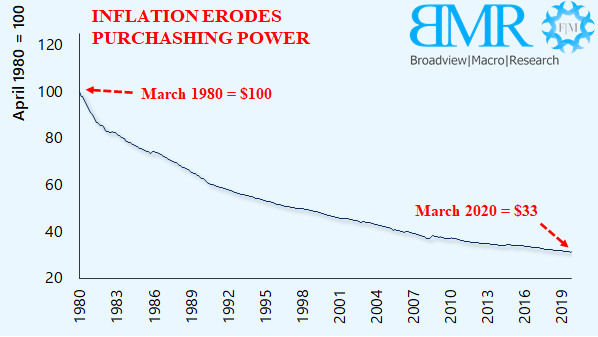
Source: Broadview Macro Research
Another risk to wealth longevity is having your purchasing power reduced over time by inflation. For example, did you know that when inflation is running at around 2% per year, it takes about 36 years to cut your purchasing power in half?
Or put differently, a million dollars today may only buy half that amount of today’s goods or services in less than two generations when inflation is present. Taken together, the important point here is that at each phase of the wealth management process there are risks that could prevent you from building enduring wealth.
Protect Your Wealth Today
So, what steps can you take to protect your hard-earned wealth today? Well, one way to prepare for life’s unexpected events is to incorporate a disciplined risk management process into your wealth management framework. Let’s take a look at some examples of how this risk management process applies as we create, grow, and preserve financial wealth.
Risk Management: Creating Wealth
Events that hamper your ability to use your innate talents to produce income and generate savings are key risks during the wealth creation process. One way to protect your wealth during this time is to utilize insurance as a tool to protect against financial loss.
The key to preserving your wealth during this time is ensuring you have the right amount of insurance coverage to meet every one of your financial needs. For example, COVID-19 has reminded us all of our mortality. At the same time, it has served as an important reminder that life insurance can be a useful way to create financial wealth.
This is especially true if you experience unexpected tragedy in your own life before you’ve had a chance to build the kind of wealth that will leave your loved ones protected. In a similar vein, now’s also the time to take a look at your disability coverage. More specifically, you should consider whether the limits on your disability insurance policy are sufficient to cover your living expenses should you become injured and can no longer work.
The point here is that if your goal is to build enduring wealth, you will need a method to defray some of the risks if life’s curveballs threaten to take you out of the game. In our case, insurance provides a way to defray some unknown risks and immediately creates a financial source of wealth in case of an unexpected tragedy.
Risk Management: Growing Wealth
Fees and taxes are factors that can hinder your ability to quickly build enduring wealth during the growing wealth process. Your goal during the growth process should be to maximize your risk-to-reward ratio. And one way to do this is to reduce unnecessary investment fees.
Figure 6: Active Management Has Largely Underperformed
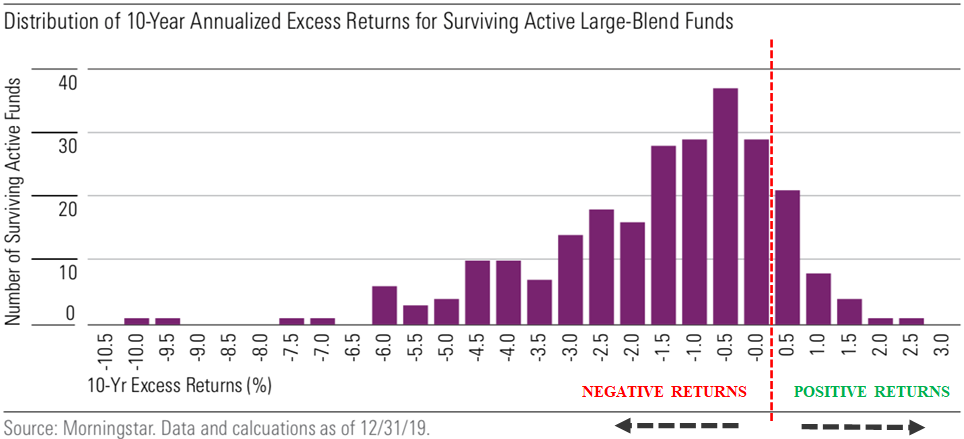
For instance, actively managed investment funds tend to charge a premium when compared to passive funds. Therefore, now’s a good time to look at the performance of these funds and consider whether what you're paying for active management is worth the premium. This is notably important at a time when active managers in some cases have underperformed their passive benchmarks.
Addressing unnecessary taxes is another way to cut your losses during the growing wealth process. This is especially true if your investments produce income and you’re not yet retired.
For example, you can minimize the taxes that you pay by making sure that income producing investments are held in tax deferred vehicle like a 401k or IRA rather than a brokerage account which is taxable.
Risk Management: Preserving Wealth
If you are planning on taking distributions from your retirement within the next year or expect to leave a legacy, protecting wealth at this phase is important now more than ever. You’ve put in the hard work to grow your money, so now’s a critical time to protect it as you move from accumulating wealth to distributing wealth.
We mentioned earlier how a sudden drop in markets can derail even the best-laid retirement plans. That’s why you’ll want to have a distribution strategy in place that addresses how retirement assets will be liquidated during periods of heightened market volatility.
For example, giving more distribution weight to an asset that is less sensitive to sharp moves in the markets and ensuring you have an adequate level of cash on hand to weather volatility is one way to prepare for such times. When it comes to leaving a lasting legacy, having a solid estate plan is where it all starts.
Figure 7: Federal Debt Has Ballooned Due to COVID-19
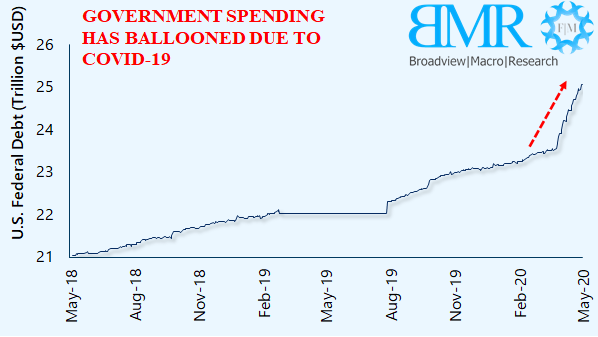
Also, you’ll want to make sure that your long-term investment management process reflects the realities of inflation. Remember, purchasing power can be cut in half in less than two generations when inflation is running at around 2% per year.
With government debt issuance ballooning by $3 trillion and Federal Reserve assets growing at an exponential rate, you’ll want to make sure that how your legacy assets are managed align with today's inflation expectations. This is important because doing so will help ensure that your wealth can adequately serve generations now and into the future.
Protecting Wealth Begins with a Process
The coronavirus certainly has exposed our varying levels of financial risk preparedness. Even so, we believe that you can take some especially important take steps right now to protect your wealth, starting with being risk-aware.
This means identifying the kinds of threats that may crop up at various life phases and then preparing for those threats as part of a disciplined risk management process. There's no doubt that when it comes to building enduring wealth it’s important to think about the steps you need to take today to create and grow your money over the long term.
However, another important step is taking the time to protect yourself against the threats that are waiting to separate you from your hard-earned wealth. Some of these steps include utilizing tools like insurance, tax and cost-efficient investing vehicles, and a solid investment, estate, and distribution plan to protect your money.
Finally, be sure to manage risks for the long term. This involves continuously evaluating the current economic and market environment to identify evolving threats to your wealth. Then use some of the tools that we’ve discussed to help mitigate those risks.
We believe that incorporating an active risk management process into your wealth management framework could ensure that your wealth endures for the long-term no matter what surprises life throws your way.

The First Step to Thriving Financially: Creating Wealth Today
What can individuals do during this downturn to thrive financially and build, or in many cases, rebuild wealth that has been lost in the past few weeks? By many measures, U.S. economic activity continues to grind to a halt on account of the COVID-19 containment efforts. This is evidenced in various data releases published this week. And it’s also a key reason why some Governors are eager to reopen their state economies.
But the reality is that returning to normal will take time, regardless of how quickly the economy fully reopens. Until then, the fact is that there are no quick fixes to undo the financial damage that has already been done. Yet, we believe that purpose driven individuals can, over time, rebuild wealth regardless of their current circumstances. This can be done by taking the first step in a disciplined, systematic process to create enduring wealth. So, how does this process work?
The Wealth Management Process: Creating Wealth
Let’s begin by level-setting our definition of wealth. To us, wealth means more than simply money taken home from a job or material possessions owned. Rather, wealth represents the financial resources we use today to make happen what matters most in our lives. Put differently, we view wealth as a means to an end rather than an end in and of itself.
Riches do not consist in the possession of treasures, but in the use made of them. –Napoleon Bonaparte
So, when we refer to rebuilding wealth, we are not talking about striving to get back lost income or material possessions. Our efforts, instead, are centered on adhering to a wealth process rather than focusing on a wealth outcome. The aim of this process is to help us generate productive assets that can be used to pursue our life’s passions and purpose.
Figure 1: The Wealth Management Process
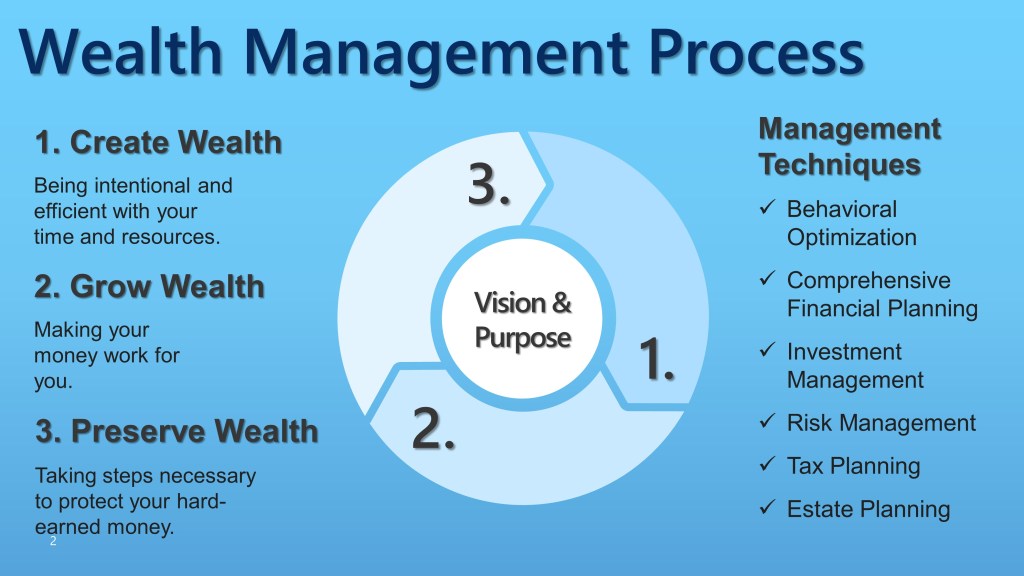
To be sure, we believe that individuals from all walks of life can amass the financial resources they need to build enduring wealth. This wealth management process includes three ongoing phases: 1) being intentional and efficient with your time and resources, 2) making your money work for you and 3) by taking steps necessary to protect your hard earned wealth. In other words, creating, growing, and preserving financial wealth. We’ll come back to our second and third points in future reports. For now, let’s focus on the first step in our wealth management process: creating wealth.
Components of the Creation Process
Creating enduring wealth involves being intentional with your money, maximizing your value to others and optimizing your net worth. Let’s explore these points in more detail, beginning with intention. A simple way to explain the concept of being intentional with your money is to consider how two families, the Adams and Bakers, use their financial resources.
Assume for a moment that the Adams family earns a million dollars and they spend a million dollars per year without saving a dime. We could deduce that the Adams family’s intention is centered squarely around consumption. What about the Bakers? They earn a hundred thousand dollars per year, yet they only spend fifty thousand and the rest goes into savings. In this case, holding all things constant, the Bakers have amassed more wealth than the Adams. It can also be safely assumed that preparing for future needs might be a key priority for the Baker family.
Figure 2: Components of Creating Enduring Wealth
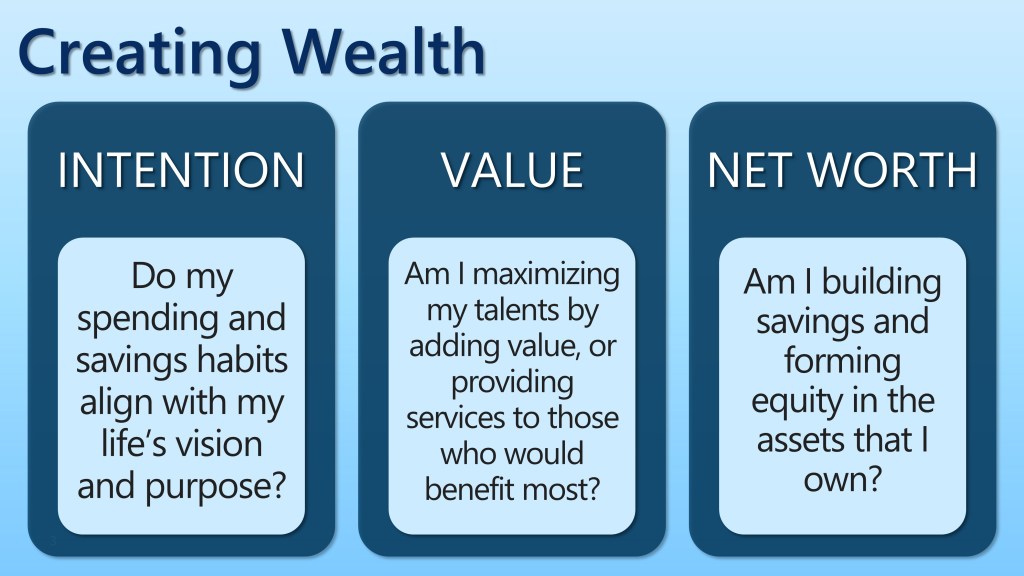
From this vantage point, we can see that the way in which money flows through your hands represents the physical manifestation of your closely held intentions. That’s pretty deep, right? Well, the point here is not to wax philosophical but to drive home a crucial point: creating wealth is ultimately rooted in the plan or purpose you lay out for your life. Consequently, you can limit your wealth creation ability when you spend or manage money in a manner that is not in alignment with your life priorities.
Intentional – Definition: done with a plan or purpose
That’s why we believe that the very first step in creating enduring financial wealth begins with being intentional – understanding the vision and purpose you have for your own life. With this understanding in hand, you can then evaluate the ways in which your financial habits align with your internal intentions. Opportunities to create wealth therefore occur when you find reasons to address misalignments between your financial habits and your life purpose. Put differently, you may be more apt to create wealth when your savings and spending plans reflect what matters most to you now and into the future.
The second way you can create wealth is by maximizing your value to others. We believe that you can build enduring wealth by using your innate talents to take your career or business to the next level. That is, adding value, or doing what you are best at for those who need it the most. Gay Hendricks, author of “The Big Leap”, describes this level of performance as the “Zone of Genius”.
And simply put, it’s the kind of work that you do that gets you up early in the morning, excited and in a state of flow. This step matters because it is one important way to increase your potential earning power and thereby build enduring wealth. Indeed, we find that the world tends to reward those individuals who are excellent in the things they do, the unique experiences they provide and how well they show up to help others.
Finally, we create wealth when we accumulate savings and quickly build equity in the assets that we own. Typically, we do this through increasing savings and optimizing net worth. Today, the opportunity to save money has never been easier. It’s true that few households have substantial emergency savings. In some cases, building an emergency savings fund is hard. However, we believe that intention and value maximization can increase nearly anyone’s ability to set aside a portion of their income. Savings is crucial to acquiring productive assets. And these assets can help you grow your wealth and make your money eventually work for you over time.
Equally important to acquiring assets is minimizing unnecessary liabilities. This is crucial because having too much of the wrong kind of debt can leave you in a position that creates wealth for your lender and not for yourself. In creating wealth, your focus should be on using good debt to acquire assets that are expected to hold their value, appreciate, or contribute positively to your future earnings potential.
Creating Wealth in the Current Environment
So how can you create wealth in this challenging economic environment? Well, we recommend that you take time to consider whether your financial priorities are in alignment with your life purpose. The stay-at-home orders have clearly given some of us time to think about what matters most in our lives. It has also forced us to reevaluate the things we can and cannot do without.
Therefore, now may be an opportune time to identify mismatches between your spending and savings habits and your life’s vision and purpose. The easiest way to start is by pulling up your last few bank statements. Then, look for patterns in your spending habits and ask yourself if those patterns align with what’s most important in your life right now. Any misalignment between priorities and purchases may be an opportunity for you to create wealth in your life.
Another thing that you can do to create wealth is to think about how you’re utilizing your talents right now and what you can do to create the most value for your employer or clients. With rising unemployment and business bankruptcies, the current economic environment will undoubtably increase your competition as business leaders and consumers have greater hiring and purchasing power.
Every man, even the most blessed, needs a little more than average luck to survive in this world. –Vance Bourjaily
There is no question that you will need to step up your game if you’re going to compete in the current environment and certainly, take your earnings game to the next level. Therefore, we believe that now is an opportune time to invest in yourself and your business with a goal for increasing your unique value offering. This may include looking at MOOCs or other certification processes to brush up on key skills and firm up your talents if you are a working professional. For business owners, the world has fundamentally changed and so finding ways to pivot your business model to efficiently serve clients in a changed world could help give you a competitive advantage and increase your wealth creation ability.
Figure 3: Building Enduring Wealth Begins with a Process

Finally, another way to create wealth is to put money away in savings and to pay down unproductive debt. If your employer offers a 401(k) or other matching retirement savings accounts, look for ways to max out your contributions. The tax, time and other employer benefits can lead to greater wealth creation (notably as financial asset prices have pulled back from recent highs) than compared to a simple savings account.
Also use this quiet period to evaluate how efficiently the assets you own are either helping or hindering your equity position. More specifically, pull up your credit report and take a look at how much good vs. bad debt are on the books. Before paying off any debt, however, it’s important to note during this time of economic uncertainty that cash and credit can both serve as important financial lifelines. For example, should you experience a loss of income you could tap your savings or line of credit to pay bills or meet immediate financial needs.
Therefore, take the time to evaluate your debt situation carefully. If you have experienced reduced or a loss of income, partner quickly with your lenders to find a way to accommodate your present situation. Otherwise, work on developing a debt payoff plan that produces an appropriate balance between quickly reducing debt while preserving an adequate cash buffer.
Get Started Today
We believe that purpose driven individuals can, over time, build wealth regardless of their current circumstances. This can be done by taking the first step in a disciplined, systematic process to create enduring wealth. The steps that we have outlined are simple. But make no mistake, they are not easy and will require constant discipline and consistency to achieve long-term success. Even so, the sooner you get started the closer you can get to achieving important financial goals and ultimately pursuing your life purpose.
Why Your Investments Might Thrive in 2021
This past year has been a period in history that many of us would like to simply forget. Concerns about our communities' wellbeing led to a seismic shift in the way that we work, educate our children, socialize, and go about our daily routines. Without a doubt, 2020 has been a year that has tried our livelihoods, finances, health, relationships, and most importantly, our patience. Indeed, the one word that might best characterize an experience that happened to us is: survival.
Nevertheless, chances are good that the negative factors that have forced us to hunker down are likely to ease into the year ahead, enabling many of us to thrive once again. More specifically, widescale distribution of a coronavirus vaccine and a return to a seemingly normal political environment likely will foster greater business and household confidence in the months ahead. Such outcomes could support labor market improvements and a rise in business earnings. At the same time, accommodative central bank policy may provide much-needed support to the economy and boost financial market sentiment.
Even so, while government spending and money printing were a boon to financial markets in 2020, investing likely won't be as simple as following the latest trading fad. Liquidity-induced momentum trades that provided handsome gains this year could be harder to come by in 2021. That's why as we look into the year ahead, the key to thriving financially for investors with a long-term savings orientation could be as simple as sticking to the basics and focusing on fundamentals.
Climbing Out of a Hole
The healthcare crisis response dealt a blow to the US economy, but there are ample reasons to be optimistic. Nationwide lockdowns during the first half of 2020 led to one of the sharpest economic contractions in history. A record 24.9 million people had claimed jobless benefits this year as businesses closed to help stem the spread of the coronavirus outbreak. During this time, some economists expected a V-shaped economic recovery fueled by historic government spending and central bank money printing.
Indeed, while growth improved in 2020, the gains that some people had hoped for failed to materialize. And as 2020 ends, the healthcare crisis has again intensified, leading to a new round of stay-at-home orders, business closures, and a rise in unemployment. While the housing market certainly benefited as more individuals worked from home, much anticipated pent-up demand in consumer spending fizzled out into the holiday season. And while it appears that the economy is now losing steam, a couple of factors may pave the way for greater economic resilience in the coming year.
So why should we be optimistic? Well, to start, we now have several vaccines that put us miles away from where we were just a few months ago. These injections may eventually help mitigate the spread of COVID infections and enable society to return to some semblance of normalcy sooner rather than later. Certainly, news of a vaccine was greeted with optimism by the markets in November.
And as vaccination efforts kick off this month, there is a reason for optimism as social distancing orders are likely to ease at some not-too-distant point. Indeed, a recent CFO Survey from the Richmond Fed showed that business executives are more optimistic about the future than last quarter as they looked past pandemic risks.
Besides vaccines, another likely reason for rising confidence heading into 2021 is greater political certainty. With another chaotic election season behind us, Capitol Hill leaders are likely to focus on introducing policies that further support economic growth. While a $900 billion stimulus package was approved in December, slowing retail sales and rising jobless claims likely opens the door for another round of government spending during the first half of next year.
Make no mistake; the road to recovery will take some time. History has shown that, on average, recessions tend to last about three quarters. From there, it takes on average two and a half years for the labor market to return to its previous high-water mark. These data points suggest that the US economy has a deep hole to climb out of, so vaccination efforts and decisions made by Congress will be essential to the recovery pace in the months ahead.
The Markets Are Not the Economy
Let's consider this economic outlook in the context of the markets. Now, there seemed to be a disconnect between financial markets and the economy in 2020. While household spending slowed and employment conditions declined, major stock market indices closed the year positively. To be sure, a repeated mantra reflecting this sentiment has been that the markets are not the economy. So why did markets perform so well amid a global pandemic? Well, without a doubt, global central bank policies played a crucial role in buoying risk asset prices.
During the height of the pandemic outbreak, the Federal Reserve (Fed) introduced a historic asset purchased program that dwarfed its previous money printing efforts. For example, in 2020, the Fed added $3.3 trillion worth of assets to its balance sheet. To put this figure into perspective, from the height of the Global Financial Crisis in 2008 and three rounds of Quantitative Easing thereafter, it took the Fed over five and a half years to purchase the same amount of assets. What's more, the Fed, European Central Bank, and Bank of Japan bought a combined total of $8 trillion of assets this year, a feat that took eight years during the Global Financial Crisis. Arguably, this massive injection of cash into the financial markets contributed to stellar market performance in 2020.
Newly Minted Investors
Another contributor to the strong market performance was greater participation from individual investors. An analysis prepared by JP Morgan Securities suggests that individuals opened more than 10 million new brokerage accounts in 2020. Add in the rise of a cottage industry of social media investing gurus, the fact that some apps have arguably gamified investing and brokerages flush with cash offering attractive margin loans, and you have a recipe for exuberance in certain corners of the markets. This sentiment was particularly evident in the tech sector, which saw outsized performance as work-from-home and healthcare stocks benefited from Fed-induced liquidity and newly minted day traders.
Today, however, there's some indication that this popular market approach may be losing steam. The momentum trade that had supported strong asset performance has subsequently led to stretched valuations. Such excesses have been exhibited more acutely in tech, which is up well over 40% compared to 16% for large caps. This preference for stocks poised to benefit from social distancing and work from home themes has come under pressure as a return to normal appears on the horizon.
Certainly, this perspective has not been lost on market participants. It has been exhibited in a rotation away from the liquidity-induced momentum trade towards more traditional cyclically oriented risk-on segments of the market. This shift in sentiment has also been evident in small-cap and emerging market stocks outperforming tech and a decline in the US dollar demand during the fourth quarter of the year.
Less Tech, More Cyclicals
Looking ahead into 2021, this sector rotation toward cyclical, risk-positive parts of the market could continue ahead of a recovery in the global economy. Even so, market optimism likely will be dependent on positive pandemic developments and a propensity for more fiscal spending.
More specifically, there is a risk that logistical and administrative issues related to vaccinations could lead to slower than anticipated uptake. For example, so far, only 3 million shots have been distributed and 11 million doses shipped – well below the Trump Administration's goal of 20 million vaccinations before year-end.
Now, there is a potential that the bottlenecks contributing to the weak uptake in vaccinations could be resolved in the coming weeks. With that said, the longer it takes to inoculate the population, the longer that pandemic related risks will linger and put downside pressure on economic growth and corporate earnings. This point is important because market expectations seem to be pricing in significant improvements in the pandemic narrative by mid-2021, paving the way for a strong second-half economic recovery. Unfavorable developments that lead to a substantial deviation from this outlook could break sentiment and lead to bouts of heightened market volatility should the market narrative.
What's more, there is a risk that a divided Congress could lead to more gridlock on Capitol Hill, potentially delaying plans for additional fiscal stimulus. Assuming that Democrats fail to pick up gains in the Georgia Senate runoff election, incoming President Joe Biden's plans for a third round of stimulus checks could face a substantial roadblock. For example, the US fiscal deficit as a share of GDP is now at its highest levels since World War II. Fiscally conservative Republicans could derail plans for another stimulus package. Should this happen amidst an already weakening economic backdrop, we could see a rise in investor uncertainty and a bout of price weakness in an already stretched market.
Positioning Your Investments to Thrive in 2021
Without a doubt, the road to recovery from the Pandemic of 2020 will be fraught with many challenges. Even so, we could see a sustained recovery in employment conditions, household spending, and economic growth assuming inoculation efforts accelerate and policymakers remain supportive of more fiscal spending next year.
Such improvements likely would sustain higher corporate earnings growth and support investor demand for cyclically oriented portions of the markets. While following the trend has been an attractive way to play pandemic uncertainty, investors positioning themselves to thrive in 2021 likely would be best served by sticking to the basics and focusing on fundamentals.
For example, markets are arguably mean reverting by nature. This behavior implies that what has performed well in the past is not as likely to perform as well in the future. From this perspective, evaluate which positions in your investment portfolio have outperformed in 2020 (especially if those positions are tech-oriented) and consider whether it's time to take some gains off the table.
Next, look over your overall investment plan and consider the composition of your holdings. As we transition away from economic survival and towards recovery, now may be the time to evaluate whether your portfolio is strategically aligned with your long-term savings goals.
Finally, get your savings plans back on track if this year's survival strategy included avoiding contributions to your retirement plan. With prices at historic highs in certain portions of the markets, it may be tempting to wait for an attractive entry point before getting back into the markets. Even so, trying to time your way back into the markets could lead to missing out on long-term opportunities. That's why dollar-cost averaging back into the markets might help you thrive financially in 2021.