

Surprising Examples of Insurance Fraud to Avoid
Insurance fraud can be defined as any attempt to gain a financial benefit by deceiving an insurance company and it is usually, though not always, a criminal offense. And while you may not be out to commit such fraud, it’s important to be aware of what constitutes as fraud and what you can do to avoid it.
Examples of Insurance Fraud
Insurance fraud comes in many forms including:
- Struggling business owner burning down his or her own property in order to make an insurance claim.
- Burgled householder who falsely claims for non-existent possessions or inflates the value of those that were stolen.
- Auto repair shop that adds a premium to its invoice in the knowledge that the vehicle owner will pass it straight to their insurance company with no questions asked.
People have been known to take such drastic measures as faking their own death to get a life insurance payout, or make claims for phantom but difficult to disprove medical conditions - whiplash as result of auto accidents being the classic example.
More sophisticated frauds include identity theft, often involving medical claims, cyber-crime and scams perpetrated by industry insiders such as agents and loss-adjusters.
The Cost of Fraud
Fraudsters may attempt to justify their actions on the grounds that “everyone does it,” or that it’s a victimless crime that only affects large, faceless and immensely rich corporations. But insurance fraud is, in fact, an offense against all other policyholders who are inevitably compelled to pay higher premiums for the coverages they need.
As a direct consequence of insurance fraud, the FBI has estimated that the average American family now has to pay between $400 and $700 more for its essential insurances each year (a figure that does not include healthcare, one of the market sectors most seriously affected).1
The costs to businesses and the wider economy are even more severe.
Around $80 billion a year is currently lost to fraudulent claims, a figure that represents some five to ten percent of the value of all United States and Canadian claims. Around one-third of insurers, however, report fraudulent claims running at a staggering 20 percent of their total payouts.2
But as shocking as these figures are, they are only a part of the picture. Insurance costs for the majority of honest policy-holders are also inflated by insurers recouping the expense of the anti-fraud measures and technologies they have to put in place. There’s also a cost to wider society in the resources of the criminal justice system that are devoted to the detection and prosecution of offenders.
It’s also important to be aware that while no sector of the insurance industry is immune to fraud, there are some that generate a disproportionate share of the overall cost.
Medical Billing Fraud
The National Health Care Anti-Fraud Association (NHCAA) has estimated that some three percent of the nation’s $3.6 trillion+ healthcare spend is lost to fraud.3
Some medical fraud is committed by medical professionals whose positions provide them with ample opportunity and temptation. Common scams include billing for treatments that were not carried out and “upcoding” - simple procedures are billed as related but more complex and therefore expensive variations.
In other instances, practitioners may even carry out unnecessary procedures on unsuspecting patients purely for the purpose of generating an insurance payout. A variation of this fraud, common in the field of cosmetic surgery, is the misrepresenting of purely elective procedures, which are not usually covered by insurance, as medically necessary treatments for which a payout can be claimed.
Medicare and Medicaid Fraud
Fraud is an expensive drain on the resources of private insurers, which is passed on to individuals and businesses in the form of higher premiums.
But Medicare and Medicaid, backed by the federal government, are subject to fraud by individuals and organized groups as well.
Medical billing fraud can be carried out against these programs, but they are also vulnerable to claims from individuals who are not entitled to payments. Medical identity theft, in which a person who is not covered takes on the identity of an insured person, is an increasing occurrence and may also involve the obtaining of prescription drugs for illegal sale.
No one knows for sure how much these frauds are costing the taxpayer, but the U.S. Government Accountability Office has estimated that in 2017 Medicare alone made improper payments of around $52 billion.4
So serious is the problem that all 50 states now have Medicaid Fraud Control Units (MFCUs), usually operating out of the Attorney General’s office.
Auto Insurance Fraud
Less striking in financial terms, but still a significant additional burden for millions of American drivers, is the problem of auto insurance fraud.
According to the Insurance Research Council, fraudulent claims amount to between 15 and 17 percent of the total, a figure partly explained by the practice in some states of allowing “no-fault” claims.5 When insurers are required to pay out for damage or injury - no matter who was to blame for an accident - it can be tempting for claimants or their attorneys to inflate their demands.
Life insurance, homeowners or renters and workers’ compensation schemes are some of the other more notable sectors for this fraudulent activity. Industry bodies and law enforcement wage a never-ending battle against this type of criminal behavior, but the vigilance of individual consumers may be in the end the best defense.
- https://www.fbi.gov/stats-services/publications/insurance-fraud
- https://www.insurancefraud.org/about-us.htm
- https://www.nhcaa.org/resources/health-care-anti-fraud-resources/the-challenge-of-health-care-fraud.aspx
- https://www.gao.gov/products/GAO-18-660T
- https://www.insurance-research.org/sites/default/files/downloads/IRC%20Fraud%20News%20Release.pdf


8 Security Tips to Protect Your Bank Account
There’s almost nothing worse than seeing withdrawals you didn’t make show up on your bank statement. As your heart begins racing and hands start sweating, you try to do the math in your head to determine if there’s some big purchase you forgot you made. But when reality sinks in, you’re left with the horrible question of what to do next and how to get your money back. Consumers reported a staggering $905 million dollars in fraud losses in 2017, which means if you’re a victim of fraud you’re not alone.1 To avoid giving criminals access to your bank account in the first place, we’ve rounded up eight top tips to help keep your checking account protected.
Protecting Your Account In-Person
As you go about your day, there are a few ways you can help keep your money protected.
Tip #1: Choose Your ATM’s Wisely
When it comes to keeping your money secure, not all ATM’s are created equal. If you’re given the choice, only use ATMs that are located inside of a bank or credit union. These ATMs are likely the most secure in terms of identity theft and personal safety. Any ATM located inside of a bank or credit union is under 24-hour security surveillance, meaning it’ll be a lot tougher for criminals to tamper with the machine. In addition, you won’t have people glancing at your pin number as they walk by.
Tip #2: Enable Text Alerts
With many institutions, you have the option to set up text alerts every time a charge is made on your credit or debit card. While the extra notifications on your phone may seem like a nuisance, this can often be the fastest way to detect a fraudulent charge.
Tip #3: Pay With Credit Cards When Possible
No, we’re not suggesting you rack up credit card debt. But some consumers prefer to use a credit card over their debit card for everyday purchases for the simple reason that it isn’t their money they’re putting at risk. While, of course, you’re responsible for the charges they accrue, you’re not exposing your actual earnings to potential threats. If a thief gains access to your checking account through your debit card, they can drain the money saved in there. If they gain access to your credit card account, there’s no personal money to be taken. Instead, they’re racking up charges that you can contest with your credit card company.
Tip #4: Look For Skimming Devices
Next time you hit the gas station (and every time after that), be on the lookout for skimming devices. According to the Federal Trade Commission, these are illegal card readers that can be attached to a payment terminal. They’re most commonly found on gas station card readers, and they are used to grab data off of a credit or debit card’s magnetic strip.2 Here are a few things to consider the next time you fuel up:
- If your gas station puts a security seal over the card reader panel, make sure it hasn’t been broken or voided.
- Look for any type of attachment to the end of the card reader. If it looks bigger than usual or wiggles when you move it, it could be a skimmer.
- To be sure you’re staying away from skimmers, pay inside at the cash register instead of at the pump.
Protecting Your Account Online
Hackers and fraudsters are as prevalent online as they are in person. Here are a few ways to keep your accounts protected as you access them online.
Tip #1: Check Your Account Regularly
When it comes to fraudulent charges to your account, thieves act quickly — often draining accounts in just a few minutes, hours or days. If you aren’t checking your account regularly, you may miss that something suspicious happened. We recommend checking in on your account every day. While it may sound extreme, the timeline for how much you could lose in the case of fraudulent debit charges is quick:
- If you report the theft before any charges are made, you won’t incur any account loss.
- If you report within two business days of learning about the theft, your maximum loss will be $50.
- If you report after two business days but within 60 days of your last bank statement being sent to you, you could see a loss of up to $500.
- If you report the theft more than 60 days after your last bank statement was sent to you, you’re subject to lose all of the money removed from the account.3
Reporting three or more business days after the unauthorized withdrawal occurs means you could stand to lose up to $500. If you’re only checking your account every week or every other week, you may not catch the withdrawal until there are hundreds of dollars at stake.
Tip #2: Use Paper Statements
While it’s much easier and more convenient to do your banking online, you should still opt-in to having paper statements sent in the mail regularly. This would be helpful in the case that a hacker took control of your online accounts. If they changed the password and locked you out of the account, you can at least still have a paper trail with your account information on it.
Tip #3: Be Cautious About Sharing Your Information
It’s not unusual to share your account information over the phone, especially if you’re attempting to pay for a service or bill. But if someone contacts you either over the phone, through a messaging platform or via email, take a little extra caution before sharing your information. If you’re being called by someone claiming to be from the bank and they ask for some account details, ask for their extension and tell them you’ll call right back. Be sure to call back using the number listed on the bank or other organization’s website to confirm the original call was legitimate. If possible, never share your account information in writing via email, messaging platform, text or social media.
Tip #4: Only Log-In On Secure Devices
When accessing your account online, stay away from using public computers or devices. If you must, always make sure the HTTPS appears before the website name in the address bar, as this can help keep your log-in information protected. It is also recommended that you avoid logging in to your account on a wifi network that is not password protected, as this can make it much easier for hackers to gain access to your information.
Whether you’re shopping online or pumping gas at the station, there are steps you can take to help keep your identity and money protected. Diligence can be the difference between facing a drained account and staying on top of unauthorized withdrawals. And if you do notice a transaction you didn’t make, act quickly to preserve as much of your account as possible.
- https://www.experian.com/blogs/ask-experian/identity-theft-statistics/
- https://www.consumer.ftc.gov/blog/2018/08/watch-out-card-skimming-gas-pump
- https://www.consumer.ftc.gov/articles/0213-lost-or-stolen-credit-atm-and-debit-cards

4 Common Real Estate Investment Mistakes to Avoid
For the discerning high net worth individual, real estate investment presents a dynamic arena to expand wealth and solidify financial legacies. With liquid assets often exceeding the $1 million mark, astute investors understand the power of leveraging these resources to foster growth and stability.
This investing landscape, however, is not without its intricacies and pitfalls. Even the most seasoned investors are not immune to missteps that can undermine the potential of their portfolios.
That’s why it’s essential to review the common errors pitfalls that even the affluent may encounter in their real estate investment journey.
Our focus extends beyond the traditional confines of the U.S. and E.U. markets, exploring global opportunities and emerging markets ripe for exploration.
Whether it's navigating solo ventures or the intricacies of collaborative investments, understanding the nuances of commercial and residential assets, or balancing the act of wealth generation with prudent financial management, this article is tailored to help high net worth individuals (HNWIs) – and those aspiring to join this exclusive echelon – make informed, strategic decisions in real estate investment.
Here are four critical areas where even the most capable high earning individuals can falter, and how to skillfully avoid these common oversights.
Mistake #1: Investing in Familiar Markets
Venturing beyond the familiar investment territories of the U.S. and E.U. is crucial for high-net-worth individuals. It’s about not missing out on the potentially higher rewards that emerging markets can offer.
Now, think about it: are you diversifying your investments enough?
Are you too focused on ‘safe’ markets and thus potentially missing out on higher returns from emerging economies?
Consider expanding your portfolio to include nations that may seem riskier. This involves looking into markets like Chile, Singapore, or Indonesia, which could offer lucrative opportunities.
Indeed, initiating comprehensive research on an emerging market of interest is key. Start with understanding the economic environment, real estate trends, and regulatory landscape of that market.
But remember, it's not just about taking risks; it's about informed decisions.
Mistake #2: Going Lone Wolf
Building a team of trusted professionals is not just beneficial, it’s essential for successful investing. This approach mitigates risks and leverages expertise.
You might ask, "Who are the professionals that can contribute to my success?" or "Am I trying to do too much alone, potentially overlooking critical insights and opportunities?"
Start assembling a team that complements your investment goals.
This could include a real estate broker, an appraiser, and various contractors if property flipping is in your strategy.
Don't underestimate the power of collaboration.
Reach out to at least one professional who can add value to your investment strategy, be it a real estate broker for market insights or a financial advisor for broader investment advice.
Mistake #3: Not Thinking Outside of the Box
Exploring unconventional investment opportunities is key to diversifying and strengthening your portfolio.
This innovative approach can reveal untapped potential and high returns.
Have you considered how unconventional investment opportunities, like parking garages, industrial spaces, or distressed properties, can fit into and diversify your current portfolio?
Look beyond traditional assets and consider these unique investment avenues. Research one non-traditional investment opportunity. Analyze its potential risks and returns, and consider how it complements your existing investment strategy.
Remember, it's not just about following the crowd; it's about finding your unique path to financial growth.
Mistake #4: Not Saving Gains
Effective financial management isn’t just about growing wealth, it's also about strategically saving and budgeting.
This balance is critical for sustaining and protecting your investments.
Are you underestimating the importance of savings in your financial plan?
Is your budget realistic in terms of capital expenditures and maintenance costs?
Review and adjust your budget to include sufficient savings for unforeseen expenses. This includes allocating funds for maintenance and capital expenditures.
A wise move is to take a closer look at your current investments and set aside a specific percentage (like 2% of the property's value) into a reserve fund. This step ensures you have a financial buffer for unexpected expenses.
Remember, it's not just about the income; it's about securing the future of your investments.
Avoid Real Estate Investing Mistakes
When it comes down to it, it's crucial to reflect on one overarching theme: informed, strategic decision-making.
Indeed, the world of investing, especially in real estate, is ever-changing and full of opportunities for those who are prepared to seek them out with wisdom and foresight.
Ultimately, however, the goal is not just to grow wealth, but to do so in a manner that is sustainable and aligned with your long-term financial vision.
Whether it's broadening your horizons to include emerging markets, collaborating with a team of experts, innovating your investment approach, or balancing the delicate act of earning and saving, each step is a building block towards a more secure and prosperous financial future and take you one step closer to becoming the master of your own financial independence journey.

A Playbook for the Prudent Speculator
Being a prudent speculator is like trying to "act natural", or being "clearly confused", or listening to the "deafening silence".
They're all things that typically don't go together.
Even so, it is possible to become a prudent speculator if you approach it the right way.
And why would you want to be a speculative investor?
Certainly, don't we all know that disciplined investing is the surefire way to achieving and maintaining financial independence?
Well, let's face it: For many of you out there, taking big bets is what's allowed you to achieve the level of success in your career or business that you're living today.
Indeed, you know all too well what it feels like to go all-in on yourself, and to see those efforts rewarded in many multiples of your initial time and financial outlay.
Now, while it's true that you've likely experienced some big professional wins in the past, a common mistake that many high achievers make is to extrapolate expertise in one domain by trying their hand at beating the markets.
And you know, all too often, this move rarely works.
That's because, all it takes is one wrong move in the markets, and you could see your years of hard work wiped out in short order, which is why a disciplined investment strategy works for the long-term.
Even so, if you're going to try your hand at speculative investing, there is a way to have your cake and eat it too, so long as you approach this act from a place of self-knowledge, order, and prudence.
Do You Have What it Takes?
So then, before we go into talking about how to get into speculative investing, the first thing we’ll need evaluate is whether you have what it takes to get started.
And what are we talking about here?
Well, image that you've got an extra $100,000 lying around, and you want to put it to work in the markets.
And by now, you've likely come across various so-called experts promising different ways to turn just a little bit of money into your ticket to financial independence.
So now, the big question here is, "do you have what it takes to put that money on the line?"
The Emotional Journey of Speculative Investing
Well, while the answer to that question might seem like an obvious "yes", given your professional success, the truth is that speculative investing introduces a different kind of emotional situation that you likely haven’t faced in your professional circumstances.
You see, while a disciplined investor puts their money to work by allowing time, a reasonable rate of return from their investments, and the power of compounding to produce gains, speculators tend to take big bets hoping that the price of an asset will rise AND that there will be a buyer at the other side of the table when it's time to sell.
Make no mistake, just as you might feel a rush when a new product takes off or a project succeeds, the potential gains in speculative investing can be exhilarating.
On the other hand, the lows can be profound, as has been the case for many "meme" stock and NFT speculators in recent years, because, unlike a product that can be tweaked or a business strategy that can be adjusted, investments can sometimes plummet with little warning.
So then, the question here is, are you emotionally equipped to handle this high level of volatility and uncertainty?
And why is this question relevant?
Well, as much as you might think you're ready to take speculative bets, it's essential to gauge your emotional resilience and ensure that you're not just chasing the highs associated with following the crowd but are indeed making informed decisions.
The Role of Self-awareness in Investment Decisions
To be sure, in your professional journey, you've likely honed your instincts and now trust them to guide you through complex decisions.
However, in the world of speculative investing, instincts can sometimes be clouded by personal biases. Now, these biases might stem from past experiences, current market trends, or even societal pressures.
And what are we talking about here?
Well, for example, you might be inclined towards a particular tech stock because you're familiar with its products or have an affinity for its CEO.
But you’ve got to ask yourself, “is this fact alone a sound reason to invest?”
The point here is that recognizing such biases is the first step in assessing your readiness for speculative investing.
Then, the next step is to actively challenge your biases to ensure that every investment decision is rooted in research and reason and not just personal preference or emotion.
Indeed, Michael Mauboussin, who is a financial strategist and author known for his work on decision-making, valuation, and behavioral finance, is frequently cited for his insights into the intersection of psychology and finance.
And in his work, he's described this concept known as the "outside view."
And what is the "outside view?"
Well, simply put, holding an outside view means stepping back from the specifics of a situation and instead looking at the broader set of similar situations to make a more informed prediction or decision.
In other words, instead of relying solely on your specific experience or the details of the current problem, you should consider how things generally turned out in comparable situations.
And why is this important?
Well, by taking this approach, you're likely to make more accurate assessments of your investments and avoid common biases that come from being too narrowly focused on the present situation.
The Ever-evolving Landscape of Speculative Investing
Now, another thing to consider as you evaluate whether you've got what it takes to be a speculative investor is that, just like the rapid changes we see in the tech industry, the speculative investment world is also in constant flux.
That's because new trends and opportunities arise, and old ones fade as market dynamics shift. So then, to successfully navigate this everchanging landscape, you need to be constantly in the know.
Now, this doesn't just mean staying up-to-date with the latest market news. Rather, it involves having a deeper understanding of market mechanics, global economic factors, and even behavioral finance.
Here again, it means taking a step back and looking at all of the factors that could influence the price movement, one way or another, of your speculative position.
That's why you'll have to put in the additional time and effort so that every investment decision you make is backed by a robust dataset, ensuring that you're not just reacting to market movements but getting ahead of them.
The Importance of the Right Tools and Resources
Finally, if you're going to engage in speculation, you've got to have the right tools at your disposal. Now, in your professional life, you already know the value of having the right tools, like the latest apps for product development or analytics for market research.
In a similar way, in speculative investing, the right tools can make all the difference. This might mean leveraging advanced analytics software for evaluating market trends or having access to high-quality research from financial experts who can provide insights beyond raw data.
And while having all of these tools at your disposal is a good start, the real magic is in your ability to use them effectively. To be sure, just as you wouldn't rely solely on one data point to make a business decision, you shouldn't base an investment decision on a single piece of analysis before pulling the trigger.
Indeed, as a tech professional or business owner, you likely possess a unique skill set in identifying value opportunities that can be invaluable in speculative investing.
But the real question here is, "do you have what it takes to be a prudent speculator?"
Make no mistake, it's crucial to approach this practice with the same diligence, self-awareness, and thirst for knowledge that has driven your professional success.
And why is this important?
Well, by recognizing and challenging biases, continuously learning, and leveraging the right tools, you can have a better chance at successfully navigating speculative investing without losing your shirt.
Is Your Financial House in Order
Alright, so now that you've done the work to determine whether you have the intestinal fortitude to engage in speculative behavior, the next thing you'll want to do before getting started is to ensure that your financial house is in order.
Now, this might sound like basic work, but listen up, because this step is essential for ensuring that you have the ability to stay in the game.
The Importance of a Financial Foundation
Now, throughout your career, you've likely built products, services, or entire companies from the ground up. So then, you likely understand the importance of a strong foundation.
In a similar way, when it comes to money, before you can explore the volatile world of speculative investing, it's crucial to have a solid financial base in place so you can bounce back from setbacks.
To be sure, as you know, speculative investments are high-risk by nature, and while they offer the potential for high returns, they also come with a greater likelihood of loss.
So then, if your basic financial needs, like emergency savings, debt management, and retirement funding, are not yet secure, then you risk jeopardizing your long-term financial health by engaging in speculative activities.
Indeed, having a solid financial foundation gives you the freedom to take calculated risks without endangering your or your family's overall financial well-being.
Now, this point is essential because, without this foundation, a single bad bet could have disastrous consequences, potentially setting you and your family back years and adding a host of various stresses to your life.
So, then, before you venture into the world of high-risk, high-rewards, make sure you've secured your basic financial needs so that you can weather potential losses without derailing your long-term goals or lifestyle.
Strategic Use of Windfalls
Now, in your professional life, sudden successes like a product going viral, a business deal exceeding expectations, or your company going public are events that bring along big windfalls that you might want to immediately put back to work and double or even triple your windfall.
But before you speculate with such a big gain, it's crucial first to consider your strategic opportunities.
And what do we mean here?
Well, when you experience a sudden windfall, it's tempting to see it as a ticket to the high-risk, high-reward pace of speculative investing. You've got to double your money, right?
Well, before you do, take a pause and consider the bigger picture.
In many ways, a windfall is a chance to solidify your financial position. Indeed, it's an opportunity to address areas in your life you might have previously neglected or as a way to accelerate your financial goals.
This could involve reducing or eliminating debt, which can save you significant interest costs over time. Or, your windfall could help bolster your savings and provide greater financial security and flexibility.
Either way, by addressing these financial needs first, what you're doing is ensuring that any venture into speculative investing is done from a position of prudence and strength, rather than on a hope and a prayer.
The Role of an Emergency Fund in Risk Management
And finally, think about your emergency fund.
Now, you're likely familiar with the importance of backups and redundancies or even understand the value of contingency plans in the business world. Now, these same concepts translate to your financial life, and underscore the importance of having a solid cash reserve in place before you engage in speculative activity.
Now, what we're talking about here isn't just about having money set aside for a rainy day.
Indeed, what we're talking about here is risk management.
And so, why is this important?
Well, can you imagine having all of your liquid cash tied up in a speculative position, and then having a sudden financial need come up in your life, like a healthcare emergency or job loss, and now you can't tap into your money?
That’s why with a robust emergency fund, or cash management strategy, you're free to explore speculative investing with the knowledge that, even if things don't go as planned, you still have a safety net when you need it.
Now, here again, it's crucial to note that this fund should be separate from your speculative investments, and contain enough liquid assets to cover living expenses from between 3 to 9 months, depending on your income and asset levels.
This way, you can ensure that market volatility doesn't directly impact your immediate financial security because, ultimately, it's about having the freedom to take calculated risks, knowing that you've mitigated the impacts from potentially disastrous events.
Become a Risk Manager
Alright, so now that you understand the emotional costs of engaging in speculative behavior and have taken the steps necessary to ensure that your finances are in order, let's take some time to talk about risk management.
Now, while speculative investing is about hoping that an opportunity will provide you with a high return in the future, risk management is a process that ensures you can stay in the game long enough to see that outcome come to pass.
And why is this approach important?
Well, speculative investments, by definition, are more volatile and uncertain than traditional investments. That's because they often involve assets or strategies that have a higher chance of rapid price fluctuation in short periods of time.
And these price moves could be due to various reasons, such as limited historical data, external macro or market factors, or the speculative nature of the asset itself.
Put differently, there are many more unknowns to account for when it comes to speculation. And even in situations where you might know everything about the market you're betting on, there might be outside events that you just can't control.
For example, a new tech startup's stock might be considered speculative because it doesn't have a long track record, and its success might hinge on factors like long-term market adoption of a product.
Or, in the case of real estate speculation, there's no guarantee that, when interest rates continue to creep higher, that the next buyer will want to pay a higher price than their neighbor.
Indeed, while risk management is essential for all forms of investing, its importance is magnified in when it comes to speculative behavior.
Alright, so now that we understand the importance of risk management, how does one actually go about becoming a risk manager?
Understanding Position Sizing
Well, when it comes to becoming a risk manager as it concerns speculative investing, the first thing you'll want to think about is sizing.
Now, from a risk management perspective, market traders (who are often known for their short-term speculative bets) talk about position sizing. And what they're referring to here is the amount of capital you allocate to a specific trade relative to your overall portfolio.
And why is this important?
Well, sizing is crucial because it's a way for you to effectively manage risk.
How so? Well, by determining the right position size, what you're doing is ensuring that even if a trade doesn't go in your favor, the loss won't be devastating to your overall finances.
At it's core, it's about deciding how much to invest in a particular trade or asset, so you can both maximize potential returns and limit potential losses in a manner consistent with your risk tolerance.
Either way, when you consider position sizing, just know that it's more than just a numerical decision. It's a reflection of your understanding of your financial situation and your comfort with risk.
The Imperative of a Clear Exit Strategy
Alright, so now that we've talked about one prudent way to enter a speculative position, let's talk about using a prudent risk management technique and setting your exit strategy.
Now, as you might well already know, venturing into speculative investments without a clear exit strategy is like sailing into stormy seas without a compass. That's because no matter how enticing the potential rewards are, without a plan to navigate the challenges, you risk being swept away and having your ship sunk.
Indeed, an exit strategy outlines the conditions under which you'll sell or otherwise exit your position, either to lock in profits or to your cut losses.
And so, by setting these parameters ahead of time, what you're doing is not leaving your decision to the heat of the moment, where emotions like fear or greed can cloud your judgment.
Ultimately, having an exit strategy allows you to enter speculative positions with a clearer sense of what you're aiming to achieve and what you're willing to risk.
At the same time, it helps you maintain discipline and helps ensure that you'll make decisions based on logic and strategy rather than purely on emotion.
Adopting a Gambler's Mindset
And finally, when it comes to risk management, the last thing you'll want to consider is adopting a gambler's mindset.
And what exactly are we talking about here?
Well, adopting a gambler's mindset can help you make better investment decisions by emphasizing risk management and probabilistic thinking in your approach.
And how's that possible?
Well, that's because in gambling, just like in speculative investing, the outcomes are uncertain, but the odds can often be quantified.
And so, by thinking like a gambler, what you're doing is becoming more attuned to assessing the probabilities of different outcomes, which allows you to better weigh potential risks against potential rewards.
Another reason to adopt this mindset is that gamblers who succeed in the long run know the importance of sticking to a strategy, setting limits on losses, and not chasing after bad bets.
In a similar way, a prudent approach to speculative investing, like knowing when to enter and exit positions and adhering to your risk management plan, can increase your likelihood of success over the long term.
A Playbook for the Prudent Speculator
You know, when it comes down to it, navigating the tumultuous waters of speculative investing is not for the faint of heart.
That’s because it demands a blend of courage, strategy, and self-awareness because, when not approached prudently, it can quickly wipe you out financially.
With that said, by understanding when to push forward, when to hold back, and most importantly, when to exit, you ensure that you're not just participating in the race, but that you have the chance to actually finish it.
In the end, the prudent speculator's voyage is not just about financial gains, it's about growth, learning, and resilience so you can take one step closer to becoming the master of your own financial independence journey.

Don't Keep All Your Eggs in One Basket
All it takes is just one stock to go to the moon, and that's it, you're set for life, right? Well, if it were only that simple. You see, concentrated investing, or keeping your eggs in one basket, seems to work until it doesn't.
Now, make no mistake, concentrated investing isn't all that bad. In fact, notable investor Warren Buffett is known to have made lots of money decade after decade because he takes big bets.
Even so, concentrated investing isn't for everyone.
In fact, if you were to personally ask the Oracle of Omaha for investment advice, he'd likely tell you to buy a diversified basket of stocks that tracks the S&P 500 index and simply hold on to your investments for the long haul!
And why would a sage investor give such seemingly conflicted advice?
Well, that's because Buffett knows that concentrated investing cuts both ways. You see, on the one hand, you could score big under the right circumstances or find yourself desperately holding onto a failing position that wipes away your life savings when fate turns against you.
Indeed, whether you've intentionally placed all your eggs in one basket or are simply trying to figure out what to do with your restricted stock or stock options, then having a plan is essential to preventing unfavorable outcomes.
And this approach starts with checking for concentrated holdings, assessing your risk tolerance to manage such a position, and then understanding how to rebalance away or hedge risk when necessary.
Understanding Concentrated Investment Positions
So then, how can you tell if you're holding on to a concentrated position in your portfolio or otherwise? Well, there are several straightforward methods to figure this out.
The first approach involves evaluating your portfolio's asset allocation. And, as you'll likely recall, your asset allocation refers to the mix of stocks and bonds, US and International holdings you might hold in your investment portfolio.
Now, a portfolio heavily weighted towards a single investment or a given sector or industry is typically indicative of a concentrated position. For example, a general rule of thumb is that if more than 20% of your portfolio is allocated to one stock or sector, then that's likely considered a concentrated investment.
Now, this sort of concentration typically happens when you have restricted stock units (RSUs) that vest, and you haven't decided what to do with your equity, so you just let it sit in your employer's stock plan account. Or, it can happen when you decide to exercise and hold your stock options but don't have a strategy in place for your equity now that you own it.
Now, another method for evaluating whether or not you have a concentrated investment position involves reviewing your exposure to a single asset or sector relative to a benchmark index.
And, what are we talking about here?
Well, let's say your portfolio has 30% invested in the tech sector while your equity benchmark has a 20% weighting in the sector itself. In this situation, you're likely to find yourself with a concentrated position from the perspective of owning more of a sector than you would otherwise like.
And finally, when it comes to determining whether you have a concentrated investment position, you should look at your holdings from the perspective of a worst-case scenario. For example, heading into the Global Financial Crisis, many employees of Wachovia Bank had their retirement savings stored up in company stock, which ultimately led to an unfortunate outcome.
That's because, when the bank failed, the value of their holdings was effectively wiped out, which canceled the retirement plans of many of the bank's former employees. So then, the moral of the story here is that if the failure of a single investment would lead to a significant loss that would severely affect your future financial plans, then you likely have a concentrated position.
Evaluating Your Risk Tolerance for Concentrated Investments
Alright, so now that you understand what it means to have a concentrated investment holding, the big question now is, "do you have what it takes to hold on to that concentrated position for the long-haul?"
And this question is so essential because, as you likely very well know, the road of investing is long and winding, with pitfalls and windfalls alike. It's like a journey where your risk appetite can significantly influence the trajectory and the destination of your investment returns.
And so, what do we mean here by risk tolerance?
Well, to be clear, risk tolerance refers to your ability and willingness to bear losses in exchange for potential gains, especially when a large portion of your net worth is potentially ebbing and flowing with the whims of the markets.
So then, for those of you out there considering or already maintaining concentrated positions, it's essential to have a deep understanding of not only your concentrated holdings, but also of how these investments are affected by market trends, narratives, and principles alike.
And why's that?
Well, it's one thing to know everything about your company stock. But to understand what Mr. Market might also think is a powerful money management skill. Indeed, financial acumen, paired with a disciplined approach, is often what separates successful investors from those who experience significant losses.
To be sure, for those of you out there who have studied market cycles or have simply lived through them, you likely already understand that downturns are inevitable and, more often than not, unpredictable.
Now, if you're a seasoned investor with a high tolerance for risk, then you're likely to remain steadfast in your investment strategy during periods of heightened market volatility because you understand the broader economic and market factors at work and anticipate the longer-term investment play at hand.
With all of that said, holding onto a concentrated position in market ups and downs isn't always as simple as understanding the technical of market or economic factors.
And why's that?
Well, that's because investing can, and often is, an emotional journey. To be sure, when market volatility picks up, and your net worth starts swinging to and fro, it can bring about strong emotional responses, like fear during downturns and euphoria during market rallies.
So then, within the context of investment risk tolerance, your emotional fortitude is a crucial trait to consider in these scenarios. Indeed, in these situations, you have to be able to resist reactive decision-making and stick to your long-term investment plan no matter what's ahead of you.
This approach is especially true when a large portion of your wealth is tied up in your company's stock, and so you'll need to be able to hold on without panicking during periods of negative news or poor earnings performance.
So then, how can you tell if you're fit for holding concentrated investment positions? Well, the first thing you'll want to do is to evaluate your inclination towards maintaining your financial acumen in your given investment holding.
More specifically, you'll need to ask yourself not only whether you're well-versed in the intricacies of a given sector of the market or your company's financials but also whether you have the mental bandwidth and time to stay on top of all the changes in both.
Remember, more often than not, all it takes is one lousy report to send an investment plummeting, so you'll need to stay on top of key developments so you can make wise decisions.
Next, you'll want to assess whether you have the intestinal fortitude to deal with a single large holding and its potential impact on your wealth. More specifically, you'll need to determine whether you can endure periods of market turbulence without making rash decisions. For example, if you're tempted to sell investments or simply move to the sidelines entirely during periods of heightened market volatility, then managing a concentrated position may not be the right fit for you.
And, when it comes to evaluating your risk tolerance within the context of managing a concentrated investment holding, you'll want to consider your broader financial position. More specifically, you'll want to look beyond your investments and evaluate your entire balance sheet.
That's why it's essential to take some time to ask yourself whether you have the ability to absorb potential losses when markets go against your holdings without it impacting your lifestyle or financial goals. And, if you don't have the financial flexibility to weather market downturns, then managing a concentrated position may not be for you.
Strategies for Managing Concentrated Investment Risk
Alright, so now that you understand what a concentrated position looks like, and have evaluated your own risk tolerance, what else can you do if you have concentrated investment risk that you can’t just walk away from, but you need to address in the present?
Well, managing concentrated investment risk often requires a strategic, multi-faceted approach that draws on a range of financial tools and principles to grow your wealth in a mindful way.
Indeed, when it comes to managing a concentrated position, you'll need to consider several factors, from complex things like tax consequences to finding the right trade-off between risk and reward to make prudent choices with your holdings.
Diversification, Asset Allocation and Rebalancing to Manage Risks
And so, how do you go about managing these risks?
Well, to start, let's come back to the first principles of diversification. Indeed, history has shown that, over the long term, you can reduce the overall risk in an investment portfolio when you spread your money across multiple holdings. To be sure, by investing in a broad range of assets, you reduce the risk associated with the poor performance of any one single investment.
And so, how do you achieve this outcome? Well, that's where a solid asset allocation strategy comes into play.
Remember, diversification is achieved by adding different asset classes (like stocks and bonds) to your portfolio, by investing in different sectors or countries, or by utilizing mutual funds or exchange-traded funds (ETFs) that offer instant diversification.
Now, asset allocation, on the other hand, involves determining how much to allocate to these various investments, and more often than not, will be determined by your investment goals, risk preferences, and time horizon.
Alright, with all that said, a common question that typically comes up with respect to diversifying a concentrated position is whether you should sell all of your holdings at once and just be done with it or whether to do so over an extended period of time?
Well, you could sell everything today, but there's a host of factors at play, including tax consequences and the potential for missing out on investment gains to consider as well.
And so, depending on your situation, this is where portfolio rebalancing comes into play.
Now, portfolio rebalancing is a proactive risk mitigation strategy that involves periodically buying or selling assets in your portfolio to maintain your desired asset allocation.
And, in your situation, this could mean reducing a concentrated position by selling some of your investment holdings and then using the proceeds to invest in other underrepresented sectors or asset types.
So then, by taking this approach, what you’re doing is preventing your portfolio from becoming overly concentrated in a single investment while ensuring it aligns with your investment goals and risk tolerance.
Okay, so now that you understand that to reduce concentration risk, you'll need to spread it out across various assets, the next question is, "over what time period?"
Well, if you have a long enough investment horizon, meaning that you don't need to tap into the proceeds from your concentrated position for quite some time, then you might be able to bear the short-term volatility associated with a concentrated position with the expectation of higher returns in the long run as you begin diversifying away this position.
With that said, however, if your investment horizon is short, meaning that you'll need to tap into those investments sooner rather than later for, let's say, a home purchase or for your early retirement, then an extended diversification strategy might be too risky since you likely won't have sufficient time to recover from a potential market downturn when unexpected volatility hits.
Hedging as a Way to Manage Risks
Now, outside of rebalancing as a way to mitigate the risk of a single investment holding, another way to deal with a concentrated position involves hedging.
And what do we mean here?
Well, hedging involves a rather deliberate process of making intricate investment decisions to transfer the risk of adverse price movements in a concentrated asset.
You're still with me, right?
Well, to put this process more simply, to achieve your desired outcome, what you're going to do more often than not is use financial derivatives like options and futures to transfer risk (or hedge against) a potential decline in the value of your concentrated position.
Now, this concept can get pretty technical rather quickly, so let me give you an example to explain here.
Let's assume that you anticipate that the value of your company stock is likely to decline in the months ahead for any number of reasons. Well, in this situation, you could enter into a contract to buy put options, which gives you the right (but not the obligation) to sell a portion of your concentrated position at a locked-in price in the future.
It's like an insurance policy if the value of your concentrated position falls significantly, but it comes with its own set of costs and trade-offs and is helpful in specific situations.
Either way, when it comes to managing a concentrated investment position, you have several options to consider. And so, what's critical to take away here is that if you do decide to hold onto a large position for the long-term, it's essential to find a strategy that works for you and ultimately stay committed to it.
Don't Keep All Your Eggs in One Basket
You know, when it comes down to it, the road to successful investing, especially when it involves concentrated positions, requires a mix of self-awareness, emotional resilience, and strategic execution. Indeed, managing a concentrated investment position is like trying to balance on a high wire where the rewards may be as significant as the risks.
Make no mistake, however, managing a concentrated investment position is often a full-time job, and likely one reason why Warren Buffett encourages individual investors to buy a diversified basket of investments early and often.
Even so, the risks are far from impossible, so long as you're armed with the right tools and strategies, like knowing when you're in a concentrated investment position and appreciating the risks and potential rewards of such positions.
And when it comes to successfully managing your concentrated investment position, understanding your investment horizon, portfolio rebalancing, and hedging strategies can help guide you through the often turbulent seas of investing.
To be sure, with these tools in hand, you'll not only be better equipped to navigate the often stressful but many times rewarding path of investing, you'll also be able to take one step closer to becoming the master of your own financial independence journey.

Don’t Let Blindspots Derail Your Financial Plans
Warren Buffet once wisely said, "Risk comes from not knowing what you're doing." These words ring true, especially when it comes to your personal finance.
Picture yourself embarking on a journey without a map, unaware of the twists and turns that lie ahead. Now apply this metaphor to your financial life.
The truth is that we all have blindspots which are those overlooked or misunderstood aspects that silently sabotage our best-laid life plans.
Indeed, these blindspots can range from unchecked spending habits and neglected investment opportunities to unoptimized tax strategies or an often ignored credit report.
And while these issues may seem insignificant in the short term, over time, they add up and hinder your journey to financial independence.
The consequences of ignoring these blindspots can be far-reaching, affecting every aspect of your life. These include unseen time costs, substantial financial costs, and the emotional toll of failing to address your financial blindspots. While the implications of ignoring financial blindspots are significant, there is a brighter side.
That’s because by addressing these blindspots, you can unlock a multitude of benefits. For example, by developing a consistent practice of reviewing potential risks, you can optimize your own earnings ability, protect your assets and ensure that you have contingency plans in place to protect yourself, your business and your family.
Let’s face it: many of us would rather avoid the discomfort of looking potential risks dead in the face. Even so, when you choose to understand the pitfalls of blindspots, take the time to identify risks and do the work to create a plan to address them, you’re more likely to overcome hidden threats that can derail years or even decades of hard work.
Understanding the Costs of Financial Blindspots
So, what are blindspots?
Well, the term' financial blindspots refers to the things in our financial lives that we may overlook, misunderstand, or simply be unaware of. They can take many forms, ranging from unchecked spending habits and neglected investment opportunities to unoptimized tax strategies or overlooked credit reports.
And you know what's interesting and somewhat unsettling is that everyone has financial blindspots, and they can lurk in unexpected corners of our financial lives.
In a way, it's just like how driving your car and failing to check for these blindspots isn't just unwise, it's downright dangerous. And ignoring these financial blindspots can lead to avoidable pitfalls that could otherwise significantly delay or even halt your journey to financial independence.
In other words, addressing these risks isn't just a good thing to do, it's a crucial part of maintaining sound financial health.
The Hidden Consequences of Ignoring Financial Blindspots
Now, too many individuals adopt the mindset that ignorance is bliss when it comes to these risks. But, ignoring your financial blindspots can have far-reaching consequences that can impact every aspect of your life, from your time and finances to your emotional well-being.
The Unseen Time Costs
For instance, in personal finance, time is not only unstoppable, but it's also a valuable asset that can either work for or against us. This point is most notable when we think about the concept of compounding interest and how it highlights the crucial role of time in wealth accumulation and preservation.
That's because every delay or detour in your financial journey due to unaddressed blindspots could mean losing out on potential growth opportunities.
Also consider the habit of not checking your spending habits. Individually, it might seem insignificant in the short term, but over time, small expenditures can add up to a substantial sum. And if that sum were invested wisely, it could yield significant returns.
In a similar way, a lack of early retirement planning or unawareness about employer-matched retirement contributions can lead to years of financial catch-up later on down the road, costing you valuable time and potential earnings.
The Financial Costs That Add Up
Unchecked financial blindspots can also result in significant financial losses. Now, imagine paying more tax than necessary simply because you weren't aware of the deductions available to you. Or think about the hefty interest that could accumulate by not promptly paying off your high-interest debt.
More than that, missing out on investment opportunities or making subpar investment decisions due to a lack of understanding can even cost you potential returns. And in the worst-case scenario, this could even result in capital loss.
Indeed, that's why failing to stay on top of even seemingly small risks, like monitoring your credit report or checking your bank statements, can lead to higher interest rates on loans, translating to more money spent in the long run.
The Emotional Price Tag
And now when we think about the costs of blindspots we shouldn't overlook the emotional toll associated with these negative outcomes. Now, you’re likely aware that countless studies have documented that financial stress ranks high among the leading causes of anxiety and depression. And, as you know, constantly worrying about unpaid bills, unmet financial goals, or unexpected expenses can take a heavy toll on your mental health.
Not only that, financial issues can strain personal relationships, leading to significant emotional distress. In extreme cases, they can even result in dire situations such as bankruptcy or foreclosure, which can postpone or entirely derail your financial independence goals.
The Upside: The Benefits of Checking Your Financial Blindspots
Now, while it's crucial to understand the pitfalls and costs associated with neglecting your financial blindspots, it's also essential to recognize the numerous benefits that come with addressing them.
Savings and Investments: Maximized
For instance, you can maximize your savings and investments simply by identifying and addressing small or what seems to be insignificant financial blindspots.
That's because those unchecked spending habits, or unused subscriptions, can gradually drain your resources. Even so, once you've identified these underutilized assets or spending habits, you can address them and save more of your income.
In a similar way, an overlooked investment opportunity today could be a missed fortune tomorrow. But, by keeping an eye out for these blindspots, you can seize more opportunities, diversify your portfolio, and potentially enhance your portfolio returns.
Either way, every opportunity, whether it's investing in an emerging industry, a high-yield savings account, or a retirement fund, is a step towards financial independence.
Emotional Well-being: Improved
Now, as we noted earlier, the connection between your financial health and emotional well-being is profound.
And it's worth emphasizing that financial stress can lead to anxiety, depression, and strained relationships. That’s why, identifying and addressing your financial blindspots is a proactive way you can significantly mitigate this stress and stay the course on your journey to financial independence.
That's because knowing where your money is going, understanding how your investments are performing, and having a plan for the future can provide you with a sense of security and peace. In fact, multiple studies have linked financial knowledge and preparedness to lower stress levels and improved mental health.
Either way, financial blindspots have their own set of costs beyond just finances that you should keep I mind if you're in a state where you're avoiding dealing with key financial decisions.
And, so, which financial blindspots should you check?
Checking Your Blindspots
Well, now that you understand the importance of addressing financial blindspots let's explore some key areas in your financial life that you should be checking on a regular basis. More specifically, let's focus on areas that can inhibit your earnings ability, threaten your assets or leave yourself or your family financially vulnerable.
Checking Blindspots Related to Your Earning Ability
Checking Your Earnings Ability
Now, a key risk that you'll want to stay on top of if you're still in your earning years is your competitive ability to earn money. That's because industry trends, market changes, and new technologies are all evolving at a rapid pace, and not staying on top of them can jeopardize your path to financial freedom.
To be sure, as industries evolve, the skills that were once in high demand can quickly become outdated and can potentially make you less competitive in the job market. Such an outcome could lead to career stagnation or losing your job, which ultimately could impact your ability to achieve your life and financial goals.
How so?
Well, consider the case of the traditional print journalism industry. You know, as digital media took center stage years ago, many journalists who failed to adapt to new technologies and online publishing trends found their career prospects diminished. And this here represents a stark example of how neglecting professional development can make you less competitive in the job market.
Now, today, technologies such as AI and machine learning continue to shape various industries, and there's a real risk of job loss or career stagnation for those who don't upgrade their skills. For instance, a software engineer who has been coasting on delivering complex code or who doesn't learn how to leverage advanced software development techniques or even people skills could find their position outsourced to a machine learning algorithm.
Checking Your Health
Another blindspot you should be checking in your life is your overall well-being. That's because, from a physical perspective, when you're not operating at your best, your ability to stay focused on new projects or the ability to push yourself to new performance levels becomes jeopardized.
Indeed, neglecting your physical and emotional well-being can have significant consequences for your financial stability. That's because chronic stress, lack of exercise, poor diet, and disregarding your mental health can impair your productivity, performance, and job security.
Could you imagine a high-achieving executive working long hours, surviving on fast food, and barely getting any sleep? Well, while this lifestyle may seem productive in the short term, it can lead to serious health issues like heart disease, diabetes, burnout, and depression. And while the medical costs of treating these conditions can be high, there’s also the real risk of income loss and derailed financial independence goals.
Checking Relationships
Finally, when it comes to checking blindspots related to your earnings ability, you'll likely want to take some time to focus on the quality of your personal and professional relationships.
That's because toxic relationships and relationships with individuals who are overly dependent on you emotionally or financially can drain your financial and emotional resources, while a lack of support network can limit opportunities for career advancement.
And why's that?
Well, consider a scenario where a business partner consistently makes poor financial decisions that lead to significant financial losses. These toxic professional relationships can leave you in a state of stress where you're unable to deal with other life priorities and ultimately derail your financial goals.
At the same time, if you're a working professional, not having a strong mentoring relationship or solid network could hinder your career growth and income potential. And if your kids are married and out of the house, or you otherwise have family members who rely heavily on you to supplement their spending, this situation can strain your emotional well-being and hinder your ability to save and invest for the future.
Checking Blindspots Related to Your Assets
Alright, so we've talked about blindspots to check when it comes to your earnings ability, let's take a few minutes and talk about potential risks that could derail your assets.
Checking Your Asset Protection
Now, outside of prudently savings and spending, there are a few things that you can do to protect your assets. That's because your assets, whether we're talking about your earnings ability, your real assets, or your financial assets, all exist in a world largely out of our control. With that said, however, insurance is one way to transfer that risk, so reviewing your insurance coverage is essential to protect yourself from potential financial hardships.
And what should you look for?
Well, you'll want to ensure that you have adequate coverage in areas such as life, disability, and personal liability. Now, imagine a healthy individual who decides to forgo disability insurance only to experience an accident that leaves them unable to work. Now, without disability coverage, they would likely bear the burden of medical bills and daily expenses that could quickly deplete their savings.
In a similar way, inadequate personal liability coverage, like your coverage limits on your home or auto policies or even an umbrella policy, can leave you vulnerable to lawsuits and the potential loss of personal assets.
And if you end up getting sued and don't have enough liability insurance, you're likely leaving your personal assets exposed to a lawsuit, which is why assessing your insurance coverage can ensure that you have the necessary protection in place is so crucial to protecting your assets.
Checking Investment Concentration Risk
And when it comes to protecting your assets, a common blindspot many high-earning individuals fail to check is their portfolios. That's because a lack of diversification within investment portfolios increases financial risk. And, if too much capital is tied up in a single asset, industry, or type of investment, then an economic or market downturn could result in substantial financial loss.
How so?
Well, a classic example is the dot-com bubble of the late 90s and early 2000s. Back then, many investors who were entranced by the allure of fast-growing internet companies invested heavily in these "to the moon" tech stocks, often to the exclusion of other assets.
And what happened?
Well, when the bubble finally burst, many of these investors suffered substantial financial losses. This event underscores the importance of diversification within investment portfolios. That's because if you have too much capital tied up in a single security or industry, you're likely leaving yourself vulnerable to a downturn in that particular asset, which could lead to significant financial loss.
Checking Your Household Finances
Another point to consider when it comes to checking blindspots related to your assets is frequently reviewing your household spending and the status of your overall financial plan. That's because even when things seem to be going well, an unseen issue can fester under the surface and undermine your financial stability.
For example, failing to seize refinancing opportunities when interest rates are favorable or neglecting to adjust your cash management plan when economic and market conditions are uncertain can lead to missed benefits or exposure to unnecessary risks.
That's why, by conducting a household financial review on the regular, you can ensure that your financial plan remains aligned with your changing needs and circumstances and the ever-evolving landscape. And when you frequently monitor your financial situation, it allows you to make necessary adjustments on the fly and stay on track toward your essential life goals.
Checking Blindspots Related to Your Financial Continuity
And finally, when it comes to checking your blindspots, the last area that you'll likely want to focus on is related to financial continuity. Now, frequently reviewing this area of your financial life will ensure that you have the right tools in place should something happen to you or your family.
Checking Your Estate Plan
Now, as part of any solid continuity plan, the first thing you'll want to assess is your estate plan. That's because creating a thorough estate plan is essential to ensuring that your wealth is distributed according to your wishes and provides financial guidance to your loved ones when you pass away.
Now, while some of you out there might consider an estate plan as something that should be done at old age, the fact is that without proper planning, should you get hit by a bus or pass away unexpectedly, your assets may be subjected to probate, potentially conflicting with your intentions.
What's more, the lack of clear instructions about what to do with your money after you pass can create difficulties for your spouse in managing finances, as well as uncertainties regarding the care of children and pets when you're not around.
Checking Your Business Continuity
Next, if you're a business owner out there, you'll want to ensure that you have a continuity plan in place so that your employees, business partners and family know what to do just in case something happens to you.
And why is this important?
Well, in the absence of a continuity plan, an unexpected personal tragedy could disrupt your business, resulting in financial loss, layoffs, or even bankruptcy.
How so?
Well, imagine a successful entrepreneur who has built a thriving business as their family's primary source of income. Then one day, they are tragically incapacitated in an accident without a continuity plan in place. And without this continuity plan, their business operations grind to a halt, leading to financial loss and layoffs at the company.
And, without a backup plan or supplemental income source, their family becomes vulnerable and struggles to meet their financial obligations. This situation underscores the risks associated with not having a business continuity plan in place if you're a business owner.
Checking Your Personal Financial Continuity
Finally, when it comes to checking your blindspots for financial continuity, you'll want to ensure that you have enough cash on hand to deal with life's inevitable ups and downs. That's because the lack of a cash management process and risk transfer mechanisms can not only cause stress and anxiety, they can jeopardize your financial independence goals.
And why's that?
Well, think about unexpected events such as accidents, illnesses, or market crashes. These and other factors can lead to financial setbacks or wipe out your savings, leaving you and your family in a precarious situation.
Or if you're self-employed and don't have a structured cash management process or risk transfer strategy in place, an unexpected illness could prevent you from working, while a market downturn diminishes your investment portfolio's value.
A Plan for Your Blindspots
Alright, so now that we've talked about which blindspots to check, the next big question you likely have is, "What should I do now?"
Well, after you've evaluated your blindspots for potential risks, it's time to create a plan to address them. Indeed, creating a solid plan to navigate potential risks to your income, assets, and legacy is like building a fortress around your financial future.
It gives you peace of mind, knowing that you're prepared for expected and unexpected challenges so that you can stay focused on your broader life goals.
Protect Your Earning Ability
Ok, so let's go back and talk about risks to your earnings ability. Now, once you have a firm grasp of the risks that can derail your earnings ability, you need to take some steps to protect yourself against these potential setbacks.
How so?
A Plan for Professional Development
Well, in today's rapidly changing professional landscape, having static skills can be a liability. Let's consider the tech industry, where changes happen at a breakneck pace. Now, you'll recall that just a decade ago, cloud computing was a novelty, but today, it's the backbone of countless businesses. And today, the advent of commercialized AI solutions is changing this same jobs landscape.
For example, imagine a senior software engineer who was highly regarded for their mastery of a specific programming language. However, as AI is increasingly demonstrating newer and more efficient ways to create code, their expertise becomes less relevant. And for some programmers, their once-in-demand skills may no longer secure their position in the job market.
So what should someone in this situation do?
Well, to combat this threat, it's crucial to develop a dynamic professional development plan. This plan should outline the evolving skills and knowledge needed to stay at the forefront of your industry.
In the case of a software engineer, this might mean regularly setting aside time to learn how to use emerging tech to make their jobs more efficiently or developing soft skills to improve their ability to collaborate in changing team environments. You can do this by allocating a portion of your budget for courses or certifications in these new areas can help you adapt your skills to meet industry demand.
In essence, continuous professional development is not just a strategy for survival in the professional world, it's a roadmap to career growth and financial stability. And by investing in learning and staying adaptable, you're solidifying your value in the job market, regardless of how things change.
A Plan for Your Healthcare
Now, as we pointed out earlier, without good health, your ability to work and generate income decreases significantly. Let's take the example of a high-powered executive who, after years of chronic stress, poor nutrition, and lack of sleep, experiences a major health crisis.
Not only do they face significant medical costs, but their recovery period also means a temporary halt in their ability to explore new lucrative financial opportunities.
Now, to prevent such outcomes, it's essential to create a proactive healthcare plan that emphasizes regular exercise, a balanced diet, and adequate sleep. What's more, you'll likely want to take the time for frequent medical check-ups and schedule preventative care.
And when it comes to stress management, activities such as yoga, meditation, or counseling can be invaluable tools to avoid burnout and to stay in the game. Indeed, by prioritizing your health, you're making a long-term investment in your ability to move productively down your path to financial independence.
A Plan to Nurture Relationships
Now, another way to protect your earning ability is to take time to nurture your relationships. To be sure, in today's fast-paced environment, it's easy to overlook others as we're so overwhelmed with what's going on at work or in our businesses.
Even so, the truth is that your relationships can have a significant impact on your financial future.
How so?
Well, a supportive network can offer job opportunities, provide valuable advice, and contribute to both your career and personal growth. For instance, an aspiring entrepreneur connected to a network of successful business people can gain invaluable insights, mentorship, and potentially even investment opportunities for their future ventures.
That's why it's crucial to actively engage with your network through social activities, professional events, or online platforms. At the same time, it's equally important to recognize and distance yourself from relationships that drain your energy or detract from your goals. That's because a friend who consistently encourages reckless spending or a business partner who makes poor financial decisions can seriously derail your financial future.
A Plan for Your Assets
Alright, now that you have a plan for protecting your earnings ability, the next thing you'll want to focus on is evaluating your blindspots and creating a plan to protect your assets.
A Plan for Insurance
Now, one of the most cost-effective means for protecting your assets is insurance. Even so, for many individuals, when they think about insurance, they look at it from the perspective of a cost that doesn't pay anything back.
And this can't be any further from the truth. That's because insurance is more than just a policy, it's a critical safeguard for your financial future.
And how does that work?
Well, let's look at this from the perspective of a young family who, due to cost concerns, opted for minimal life and disability insurance through their employer. Now, the time came when this family experienced an unforeseen tragedy that left surviving family members with not only dealing with emotional loss but also facing crippling financial strain.
That's because without adequate coverage, they were self-insured, leaving themselves bearing the brunt of the financial fallout.
So, what can you do to avoid such an outcome?
Well, to avoid such scenarios, make it a habit to frequently check and update your insurance policies to ensure that they reflect your current situation and financial needs. Here again, you want to think about your insurance premiums not as an expense but as a necessary investment for protecting your assets.
And by ensuring that you have sufficient coverage in areas like life, disability, and personal liability insurance, you can weather life's storms without jeopardizing your financial future.
A Plan for Your Concentrated Stock
Another step you can take to protect your assets is to reduce your concentration risk. Now, you'll recall that the financial landscape is full of uncertainties, and putting all your eggs in one basket can expose you to significant financial risk.
How so?
Well, you'll recall our example from earlier about some investors who had concentrated their wealth in tech stocks during the late 90's tech bubble and lost much of their fortunes when the bubble burst.
Now, you know, in many ways, diversification could have mitigated this risk. To be sure, this emphasizes why it's so essential to craft an investment strategy that aligns with your financial goals and risk tolerance and then diversifying your investments across various uncorrelated asset classes.
To be sure, this approach can help protect your portfolio from market volatility and minimize the risk of significant losses. What's more, by frequently reviewing and rebalancing your portfolio, you can maintain your desired risk level and ensure that your financial trajectory remains on course.
A Plan for Your Spending and Savings
And when it comes to protecting your assets, complacency is often the single biggest threat that you don't see coming. That's because complacency can silently erode your financial health.
And how is this possible?
Well, when you're complacent, you may assume that everything is going well with your money. But, if you neglect to do your regular financial check-ins, you might discover that your high-interest debt is slowly chipping away at your savings or your spending has gotten out of hand once again. Even when things seem to be on track, it's essential to complete regular financial reviews to quickly detect potential financial issues.
And how can you accomplish this outcome?
Well, you can establish a routine for monthly or quarterly financial check-ins with yourself to see where you stand compared to your broader financial goals.
Now, these reviews should encompass a thorough evaluation of your savings, budget, expenses, debt management, and retirement planning. And by staying vigilant and proactive, you can identify potential threats to your financial stability and take timely corrective action, ensuring your life plans stay on course.
A Contingency Plan for Your Assets and Income
Finally, when it comes to creating a plan for dealing with potential blindspots, you'll want to pay extra close attention to contingency planning related to your wealth and income.
A Plan for When You Pass
Now, earlier, we talked about how essential it is to consider your estate plan and the importance of this critical contingency planning can't be overstated. To be sure, estate planning serves as your posthumous voice, guiding the distribution of your assets according to your wishes.
How so?
Well, consider the example of a prosperous business owner who passed away without a valid will. The resulting legal battles among the heirs and business partners not only strained relationships but also diminished the value of the estate.
So then, to avoid such scenarios, at the very least, draft up a will, set up your powers of attorney, and update your beneficiary designations to ensure that your assets go to your chosen beneficiaries and your loved ones have access to your financial resources when the unexpected happens.
And, depending on your situation, you could also consider whether the time is right to set up a trust to provide additional control over your estate. Remember, your life circumstances and wishes can change, so frequently review and update your estate plan to ensure it remains aligned with your current situation.
A Plan for Your Business
Now, if you're a business owner, you know that unforeseen disruptions can severely impact your operations. To be sure, imagine a family-owned business that comes to a standstill after the sudden illness of its key operator, leading to a significant financial loss for the family. Now, in this situation, a well-structured business continuity plan could have prevented an outcome like this.
Indeed, crafting a robust continuity plan, including a succession strategy detailing who will take over in the event of your absence, is essential for business owners. It helps take out some of the uncertainty at a time of emotional volatility and helps keep business operations smooth when you're not around.
And by frequently reviewing and updating your business continuity plan, it ensures that your plan stays relevant and effective, which can provide a safety net for your business's and your family's future.
A Plan for Personal Emergencies
Finally, when it comes to protecting your finances from blindspots, you'll want to create a plan for your own personal financial continuity.
Here again, we're talking about ensuring that you have enough cash on hand to deal with an unexpected job loss or unforeseen big-ticket expense.
That's why, to avoid such hardships, check your cash management process, including your emergency fund, and ensure that it can cover at least 3-6 months' worth of living expenses.
And if already have sufficient savings, then take the time to make a plan to frequently review your spending and life situation to ensure that the emergency savings level that you've defined is still relevant to your ever-changing lifestyle needs.
And if you've reviewed your emergency savings and find that you're coming up short, now may be the time to do some soul-searching on your actual lifestyle expenses to see if there are ways to cut back on spending and lessen your overall emergency savings need.
And if your spending is within reason, have a plan in place to prioritize which sources of savings you'll tap in case of an emergency, like your brokerage account or Roth IRA, before tapping into your credit cards should your cash reserves still fall short.
Blindspots: The Hidden Threats to Your Financial Plans
Remember, however, that to effectively tackle blindspots, you must thoroughly understand and evaluate various aspects of your financial life. This includes assessing your professional development, healthcare factors, relationships and others for potential derailers.
Now, while the task of managing your blindspots may seem daunting, it's essential to keep in mind that it is an integral part of your journey toward a secure and prosperous future. With determination, the right strategies, and a commitment to an ongoing evaluation process, you can navigate your own financial complexities and build a fortress around your financial life.
What's more, by dealing with your blindspots head-on, you'll not only gain peace of mind and confidence, but you'll also be doing the work that takes you one step closer to becoming the master of your financial independence journey.

What's the Cost of Too Many Financial Accounts?
Did you know that having too many financial accounts can actually be more counterproductive than being useful? To be sure, while some individuals view having multiple financial accounts as making them better stewards of their finances, the truth is that being overbanked can lead to serious financial problems.
And that's what happened to Brian. Now, Brian is an ambitious entrepreneur with a passion for personal finance. And Brian believed that the more accounts he had, the better he could manage his finances and grow his wealth.
Even so, little did Brian know that his obsession with opening and managing various financial accounts would take a toll on his mental health and cost him dearly.
And, that's not because Brian didn't know how to manage his money. In fact, Brian had always been a high achiever. He graduated at the top of his class from a prestigious business school and quickly climbed the corporate ladder, earning a six-figure salary enabling him to make the leap and start his own business.
As his wealth grew, so did his appetite for diversification. So much so that Brian believed that opening multiple bank accounts, credit cards, and investment accounts would provide him with better financial security and opportunities for growth.
And, over the years, Brian accumulated several dozen bank accounts, credit cards, and investment accounts. Even so, Brian meticulously tracked the balance, interest rates, and fees for each account, ensuring that he maximized his returns. In fact, he spent countless hours poring over spreadsheets and statements, monitoring his cash flows, and making complex transactions between accounts.
Now, at first, Brian's strategy seemed to work. His wealth grew, and he felt a sense of accomplishment from his financial prowess. But as Brian brought on new clients and his business grew, so did the complexity of his financial situation.
And as his finances became more complex, Brian's stress level started to rise. Indeed, whenever a statement arrived in the mail, or an email notification popped up on his phone from a financial institution, Brian felt a wave of anxiety wash over him. The truth is that the sheer volume of information related to his finances was so overwhelming that he struggled to keep track of all the financial details.
The turning point came when Brian missed a credit card payment deadline. He had always prided himself on his financial responsibility, but the oversight led to a hefty late fee and a hit to his credit score. And it was that incident that shook Brian to his core, forcing him to question whether his financial strategy was really working.
Nevertheless, despite the warning signs, Brian stubbornly refused to simplify his finances. He believed that his system, while complex, was still the best way to manage his money, and this decision came at a steep cost. That's because the stress from managing so many accounts at once led to more oversights and errors, resulting in additional fees and penalties. As this happened, his stress levels skyrocketed, which affected his work performance and personal relationships.
So, what happened?
Well, Brian's once-pristine credit score plummeted, making it difficult for him to secure cheap funding to keep his business afloat. What's more, his investment accounts suffered, as he was unable to give each account the attention it required. Eventually, Brian's professional and personal life began to suffer as a result of his financial struggles.
And, only when Brian hit rock bottom did he finally recognize that something needed to change. At that point, he realized that his finances had become unmanageable, leading him to admit that he needed to simplify his financial life.
Now, as Brian began working to simplify his financial life, he noticed a significant decrease in his stress levels. In fact, he no longer spent countless hours poring over financial statements or worrying about missing important details. And as a result, his professional performance improved, and he gradually repaired his relationships with friends and family.
The Mental and Financial Costs of Too Many Financial Accounts
In the end, Brian learned a valuable lesson: sometimes, less is more. His pursuit of financial complexity had limited his ability to remain financially flexible, ultimately costing him far more than it had earned. By embracing simplicity, however, Brian was able to regain control of his finances and, more importantly, his life.
Can you relate to Brian?
The truth is that many individuals today are overbanked or have too many financial accounts spread across various financial institutions, and it's costing them their ability to manage everyday stresses and to remain resilient to one-time shock events.
The Mental Costs of Being Overbanked
In turn, these complex processes for managing their finances quickly spiral out of control, leading to unnecessary financial costs and setbacks.
Indeed, there are many costs associated with being overbanked, and it all starts with cognitive overload.
So, what is cognitive overload?
Well, cognitive overload is when you become so stressed that you don't know what to do next. And this typically happens when your brain cannot process and handle the overwhelming amount of information it's receiving because there are so many things coming at you at one time.
Now, Eldar Shafir has a lot to say about cognitive overload. That's because Shafir is a cognitive psychologist whose work focuses on how cognitive limitations, such as cognitive overload, can affect decision-making and behavior in various life domains. And Shafir, along with other behavioral economists studied how your mental resources can become scarce when you're faced with income challenges, time pressures, or other demanding situations.
According to Shafir, when you experience cognitive overload due to resource scarcity, it can lead to a phenomenon called "tunneling." Tunneling occurs when you focus your attention on the immediate problem at hand, forcing you to neglect other important aspects of your life. And, as a result, you may struggle to make sound decisions or engage in effective problem-solving when it comes to your money.
Indeed, in a study conducted by Shafir and his colleagues, participants were given a challenging financial decision to make, with some participants facing a high-pressure situation that simulated financial scarcity while others faced a low-pressure situation. Those in the high-pressure condition experienced cognitive overload, leading them to make suboptimal financial decisions compared to those in the low-pressure condition.
What this study illustrates is that when you're overbanked, and your financial management process becomes so complex that it takes up too much of your attention, it leaves little room for other essential professional and personal life obligations, especially when sudden life changes take place.
When this happens, you may feel mentally exhausted, find it difficult to focus on tasks, and struggle to make critical decisions. In turn, "tunneling" can affect your productivity, creativity, and overall well-being because your mental resources are committed to solving one complex problem. And more often than not, that's worrying about your finances. It can also cause additional stress and anxiety, leading to burnout and decreased life satisfaction.
Moreover, when your brain is preoccupied with one domain of your life, like staying on top of managing your various financial accounts, it may be less able to switch gears and focus on other tasks. This situation can lead to reduced creativity and problem-solving ability, as well as increased risk of errors or oversights in other parts of your life, like staying on top of your workload or managing essential relationships.
Now, maybe you're in a situation where you have various deposit, credit, and investment accounts spread across various financial institutions and are doing just fine managing all of them.
The Financial Costs of Being Overbanked
The trouble is that while you may have a well-oiled process right now to manage all of the complexity, all it takes is one overwhelming life event to put a kink in your complex financial process, ultimately leading to cognitive overload and potentially costly financial mistakes down the road.
And what are these costs?
Well, having multiple deposit accounts, like checking and savings accounts, can lead to increased fees and expenses if you become distracted by other pressing personal or professional matters in your life.
That's because when you're managing several accounts spread across different institutions, it's easy to overlook minimum balance requirements, which might result in monthly maintenance fees. And if you're using three, four or five deposit accounts to pay various expenses, chances are that you might encounter the occasional overdraft charge if you forget to make a transfer from one account to the other as expenses come through.
Now, at this point, you may be tempted to believe that, when times get tough, you can just put your expenses on your credit cards to avoid those potential bank charges. But, when it comes to your credit cards, managing multiple cards can make it more challenging to track your spending and pay off your balances on time, leading to interest charges and potential late payment fees when the inevitable road bump or pothole comes along in your journey to financial independence.
What's more, having too many accounts can not only affect your propensity to spend wisely, it can also negatively impact your credit score. For example, each time you apply for a new card, there is a hard inquiry on your credit report, which can lower your overall score and make it more expensive to borrow money in the future.
And finally, when it comes to your investment accounts, there is such a thing as having too much of a good thing. Indeed, when it comes to investment accounts, managing multiple accounts can lead to inefficiencies, including a suboptimal asset allocation and paying too much in performance fees.
That's because when you have too many investment accounts, tracking each account's performance and combined allocations can become time-consuming, making it harder to maintain a well-diversified portfolio. What's more, with so many accounts to manage, you'll likely be less inclined to evaluate the fees that you're paying for various investment products, leading to overall lower returns over the long-term.
So, when it comes down to it, being overbanked or having too many financial accounts can be mentally and emotionally taxing and lead to unnecessary fees and expenses that can delay or even derail your journey to financial independence. That's why it may not always be beneficial to have many accounts spread across various institutions when it comes to your financial accounts.
The Benefits of Financial Simplicity
So, what can you do if you find yourself in Brian's position where you're overbanked, and it's beginning to tax your time and cost you money?
The short answer is to simplify.
Why simplify? Well, other than the obvious reason that it can reduce the complexities in your life, simplifying your financial account management can have many near- and long-term benefits.
For example, in the book, "Your Money or Your Life," authors Vicki Robin and Joe Dominguez emphasize the importance of simplicity and intentionality when it comes to managing your finances. In fact, the authors drive home the point that being overbanked can often lead to confusion and unnecessary complexity in your financial life.
What's more, Robin and Dominguez emphasize the importance of understanding the true value of money in terms of life energy. By simplifying your finances, you are more likely to gain a clearer perspective on your spending habits and the amount of time and energy you invest in acquiring material possessions. This awareness can lead to more intentional and meaningful use of your financial resources, ultimately improving your overall quality of life.
Indeed, embracing simplicity can allow you to cultivate a more fulfilling and purpose-driven life. That's because by reducing physical and financial clutter, you can focus on the activities, relationships, and experiences that truly bring you joy and satisfaction.
Sure, managing a complex financial framework can, at times, make you feel empowered and like you're a good steward of your money. At the same time, however, simplifying your life can help you identify and prioritize your values and help you align your spending habits with your life goals, ultimately leading to a more content and purposeful existence.
Another take on the idea of simplicity comes from the world of home organization. Marie Kondo, known for her KonMari method of tidying and organizing, offers valuable insights on how you may want to consider decluttering the number of financial accounts you have, which can help simplify your financial life.
Now, Kondo believes that decluttering and simplifying your surroundings can profoundly impact your mental and emotional well-being. That's because by only keeping items that "spark joy" in your life, you cultivate an environment filled with positivity and happiness. When you do, you'll likely experience less stress and anxiety, and as a result, your mind will be clearer and more focused.
How does this work? Well, the KonMari method encourages you to be more mindful of your possessions and their value. By focusing on simplicity, you develop a deeper understanding of what truly matters to you. As you carefully consider each of your financial accounts and determine whether or not its management sparks joy, you become more conscious of your consumption habits and learn to appreciate how you spend your life energy.
How to Simplify by Aligning Account Management with Your Money's Purpose
So, now that we've discussed the emotional and financial costs of being overbanked, and how simplifying your life and finances can help you cut stress and achieve peace of mind, how do you actually go about the process of reducing the number of accounts you manage?
One approach to simplifying your financial management is to align your financial accounts with your money's purpose.
And what exactly does this mean?
Well, you'll likely recall that in recent articles, we discussed how essential it is to identify your values, crystallize your life purpose and align your money with these priorities. So then, from this perspective, if your values and life purpose guide how you use your money, then how you manage your financial accounts is an extension of making your life goals a reality.
Indeed, when you take the time to examine your financial accounts, you may discover that some of them no longer serve a clear purpose or align with your current financial goals. Remember, this clutter can lead to cognitive overload and stress, making maintaining a healthy relationship with money challenging.
Alright, so where do you begin once you're ready to simplify and declutter your financial house?
Well, you can start by reflecting on your near- and long-term financial goals and the values that drive them. Ask yourself: "What do I truly want to achieve over the next one, three, five, and ten years and how will my money help me get there?"
Then, review each of your financial accounts, including bank accounts, credit cards, and investment accounts. Consider whether each account serves a specific purpose that supports your defined financial goals. If you find an account that no longer aligns with your objectives or creates unnecessary complexity, consider closing or consolidating it.
Ultimately, the goal is to simplify your financial life and make it easier to manage your money. By reducing the number of bank accounts you have, you can streamline your finances and make it easier to keep track of your spending, savings, and investments. This, in turn, can help you achieve greater clarity and control over your financial future.
What's more, as you simplify your financial household, you may notice a positive shift in your mental state. The process of aligning your accounts with your money's purpose can bring clarity and focus to your financial decision-making, reducing anxiety and stress. That's because when you clearly understand the life goals you are working towards, and how your money supports your goals, it becomes easier to make intentional choices that promote financial well-being.
Moreover, this newfound sense of financial order can free up mental space and energy for other aspects of your life. To be sure, when you are no longer weighed down by financial clutter, you can devote more time and attention to nurturing your personal and professional relationships, pursuing your passions, and moving you one step closer to becoming the master of your financial independence journey.

How to Avoid Insurance Fraud + Some Examples That Might Surprise You
Insurance fraud can be defined as any attempt to gain a financial benefit by deceiving an insurance company and it is usually, though not always, a criminal offense. And while you may not be out to commit such fraud, it’s important to be aware of what constitutes as fraud and what you can do to avoid it.
Examples of Insurance Fraud
Insurance fraud comes in many forms including:
- Struggling business owner burning down his or her own property in order to make an insurance claim.
- Burgled householder who falsely claims for non-existent possessions or inflates the value of those that were stolen.
- Auto repair shop that adds a premium to its invoice in the knowledge that the vehicle owner will pass it straight to their insurance company with no questions asked.
People have been known to take such drastic measures as faking their own death to get a life insurance payout, or make claims for phantom but difficult to disprove medical conditions - whiplash as result of auto accidents being the classic example.
More sophisticated frauds include identity theft, often involving medical claims, cyber-crime and scams perpetrated by industry insiders such as agents and loss-adjusters.
The Cost of Fraud
Fraudsters may attempt to justify their actions on the grounds that “everyone does it,” or that it’s a victimless crime that only affects large, faceless and immensely rich corporations. But insurance fraud is, in fact, an offense against all other policyholders who are inevitably compelled to pay higher premiums for the coverages they need.
As a direct consequence of insurance fraud, the FBI has estimated that the average American family now has to pay between $400 and $700 more for its essential insurances each year (a figure that does not include healthcare, one of the market sectors most seriously affected).1
The costs to businesses and the wider economy are even more severe.
Around $80 billion a year is currently lost to fraudulent claims, a figure that represents some five to ten percent of the value of all United States and Canadian claims. Around one-third of insurers, however, report fraudulent claims running at a staggering 20 percent of their total payouts.2
But as shocking as these figures are, they are only a part of the picture. Insurance costs for the majority of honest policy-holders are also inflated by insurers recouping the expense of the anti-fraud measures and technologies they have to put in place. There’s also a cost to wider society in the resources of the criminal justice system that are devoted to the detection and prosecution of offenders.
It’s also important to be aware that while no sector of the insurance industry is immune to fraud, there are some that generate a disproportionate share of the overall cost.
Medical Billing Fraud
The National Health Care Anti-Fraud Association (NHCAA) has estimated that some three percent of the nation’s $3.6 trillion+ healthcare spend is lost to fraud.3
Some medical fraud is committed by medical professionals whose positions provide them with ample opportunity and temptation. Common scams include billing for treatments that were not carried out and “upcoding” - simple procedures are billed as related but more complex and therefore expensive variations.
In other instances, practitioners may even carry out unnecessary procedures on unsuspecting patients purely for the purpose of generating an insurance payout. A variation of this fraud, common in the field of cosmetic surgery, is the misrepresenting of purely elective procedures, which are not usually covered by insurance, as medically necessary treatments for which a payout can be claimed.
Medicare and Medicaid Fraud
Fraud is an expensive drain on the resources of private insurers, which is passed on to individuals and businesses in the form of higher premiums.
But Medicare and Medicaid, backed by the federal government, are subject to fraud by individuals and organized groups as well.
Medical billing fraud can be carried out against these programs, but they are also vulnerable to claims from individuals who are not entitled to payments. Medical identity theft, in which a person who is not covered takes on the identity of an insured person, is an increasing occurrence and may also involve the obtaining of prescription drugs for illegal sale.
No one knows for sure how much these frauds are costing the taxpayer, but the U.S. Government Accountability Office has estimated that in 2017 Medicare alone made improper payments of around $52 billion.4
So serious is the problem that all 50 states now have Medicaid Fraud Control Units (MFCUs), usually operating out of the Attorney General’s office.
Auto Insurance Fraud
Less striking in financial terms, but still a significant additional burden for millions of American drivers, is the problem of auto insurance fraud.
According to the Insurance Research Council, fraudulent claims amount to between 15 and 17 percent of the total, a figure partly explained by the practice in some states of allowing “no-fault” claims.5 When insurers are required to pay out for damage or injury - no matter who was to blame for an accident - it can be tempting for claimants or their attorneys to inflate their demands.
Life insurance, homeowners or renters and workers’ compensation schemes are some of the other more notable sectors for this fraudulent activity. Industry bodies and law enforcement wage a never-ending battle against this type of criminal behavior, but the vigilance of individual consumers may be in the end the best defense.
- https://www.fbi.gov/stats-services/publications/insurance-fraud
- https://www.insurancefraud.org/about-us.htm
- https://www.nhcaa.org/resources/health-care-anti-fraud-resources/the-challenge-of-health-care-fraud.aspx
- https://www.gao.gov/products/GAO-18-660T
- https://www.insurance-research.org/sites/default/files/downloads/IRC%20Fraud%20News%20Release.pdf

How to Protect Your Checking Account: 8 Tips for Security
There’s almost nothing worse than seeing withdrawals you didn’t make show up on your bank statement. As your heart begins racing and hands start sweating, you try to do the math in your head to determine if there’s some big purchase you forgot you made. But when reality sinks in, you’re left with the horrible question of what to do next and how to get your money back. Consumers reported a staggering $905 million dollars in fraud losses in 2017, which means if you’re a victim of fraud you’re not alone.1 To avoid giving criminals access to your bank account in the first place, we’ve rounded up eight top tips to help keep your checking account protected.
Protecting Your Account In-Person
As you go about your day, there are a few ways you can help keep your money protected.
Tip #1: Choose Your ATM’s Wisely
When it comes to keeping your money secure, not all ATM’s are created equal. If you’re given the choice, only use ATMs that are located inside of a bank or credit union. These ATMs are likely the most secure in terms of identity theft and personal safety. Any ATM located inside of a bank or credit union is under 24-hour security surveillance, meaning it’ll be a lot tougher for criminals to tamper with the machine. In addition, you won’t have people glancing at your pin number as they walk by.
Tip #2: Enable Text Alerts
With many institutions, you have the option to set up text alerts every time a charge is made on your credit or debit card. While the extra notifications on your phone may seem like a nuisance, this can often be the fastest way to detect a fraudulent charge.
Tip #3: Pay With Credit Cards When Possible
No, we’re not suggesting you rack up credit card debt. But some consumers prefer to use a credit card over their debit card for everyday purchases for the simple reason that it isn’t their money they’re putting at risk. While, of course, you’re responsible for the charges they accrue, you’re not exposing your actual earnings to potential threats. If a thief gains access to your checking account through your debit card, they can drain the money saved in there. If they gain access to your credit card account, there’s no personal money to be taken. Instead, they’re racking up charges that you can contest with your credit card company.
Tip #4: Look For Skimming Devices
Next time you hit the gas station (and every time after that), be on the lookout for skimming devices. According to the Federal Trade Commission, these are illegal card readers that can be attached to a payment terminal. They’re most commonly found on gas station card readers, and they are used to grab data off of a credit or debit card’s magnetic strip.2 Here are a few things to consider the next time you fuel up:
- If your gas station puts a security seal over the card reader panel, make sure it hasn’t been broken or voided.
- Look for any type of attachment to the end of the card reader. If it looks bigger than usual or wiggles when you move it, it could be a skimmer.
- To be sure you’re staying away from skimmers, pay inside at the cash register instead of at the pump.
Protecting Your Account Online
Hackers and fraudsters are as prevalent online as they are in person. Here are a few ways to keep your accounts protected as you access them online.
Tip #1: Check Your Account Regularly
When it comes to fraudulent charges to your account, thieves act quickly — often draining accounts in just a few minutes, hours or days. If you aren’t checking your account regularly, you may miss that something suspicious happened. We recommend checking in on your account every day. While it may sound extreme, the timeline for how much you could lose in the case of fraudulent debit charges is quick:
- If you report the theft before any charges are made, you won’t incur any account loss.
- If you report within two business days of learning about the theft, your maximum loss will be $50.
- If you report after two business days but within 60 days of your last bank statement being sent to you, you could see a loss of up to $500.
- If you report the theft more than 60 days after your last bank statement was sent to you, you’re subject to lose all of the money removed from the account.3
Reporting three or more business days after the unauthorized withdrawal occurs means you could stand to lose up to $500. If you’re only checking your account every week or every other week, you may not catch the withdrawal until there are hundreds of dollars at stake.
Tip #2: Use Paper Statements
While it’s much easier and more convenient to do your banking online, you should still opt-in to having paper statements sent in the mail regularly. This would be helpful in the case that a hacker took control of your online accounts. If they changed the password and locked you out of the account, you can at least still have a paper trail with your account information on it.
Tip #3: Be Cautious About Sharing Your Information
It’s not unusual to share your account information over the phone, especially if you’re attempting to pay for a service or bill. But if someone contacts you either over the phone, through a messaging platform or via email, take a little extra caution before sharing your information. If you’re being called by someone claiming to be from the bank and they ask for some account details, ask for their extension and tell them you’ll call right back. Be sure to call back using the number listed on the bank or other organization’s website to confirm the original call was legitimate. If possible, never share your account information in writing via email, messaging platform, text or social media.
Tip #4: Only Log-In On Secure Devices
When accessing your account online, stay away from using public computers or devices. If you must, always make sure the HTTPS appears before the website name in the address bar, as this can help keep your log-in information protected. It is also recommended that you avoid logging in to your account on a wifi network that is not password protected, as this can make it much easier for hackers to gain access to your information.
Whether you’re shopping online or pumping gas at the station, there are steps you can take to help keep your identity and money protected. Diligence can be the difference between facing a drained account and staying on top of unauthorized withdrawals. And if you do notice a transaction you didn’t make, act quickly to preserve as much of your account as possible.
- https://www.experian.com/blogs/ask-experian/identity-theft-statistics/
- https://www.consumer.ftc.gov/blog/2018/08/watch-out-card-skimming-gas-pump
- https://www.consumer.ftc.gov/articles/0213-lost-or-stolen-credit-atm-and-debit-cards
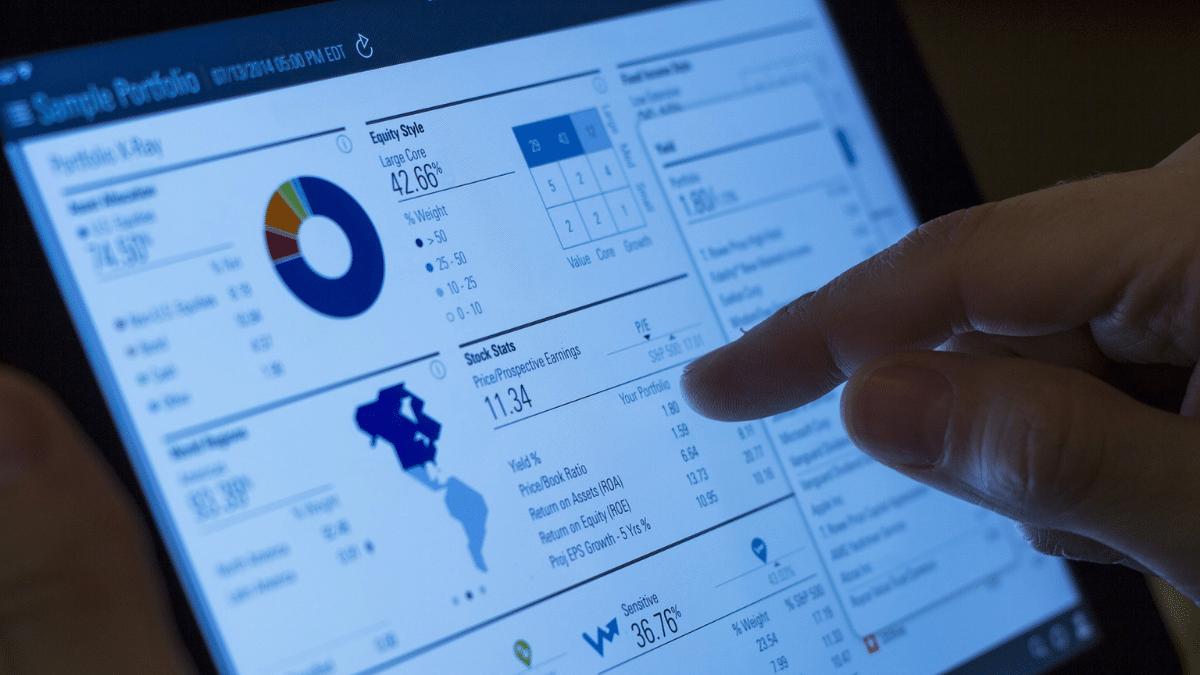
Four Ways to Prepare for Heightened Market Volatility
Many investors know that managing volatility is central to achieving essential financial goals. But how much should you worry about volatility, and what can you do to prepare for it? Volatility represents the ups and downs of asset prices over time. And quite often it’s not the volatility that you should be worried about as it is periods of heightened market volatility.
What’s more, human expectations about the future tend to influence asset price movements. And it's during periods of changing expectations and uncertainty that asset prices swing wildly. Being aware of the narratives driving the markets and having a plan in place before they change is central to financial success. The bottom line is that if you're unprepared for periods of heightened volatility, you might be exposing your savings to unnecessary losses.
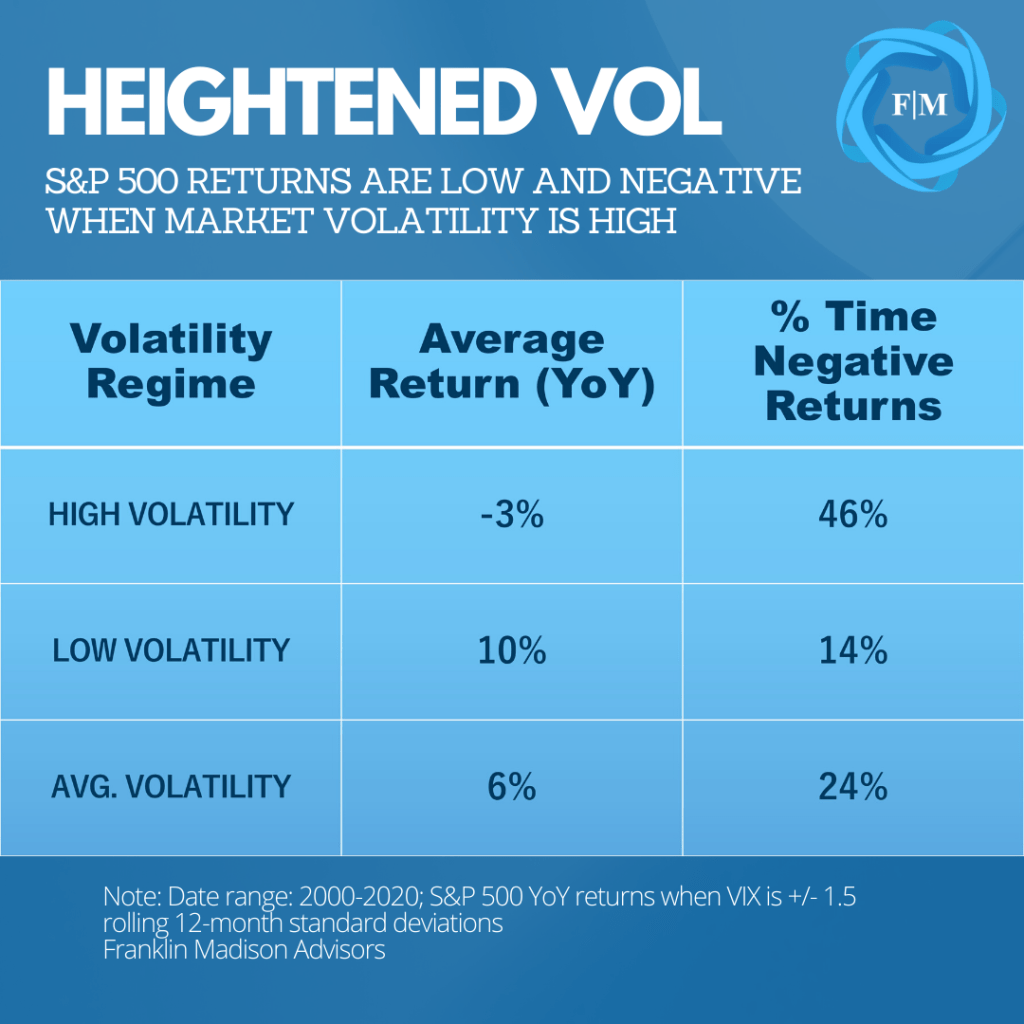
#1 Become Familiar with Volatility
Volatility is a normal part of investing. Asset prices do not move up in a straight line but tend to ebb and flow as they appreciate over time. Volatility is the price that you pay to earn a return on your investment. Indeed, what should be at the top of your list of in terms of investing concerns is not volatility itself, but periods of heightened volatility. Before diving deeper into the topic, let's explore some basic concepts.
One way to quantitatively measure volatility is through a mathematical standard deviation of an asset's return. This measure describes the historical tendency for prices to swing up or down versus their long-term average. The higher the standard deviation, the higher the volatility. This understanding is essential because the wider the swings in price returns relative to their long-term average, the less certainty you may have about future returns from one period to the next. And less certainty tends to go hand in hand with higher investment risk.
Let's look at an example. From the turn of the century, the S&P 500 index has averaged a modest yearly gain of about 5.3%. This average return, however, masks some of the sharp market moves over the past two decades. If we looked at periods when market volatility was elevated during this time, the S&P 500 returned an average year-over-year loss of -3.3%. However, periods of lower volatility were associated with a higher average annual gain of around 10%.
The takeaway here is that volatility can be used to generate investment returns, mainly when it is low. More crucially, however, history tells us that sudden moves higher in volatility can detract from those returns. Therefore, awareness of the potential impact of a sudden rise in market volatility is vital to improving your investment outcomes.
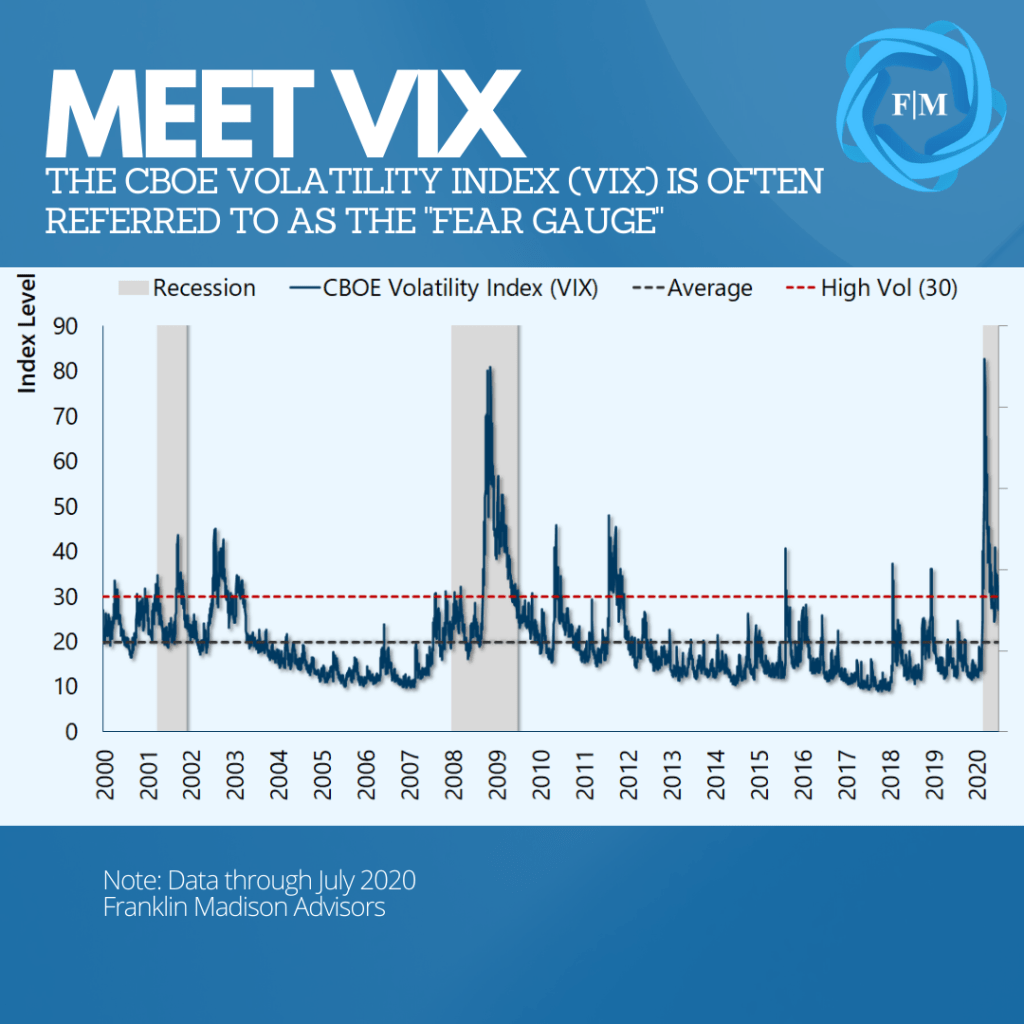
Source: Broadview Macro Research
#2 Understand Volatility Trends
Another way to look at volatility is through market participants' expectations about the future. One widely tracked measure of such expectations is the VIX. The CBOE Volatility Index (VIX) uses a sophisticated method to express the future implied moves of the S&P 500 index. Often referred to as a "fear gauge," sudden moves higher in the VIX are often associated with periods of uncertainty and heightened market volatility.
Compared to the backward-looking statistical measure of volatility mentioned earlier, the VIX is forward-looking. It is also based on investor's directional expectations of the S&P 500 in the month ahead expressed through options market activity. A higher reading generally reflects greater pessimism about the expected direction of the markets.
Over the past two decades, the reading on the VIX has averaged a level of around 20. During the height of the Global Financial Crisis, VIX shot up to a level of 80 and, more recently, bested in February by the uncertainties related to the COVID19 pandemic. Historically speaking, a level below 20 has been consistent with favorable market conditions. A reading above 30 tends to occur during down moves in the market. Why is VIX important?
If you don't know where you are, then it becomes that much harder to figure out where you might be heading. From a volatility perspective, VIX offers a simple way to know how much uncertainty might be priced into the markets at a given time. This understanding is useful before making investment decisions, particularly when history has shown that higher levels of volatility are associated with the potential for lower returns.

Source: Broadview Macro Research
#3 Anticipate Changing Narratives
While financial markets are often viewed as a singular entity, the truth is that they are composed of thousands of assets, each with a host of participants. While algorithmic (computer-based) trading plays an increasingly essential role in the markets, the value of an asset is primarily driven by what human buyers and sellers think it's worth.
Investors are more inclined to bid up prices when they feel confident about the future. For example, when there is certainty about a company's earnings prospects, the policy environment, and the economy's health, asset prices tend to grind steadily higher, and volatility remains low. However, during times of uncertainty about these factors, investors are less willing to pay more for an asset, prices fall, and volatility rises.
One way to measure broad expectations about the economic and policy environment and its potential impact on earnings is by evaluating work compiled by researchers at Northwestern, Stanford, and the University of Chicago. Their Economic Policy Uncertainty Index brings together three components that track 1) news about the economy, 2) tax policy changes and 3) economic forecasts. Their research aims to provide a quantitative measure of what is often a qualitative event (feeling uncertain).
When comparing this measure against the VIX, the data confirm what we know intuitively from a historical perspective: market volatility tends to rise during times of heightened economic uncertainty. From an investment perspective, when uncertainty rises, market participants often change their expectations about the future. And it's during this time of shifting expectations when the price of an asset that may have otherwise seemed reasonable an hour, day or week ago comes into question.
Look for Changes in the Narrative
These periods of uncertainty are driven by a catalyst that often takes time to develop, and that's why measures like the Economic Policy Uncertainty index can help. We only have to look back to the events in February to see how this relationship between uncertainty and heightened volatility played out. Coming into 2020, concerns about a recession had been on the rise, yet many economists expected only softer overall US growth.
In February, however, this hopeful view on the economy changed as Chinese provinces were under lockdown amid a healthcare crisis while the US began reporting rising COVID19 infection rates. As large parts of the US went into lockdown, prospects rose of a deep economic downturn, fueling a volatility spike by late February and ushering in one of the sharpest market selloffs in history.
The point here is that market sentiment is regularly driven by a broad story that is often evident in many quantitative indicators. When factors that support the dominant narrative are challenged, market participants that had been prepared for one set of developments may suddenly change their market positioning to re-evaluate their investment thesis.
When the story changes, the market direction will likely go along with it. Being aware of the narrative driving market sentiment, potential inconsistencies in the story, and how individual market participants might respond can help you better anticipate periods of heightened market volatility.
#4 Know What You Own
Another vital point to understand about volatility is that not all financial assets behave the same way when volatility rises. During periods of heightened market volatility, assets with higher risk levels tend to see wider price swings.
To this point, it is generally understood that stocks are riskier than bonds. This is because equity holders often share in the benefits of company ownership, like stock price appreciation and earnings paid out in dividends. During times of financial distress, like a bankruptcy, however, bondholders are often first in line to be paid back while equity holders might lose a sizeable share of their investment.
Other factors, like the type of issuer (government vs. private sector), company size, market characteristics, and country of domicile, all affect an asset's risk characteristics. Taken together, the higher the likelihood that these factors might expose an investor to a loss, the higher an asset's level of expected risk.
When uncertainties rise and market volatility spikes, individuals holding riskier investments are likely to experience wide swings in asset prices. How do we know this? Well, take, for example, the March market selloff. During the first quarter, the S&P 500 experienced a historic price drop of 20%. At the same time, US government bonds rallied nearly 8% as market participants shed risk assets in preference for perceived safe havens.
The critical takeaway here is that higher-risk assets tend to underperform when uncertainties arise and volatility spikes. If you're anticipating higher market volatility levels, then it's vital to know what you own. Understanding your risk exposures may enable you to trim less favorable holdings and align your investments with your long-term goals ahead of a rise in market volatility.
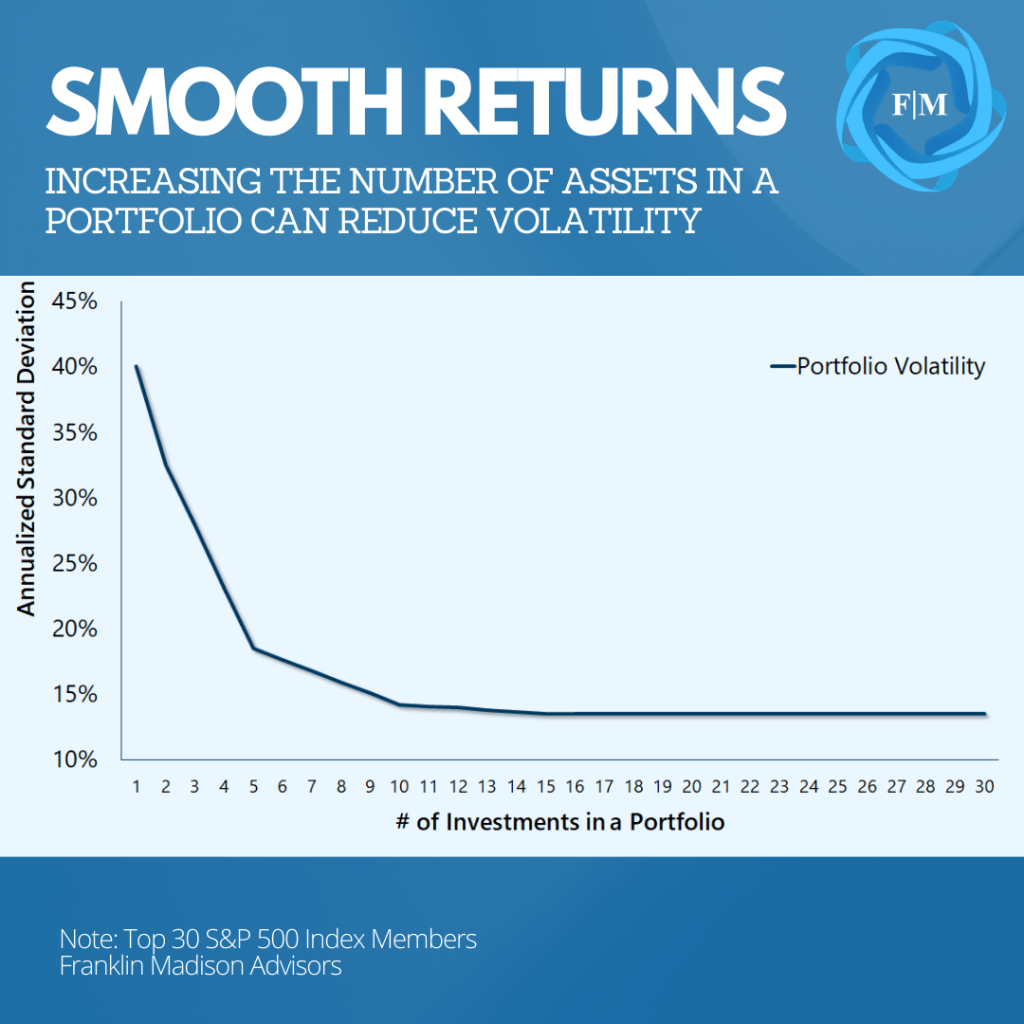
Source: Broadview Macro Research
Improve Your Volatility Preparedness
We've addressed the various characteristics of volatility and its impact on the markets and investing. So, what can you do to help mitigate the effects of heightened market volatility in your investment portfolio?
Here are three suggestions:
First, don't put your eggs in one basket. As we've written about recently, diversification is one crucial way to reduce portfolio volatility and smooth out investment returns for the long term. Studies have shown that increasing the number of securities held can reduce overall volatility in an investment portfolio. Therefore, if your goal is to invest for the long term, be sure to diversify your portfolio across various securities and asset classes to help reduce risk.
Second, build situational awareness. It's easy to get caught up in the market's daily price action or stay focused on a particular asset when your investments are doing well. Even so, markets are often driven by one or more underlying stories that can evolve. And it's at those turning points in market narratives where volatility tends to spike. That's why it's critical to stay informed about broadly relevant market topics so that you don't get caught unprepared when they change.
Finally, have a plan and act accordingly. Start with knowing what you own. Then, try to anticipate how those assets might perform during wild market swings and adjust your holdings accordingly. Heading into a period of heightened market volatility, it's also vital to have a higher level of cash on hand. Doing so accomplishes two ends. One, it reduces the likelihood that you'll need to sell an investment at an inopportune time to pay for necessary expenses. And two, it may allow you to have dry powder on hand for an opportunity to add discounted assets to your investment portfolio.
Volatility is a normal part of investing. It's the price you pay to earn an investment return. That's why what should be at the top of your list in terms of investing concerns is not volatility itself, but periods of heightened market volatility.
Whether you measure it using backward- or forward-looking means, the fact is that spikes in volatility are often drive by changing human expectations about the future and associated with lower investment returns. Being aware of the narratives driving the markets and having a plan in place before they change is central to investing success. The bottom line is that if you're unprepared for periods of heightened volatility, then you might be exposing your savings to unnecessary losses.