

Retirement: 8 Tests Before You Leave Your Paycheck Behind
Retirement shouldn’t begin with a guess.
Still, that’s effectively what happens when someone chooses a retirement date based primarily on the balance of an investment account.
The number may look substantial. The financial projection may show a high probability of success. And after decades of working and saving, it may finally feel like the right time to leave.
However, retirement readiness isn’t determined by one number.
Instead, it depends on whether the major pieces of your financial life can continue working together after your paycheck stops.
In our planning work, we don’t begin the retirement conversation by asking whether someone has reached a particular portfolio balance. We begin by looking at what the paycheck currently supports, what will replace it, and which financial decisions could put the most pressure on the plan after retirement.
That process usually requires more than an investment projection.
It requires a retirement readiness test.
Why Your Retirement Number Isn’t Enough
Most people begin with a straightforward question:
Do I have enough money to retire?
That’s an important question. However, it’s also incomplete.
Two couples could each have $4 million saved and have very different levels of retirement readiness.
One couple may have no debt, predictable spending, substantial taxable savings, two pensions, and both spouses already enrolled in Medicare.
Meanwhile, the other couple may have a large mortgage, most of its wealth in tax-deferred retirement accounts, several years to go before Medicare, and ongoing financial responsibilities for parents or adult children.
The account balances may be identical.
Nevertheless, the retirement decisions aren’t.
That’s because a portfolio can tell you how much you’ve accumulated, but it can’t tell you whether your spending is realistic, whether your tax strategy is coordinated, or whether your family is prepared for an unexpected health or caregiving event.
So, before choosing a retirement date, we believe the plan should pass eight readiness tests.
Test 1: Do You Know What Retirement Will Actually Cost?
First, you need a dependable estimate of what you’ll spend.
That sounds simple. Yet, in practice, it’s often one of the least developed parts of a retirement plan.
Many households know approximately what comes out of their checking account each month. However, that number may not include irregular expenses such as travel, home repairs, vehicle replacements, financial support for family members, or large insurance premiums.
Additionally, retirement spending rarely remains constant.
During the early years, you may spend more on travel, hobbies, dining, or home projects. Later, those expenses may decline while healthcare, home assistance, or caregiving costs increase.
As a result, one static spending assumption may not adequately describe a retirement that could last 25 or 30 years.
When we review retirement spending, we separate expenses into three broad categories:
- Core expenses are the costs required to maintain your household, including housing, utilities, food, insurance, and basic healthcare.
- Lifestyle expenses include travel, entertainment, gifts, hobbies, and other discretionary spending.
- Contingent expenses are costs that may not occur every year but still need to be planned for, such as major home repairs, helping an aging parent, or replacing a vehicle.
This distinction matters because each category has a different level of flexibility.
If markets decline, you may be comfortable postponing a large trip. However, you probably won’t be able to postpone property taxes, health insurance premiums, or a new roof.
Therefore, the first readiness test isn’t whether your portfolio can support one spending number.
It’s whether you understand which expenses are essential, which are flexible, and which could surprise you.
Test 2: Do You Know What Will Replace Your Paycheck?
Once spending is clear, the next step is mapping out your retirement income.
That may include Social Security, pensions, investment income, retirement account withdrawals, rental income, deferred compensation, or part-time work.
However, income planning isn’t simply a matter of adding those sources together.
Timing matters.
For example, you may retire several years before claiming Social Security. A pension may not begin immediately. Deferred compensation may arrive in large installments rather than predictable monthly payments.
Consequently, the first several years of retirement may place more pressure on your portfolio than the later years.
The plan should also consider what happens after the first spouse dies.
A married couple receiving two Social Security payments may eventually become a surviving household receiving one benefit. A surviving spouse may qualify for the higher applicable benefit, but the two payments generally aren’t added together.
Meanwhile, many household expenses may remain largely unchanged.
The surviving spouse may still have the same house, property taxes, insurance premiums, and maintenance costs. However, the household may now have less income and narrower federal tax brackets.
Therefore, a retirement income plan shouldn’t work only while both spouses are alive.
It should also be tested for the survivor.
Test 3: Do You Have Enough Liquidity?
Next, you need to determine how much money should remain readily available.
Retirement changes the role of cash.
While you’re working, a paycheck can replenish your checking account after a large expense. Once you retire, that expense may need to be funded by selling investments or withdrawing money from a retirement account.
That can become a problem during a market decline.
If you’re forced to sell investments after they’ve fallen, you’re not only realizing the loss. You’re also removing assets that would otherwise have the opportunity to participate in a recovery.
That’s why we don’t view a retirement cash reserve as idle money.
Instead, it’s a source of financial flexibility.
The appropriate amount will vary by household. However, it should generally reflect near-term spending needs, known major purchases, the reliability of outside income, and the level of risk in the investment portfolio.
At the same time, holding too much cash can create another problem. Over long periods, inflation can reduce its purchasing power.
So, the goal isn’t to move everything out of the market before retirement.
Rather, the goal is to maintain enough liquidity that you won’t need to make a rushed investment decision simply because a bill is due.
Test 4: Have You Built a Retirement Tax Strategy?
Taxes don’t disappear when your paycheck stops.
In many cases, they become more complicated.
During your working years, income may come primarily from wages. In retirement, however, cash flow may come from several sources with different tax characteristics.
Traditional retirement account withdrawals are generally taxable. Qualified Roth withdrawals may be tax-free. Brokerage account sales may create capital gains. Social Security may become taxable depending on the household’s other income.
Meanwhile, higher income can also increase Medicare Part B and Part D premiums through income-related monthly adjustment amounts.
Therefore, the question isn’t simply which account has money available.
The better question is which account should fund spending this year without creating unnecessary problems in future years.
For instance, the period after retirement but before required minimum distributions begin may create an opportunity to recognize income intentionally through Roth conversions.
However, that doesn’t mean converting as much as possible.
A Roth conversion can affect federal and state taxes, Medicare premiums, capital-gain taxation, healthcare subsidies before Medicare, and the amount of cash available for spending.
Additionally, required minimum distributions generally apply to traditional IRAs and many employer retirement plans under current tax rules.
As a result, the tax strategy should look beyond this year’s tax return.
It should consider the full retirement timeline.
The objective isn’t necessarily to pay the least amount of tax in one particular year. Instead, it’s to manage lifetime taxes while preserving the flexibility to fund the life you want.
Test 5: Have You Planned for Healthcare?
Healthcare is one of the biggest variables in the retirement decision.
If you retire before age 65, you’ll need to determine how you’ll maintain coverage until Medicare begins.
Depending on your circumstances, that may involve coverage through a spouse, COBRA, an Affordable Care Act marketplace plan, or private insurance.
However, the premium is only part of the cost.
You’ll also need to consider deductibles, copays, prescription expenses, dental care, vision care, and out-of-pocket limits.
Then, once Medicare begins, the planning doesn’t stop.
Original Medicare doesn’t cover every healthcare expense. For example, it generally doesn’t cover most routine dental care, hearing aids, or long-term custodial care.
That distinction is important.
Medicare may cover qualifying short-term skilled nursing care under certain conditions. However, it generally doesn’t cover ongoing custodial care when help with activities such as bathing, dressing, or eating is the only care required.
Therefore, a complete healthcare review should address two different risks:
The first is how you’ll pay for medical coverage and routine healthcare expenses.
The second is how you’d fund an extended-care need that Medicare may not cover.
Without both pieces, an otherwise strong retirement plan may still contain a significant blind spot.
Test 6: Do Your Debt and Housing Decisions Support the Plan?
Next, consider the role of debt.
A mortgage payment that felt manageable during your working years may feel different when it’s funded through portfolio withdrawals.
At the same time, paying off the mortgage immediately before retirement isn’t automatically the right answer.
For example, withdrawing a large amount from a traditional IRA could create a sizable tax bill. Using taxable savings to eliminate the mortgage could reduce the liquidity available for healthcare, home repairs, or a market downturn.
Therefore, the question isn’t simply whether you can pay off the house.
It’s whether paying it off improves the overall plan.
Housing also needs to be evaluated beyond the mortgage.
Consider whether the home will remain:
- Affordable to maintain
- Physically accessible
- Close to family and healthcare
- Appropriate for the lifestyle you want
- Practical if one spouse is living there alone
A retirement projection may assume that you’ll stay in the same home indefinitely. However, that assumption should be tested rather than accepted automatically.
Ultimately, the home should support your retirement.
Your retirement shouldn’t exist primarily to support the home.
Test 7: Are Your Protection and Estate Plans Current?
As retirement approaches, insurance needs often change.
Disability insurance may become less important once earned income stops. Meanwhile, long-term care, property, liability, and umbrella coverage may become more important.
Life insurance also deserves a fresh review.
Some policies may no longer be necessary because the original income-replacement need has declined. However, other policies may still play a role in supporting a surviving spouse, providing liquidity, funding a legacy goal, or covering an estate-planning need.
The objective isn’t to cancel every policy once you retire.
Instead, it’s to determine whether each policy still has a specific job.
The same principle applies to your estate plan.
Wills, trusts, financial powers of attorney, healthcare directives, and beneficiary designations should reflect your current wishes and family circumstances.
However, estate planning isn’t only about transferring assets after death.
It’s also about preparing for incapacity.
Your family should know who can make financial and medical decisions, where important documents are located, and how essential accounts and bills will be managed during an emergency.
Otherwise, a financially sound retirement plan may become difficult to implement precisely when your family needs it most.
Test 8: Are You Personally Ready to Retire?
Finally, retirement readiness isn’t purely financial.
Work provides more than income.
It may also provide structure, identity, relationships, intellectual stimulation, and a sense of purpose.
Once work ends, those things don’t automatically replace themselves.
That’s why we ask clients to think beyond the retirement date.
What will an ordinary Tuesday look like?
How will you spend your time after the initial travel and home projects are complete?
How will you maintain friendships and social connections?
What will give you a sense of progress or contribution?
And if you’re married, have you and your spouse discussed what each of you expects retirement to look like?
A person can be financially prepared to retire and still struggle with the transition.
Conversely, someone may feel emotionally ready to leave but discover that the financial pieces haven’t yet been coordinated.
A durable retirement plan needs both.
What a $4 Million Portfolio Doesn’t Tell You
Consider a hypothetical married couple with $4 million in total savings and investments.
At first glance, they appear ready to retire.
However, the account balance doesn’t reveal the full picture.
Of the $4 million, assume $2.8 million is held in traditional tax-deferred retirement accounts. Another $700,000 is held in a taxable brokerage account, $300,000 is in Roth accounts, and $200,000 is in cash.
The couple estimates that they spend approximately $160,000 per year. However, that estimate doesn’t fully include irregular home repairs, vehicle replacements, or travel.
They also have a mortgage costing approximately $4,000 per month.
Additionally, one spouse is several years away from Medicare eligibility. The couple expects to provide roughly $18,000 per year of support to an aging parent, and their estate documents haven’t been updated in more than 10 years.
Neither spouse has started Social Security.
So, are they ready?
Possibly.
However, the $4 million balance alone can’t answer the question.
Before choosing a retirement date, the couple would need to determine:
- Whether $160,000 accurately reflects their full spending
- How much additional money is needed for health insurance
- Whether the mortgage should be maintained, refinanced, or paid off
- How family support affects sustainable withdrawals
- Which accounts should fund the first several years
- Whether partial Roth conversions improve the long-term tax picture
- How the plan changes when Social Security begins
- Whether the surviving spouse can maintain the household
- How much cash should remain outside the investment portfolio
- Whether estate and incapacity documents need to be updated
The couple may discover that they can retire as planned.
Alternatively, they may decide to work one more year, reduce a planned expense, restructure the mortgage, or create a more deliberate withdrawal strategy.
The purpose of the analysis isn’t to push retirement further away.
Instead, it’s to replace uncertainty with informed tradeoffs.
Test the Full Plan Before Choosing the Date
Before submitting your retirement notice, step back and review the entire financial system that will need to replace your paycheck.
Do you understand what retirement will cost?
Do you know where your income will come from?
Do you have enough liquidity to avoid selling investments at the wrong time?
Have you coordinated taxes, healthcare, housing, insurance, and estate planning?
Have you tested what happens if markets fall, inflation remains elevated, a spouse dies, or a family member needs help?
And just as importantly, do you know what you’re retiring to?
The goal isn’t to eliminate every uncertainty.
That’s impossible.
Instead, the goal is to identify the decisions that matter most, understand the tradeoffs, and make sure the major pieces of your financial life can continue working together.
Because retirement readiness isn’t determined by whether you’ve reached one particular number.
It’s determined by whether the full plan is ready to support the life that comes next.
Sources
- Internal Revenue Service, required minimum distribution guidance. https://www.irs.gov/retirement-plans/plan-participant-employee/retirement-topics-required-minimum-distributions-rmds
- Social Security Administration, retirement and survivor-benefit guidance. https://www.ssa.gov/survivor/amount
- Centers for Medicare & Medicaid Services, Medicare premiums and income-related adjustments. https://www.cms.gov/newsroom/fact-sheets/2026-medicare-parts-b-premiums-deductibles
- Medicare.gov, services not covered by Original Medicare and long-term-care guidance. https://www.medicare.gov/coverage/long-term-care


The Retirement Tax Window Most People Miss
Some people think retirement tax planning begins when required minimum distributions show up.
That is understandable.
For decades, the retirement tax conversation has been framed around age-based triggers. Social Security. Medicare. Pension elections. Required minimum distributions. Roth conversions. Charitable distributions. Estate planning.
And because many of those decisions become more visible later in retirement, it is easy to assume the real planning does not begin until then.
But that is often too late.
For many retirees, one of the most valuable tax-planning windows opens in the years just before and just after retirement. It is the period after earned income declines, but before every major retirement income source has fully started.
I think of this as the retirement tax gap.
It is the gap between your working-income years and your forced-income years.
And if you miss it, you may not get the same opportunity again.
Why This Window Matters
During your working years, your tax picture is often driven by your paycheck.
You may have salary, bonus income, business income, equity compensation, deferred compensation, or other income tied to work. Even if you are saving aggressively, your flexibility can be limited because your taxable income is already high.
Then retirement begins.
For some households, income drops quickly. The paycheck stops. Bonus income disappears. Equity compensation may slow or end. Business income may decline. And for a few years, the tax return may look very different from the one you had while working.
But that lower-income period may not last forever.
Social Security may begin later. Pension income may start. Medicare premiums may be affected by income. Required minimum distributions eventually force money out of tax-deferred retirement accounts. Under current IRS rules, retirement account owners generally must begin RMDs starting with the year they reach age 73, though the rules can vary by birth year, account type, and retirement plan details.
That creates a planning gap.
Not a loophole.
Not a trick.
A window.
And in retirement planning, windows matter because timing can be just as important as the strategy itself.
The Mistake Is Waiting Until the Tax Bill Arrives
The problem is that many people do not think about retirement taxes until something forces the issue.
The first large IRA distribution.
The first RMD.
The first Medicare surcharge.
The first year Social Security becomes taxable.
The first year a surviving spouse files as a single taxpayer.
By then, the options may be narrower.
This is one of the reasons retirement tax planning should not be treated as a once-a-year tax filing exercise. Tax filing looks backward. Planning looks forward.
Your tax return tells you what happened.
Your retirement income timeline helps you decide what to do next.
That distinction matters.
Because the years before RMDs begin may offer more flexibility to decide where income comes from, which assets to reposition, how much ordinary income to recognize, and whether it makes sense to reduce future tax pressure before it becomes mandatory.
How We Evaluate the Retirement Tax Gap
In our planning work, we do not start with the question, “How much should you convert to Roth?”
That question comes later.
We start by building the income timeline.
That means looking year by year at when earned income stops, when Social Security may begin, when pension income starts, when Medicare begins, when RMDs begin, and when taxable portfolio income may change.
Then we look for years where the client has unusual control over taxable income.
That control is the key.
Some retirement income is voluntary. Some is forced. Some is predictable. Some is market-dependent. Some is tied to tax law. Some is tied to health, longevity, or family needs.
The planning opportunity exists when you have enough flexibility to make deliberate decisions before the rules make more of those decisions for you.
A useful retirement tax gap review should ask:
- When does earned income stop or materially decline?
- When do guaranteed income sources begin?
- When do Medicare and RMD rules start to matter?
- Which years offer the most control over taxable income?
- What future tax problem are we trying to reduce?
That last question is important.
The goal is not to create taxable income just because a lower bracket exists. The goal is to determine whether using part of that bracket today may reduce a larger tax problem later.
What Can Be Done During the Window?
The retirement tax window is not about doing one thing.
It is about evaluating several moving pieces together.
For some retirees, that may include Roth conversions. The idea is not simply to convert as much as possible. The better question is whether recognizing income today may reduce the risk of larger taxable IRA distributions later.
But Roth conversions are not automatically the right answer.
A conversion may increase current-year income. It may create a larger tax bill today. It may affect Medicare premiums in a future year because Medicare income-related monthly adjustment amounts are based on modified adjusted gross income. Higher income can increase Part B and Part D premium costs for certain beneficiaries.
That does not mean Roth conversions should be avoided.
It means they should be measured.
For other retirees, the opportunity may be capital gain management. If income is temporarily lower, there may be room to realize gains, diversify a concentrated position, or rebalance a taxable portfolio in a more deliberate way.
For others, it may be asset location. This means looking at which assets belong in taxable accounts, tax-deferred accounts, and Roth accounts so that the overall portfolio is not just invested well, but also distributed tax-efficiently over time.
For charitably inclined retirees, the conversation may eventually include qualified charitable distributions once eligible.
For households delaying Social Security, the years before benefits begin may create a unique planning period. Delaying Social Security beyond full retirement age can increase the eventual retirement benefit through delayed retirement credits, though the right claiming decision depends on health, cash flow, longevity, survivor needs, and the broader plan.
None of these decisions should be made in isolation.
That is the point.
The retirement tax window is valuable because several decisions overlap at once. Income planning, portfolio planning, tax planning, Medicare planning, Social Security planning, estate planning, and cash flow planning all start to interact.
A Simple Example
Consider a married couple who retires at 62.
During their working years, their household income was high. Between salary, bonuses, and investment income, they did not have much room to recognize additional taxable income without pushing themselves into a higher tax bracket.
They retire at 62 and decide to delay Social Security until 67.
They do not have a pension starting immediately. They have taxable savings, traditional IRAs, Roth IRAs, and a brokerage account. Their living expenses are covered partly from cash and partly from taxable investments.
For the first time in years, their taxable income is meaningfully lower.
That five-year period from age 62 to 67 may be one of the most important tax-planning periods of their retirement.
They may have room to convert part of a traditional IRA to a Roth IRA.
They may be able to realize capital gains in a controlled way.
They may be able to diversify appreciated investments without creating the same tax impact they would have faced during their peak earning years.
They may be able to reduce the size of future RMDs.
They may be able to build more tax flexibility for the surviving spouse later in life.
But only if they see the window before it closes.
Because once Social Security begins, pension income starts, portfolio income grows, and RMDs enter the picture, the tax return can fill back up quickly.
That does not mean planning is impossible later.
It just means the easiest planning years may have already passed.
The Window Is Not Always Obvious
One reason people miss this opportunity is that retirement feels like a cash flow event, not a tax event.
Most new retirees are focused on practical questions.
Can I afford to stop working?
Where will my monthly income come from?
How much can I safely spend?
Should I claim Social Security now or later?
How do I avoid running out of money?
Those are the right questions.
But there is another question that should sit beside them:
What will my tax return look like over the next 10 to 15 years?
Not just this year.
Not just next year.
The full timeline.
That timeline may reveal that income is low for a short period, then rises later. Or it may reveal that income looks manageable while both spouses are alive, but becomes less efficient for the surviving spouse. Or it may show that doing nothing today could create larger forced distributions later.
This is where retirement tax planning becomes more than tax preparation.
It becomes coordination.
The Goal Is Not to Pay the Lowest Tax This Year
This is important.
Good retirement tax planning is not always about minimizing this year’s tax bill.
Sometimes the lowest tax bill today creates a higher lifetime tax cost later.
That can happen when retirees avoid taking IRA distributions in their 60s, only to face larger RMDs in their 70s. It can happen when a married couple fails to plan for the surviving spouse’s future tax brackets. It can happen when Medicare surcharges, Social Security taxation, capital gains, and retirement distributions all collide in the same year.
The better goal is not to avoid tax at all costs.
The better goal is to manage taxes over a lifetime.
That requires looking at the sequence of income, not just the amount of income.
It also requires humility.
Tax laws can change. Investment returns will not follow a straight line. Health needs, family needs, and spending needs may evolve. A good plan should be flexible enough to adjust as the facts change.
Before You Make a Move, Ask Better Questions
The retirement tax gap can create planning flexibility, but flexibility is not the same thing as certainty.
Before making a Roth conversion, realizing capital gains, delaying Social Security, or drawing from one account instead of another, it is worth asking:
What tax bracket are we filling today?
What future tax bracket are we trying to avoid?
Could this decision affect Medicare premiums?
Does this create enough cash flow for the next few years?
How does this affect the surviving spouse?
Are we coordinating this with the investment plan, estate plan, and charitable plan?
That is the difference between a tax move and a retirement strategy.
A tax move looks at one transaction.
A retirement strategy looks at the sequence of decisions.
Start Before the First RMD
The retirement tax window most people miss is not hidden because it is complicated.
It is hidden because it arrives during a transition.
You are leaving work.
You are figuring out cash flow.
You are deciding when to claim benefits.
You are adjusting to a new rhythm of life.
And in the middle of that transition, there may be a short period when your tax picture gives you more room to plan than you had before and may have again.
That is why retirement tax planning should begin before the first RMD shows up.
Before Social Security is automatically deposited.
Before Medicare premiums surprise you.
Before the tax return starts telling you what you should have planned for years earlier.
The starting point is simple:
Build your retirement income timeline.
Look at when earned income stops, when Social Security may begin, when pension income starts, when RMDs begin, and when large taxable events may occur.
Then ask what can be done in the lower-income years to create more flexibility later.
Because in retirement, the best tax move is not always found after the problem appears.
Sometimes it is found in the quiet years before everyone else starts paying attention.
This material is for educational purposes only and should not be treated as personalized tax, legal, or investment advice. Retirement tax strategies should be evaluated in light of your full financial picture and coordinated with your tax professional before implementation.

The New Senior Deduction Most People Don’t Know About
Most retirees know about the standard deduction.
Some know there’s already an extra standard deduction once you reach age 65.
But beginning in 2025, there’s another senior tax deduction that many people may not know about yet.
The One Big Beautiful Bill Act created a temporary additional deduction for taxpayers age 65 and older. For 2025 through 2028, eligible taxpayers may be able to claim up to an additional $6,000 per person. For a married couple where both spouses qualify, that could mean up to $12,000 in additional deductions.
And this is on top of the existing senior standard deduction already in the tax code.
According to the IRS, the deduction applies from 2025 through 2028, is available to taxpayers age 65 and older, and begins phasing out when modified adjusted gross income exceeds $75,000 for single filers or $150,000 for married couples filing jointly. The IRS also notes that the deduction is available to eligible taxpayers whether they itemize or claim the standard deduction.
Now, that may sound like a simple tax break.
But for retirees, it could be more than that.
It could change the math on Roth conversions, IRA withdrawals, capital gains, and how much taxable income you can recognize before the tax cost starts to climb.
Why This Matters
Retirement tax planning is often about finding windows.
There may be a window after you stop working but before Social Security begins.
There may be another window before pensions start.
And there may be a window before required minimum distributions begin.
For some retirees, these years can be especially valuable because taxable income may be lower than it was during the working years and lower than it may be later in retirement.
That matters because lower-income years can create flexibility.
You may be able to convert part of a traditional IRA to a Roth IRA.
You may be able to realize capital gains at a lower tax cost.
You may be able to reposition assets before required minimum distributions begin.
And you may be able to fill up a tax bracket intentionally instead of letting future income push you into a higher one later.
That’s where this new senior deduction comes in.
For taxpayers age 65 and older, the deduction may create another layer of flexibility during a limited planning window.
Now, that doesn’t mean everyone should immediately do a larger Roth conversion.
It doesn’t mean the deduction eliminates taxes.
And it doesn’t mean every retiree will qualify for the full amount.
Instead, the better planning question is this:
Does this deduction change how much income I can recognize before I cross an important tax threshold?
That’s where the planning value may show up.
The Deduction Isn’t the Strategy
One of the mistakes people make with tax planning is looking at a new rule in isolation.
A new deduction shows up, and the instinct is to ask, “How do I use it?”
But that’s not always the right starting point.
In retirement tax planning, the deduction is only one input. The real question is how it affects the broader income plan.
That means looking at the deduction alongside Roth conversion sizing, traditional IRA withdrawals, capital gains, Social Security taxation, Medicare IRMAA thresholds, required minimum distributions, charitable giving, and surviving spouse tax exposure.
That’s where this new senior deduction becomes more interesting.
It may not change the entire plan.
But it may change the margin.
And in retirement tax planning, the margin matters.
A few thousand dollars of additional deduction may determine whether more IRA money can be converted at an acceptable tax cost. It may reduce the tax drag on income that was already going to be recognized. Or it may create a little more room before a taxpayer bumps into a bracket, phaseout, or other income-sensitive threshold.
That’s why this should be modeled, not guessed at.
A Simple Example
Consider a married couple, both age 66.
They recently retired. They haven’t started required minimum distributions yet. They’re delaying Social Security. And for the next few years, they’re living partly from cash reserves and taxable investments.
They also have a meaningful balance in traditional IRAs.
Suppose their projected taxable income before Roth conversions is $90,000.
Before the new senior deduction, their tax projection may have suggested converting only a certain amount from their IRA to a Roth IRA while staying within a target taxable income range.
But now, from 2025 through 2028, this couple may have up to $12,000 of additional deductions available because both spouses are over age 65.
That doesn’t make a Roth conversion tax-free.
But it may allow them to recognize more income before reaching the same taxable income level they would have reached under the old rules.
For example, if they were originally planning a $50,000 Roth conversion, the new deduction may reduce the taxable impact of that conversion. Or, if their goal was to fill a specific tax bracket without going beyond it, the deduction may allow them to convert somewhat more than they otherwise could have.
Of course, the exact number would depend on their full tax return.
Their Social Security income, pension income, capital gains, charitable giving, deductions, and modified adjusted gross income all matter.
But the planning point is still important.
The same Roth conversion that looked slightly too large before may now fit more comfortably inside the plan.
Or, if they were already planning to convert a set amount, the new deduction may reduce the tax cost of that conversion.
That’s why the new rule matters.
It’s not just a deduction sitting on a tax return.
It can affect the retirement income plan.
How We’d Evaluate This in a Retirement Tax Projection
When looking at a rule like this, the first step isn’t to assume it creates an opportunity.
The first step is to test it.
In a retirement tax projection, we’d want to answer several questions.
First, does the taxpayer qualify based on age and filing status?
The deduction is tied to taxpayers age 65 and older. For married couples, the $12,000 maximum applies when both spouses qualify. If only one spouse qualifies, the maximum benefit may be lower.
Second, is the deduction fully available or partially phased out?
This matters because the phaseout begins once modified adjusted gross income exceeds the applicable threshold. So, a taxpayer with significant IRA withdrawals, capital gains, pension income, or Roth conversions may reduce or lose part of the benefit.
Third, what income would have been recognized anyway?
If a retiree was already planning IRA withdrawals, capital gains, or a Roth conversion, the deduction may reduce the tax cost of income already built into the plan.
Fourth, does the deduction create more room for strategic income?
This is where Roth conversions come into the picture. The additional deduction may allow some taxpayers to convert more IRA assets before reaching the same taxable income target.
Fifth, what other thresholds are affected?
This is where the analysis can get more complicated.
A Roth conversion may reduce future RMDs, but it can also increase modified adjusted gross income today. Capital gains may be taxed favorably, but they can still affect other parts of the return. And Medicare IRMAA thresholds may be based on income measures that don’t always move the same way as taxable income.
Finally, what happens after 2028?
Because the deduction is scheduled to be temporary, it should be viewed as part of a limited planning window. The question isn’t only whether the deduction helps this year. The question is whether it changes the sequence of decisions between 2025 and 2028.
That’s the difference between tax preparation and tax planning.
Tax preparation reports what happened.
Tax planning asks what should happen next.
Where This Can Show Up
The most obvious place this deduction may matter is Roth conversion planning.
For retirees in their 60s and early 70s, Roth conversions are often evaluated year by year. The goal isn’t simply to convert as much as possible. The goal is to convert the right amount based on current tax rates, future required minimum distributions, Social Security taxation, Medicare premiums, estate goals, and survivor-tax exposure.
A new deduction changes one input in that calculation.
But Roth conversions aren’t the only area affected.
This deduction may also matter when deciding whether to realize capital gains, especially for retirees managing appreciated taxable investments.
It may matter when choosing whether to draw from an IRA, a taxable account, or cash.
It may matter when coordinating charitable giving strategies, including whether qualified charitable distributions may become more attractive later.
And it may matter for taxpayers who are trying to manage income around Medicare surcharge thresholds.
That last point is important.
The deduction may reduce taxable income, but retirees still need to pay attention to modified adjusted gross income, especially when Medicare IRMAA thresholds are involved. A deduction may help with the income tax calculation, but it doesn’t automatically make every income-related threshold disappear.
This is where many retirement tax mistakes happen.
People look at one tax benefit in isolation.
But retirement tax planning doesn’t work in isolation.
Your IRA withdrawal affects your taxable income.
Your taxable income can affect how much of your Social Security is taxed.
Your modified adjusted gross income can affect Medicare premiums.
Your Roth conversion can reduce future required minimum distributions but increase this year’s tax bill.
And your capital gains can look manageable until they interact with everything else on the return.
So, while the new senior deduction may create an opportunity, it still needs to be modeled inside the full retirement income plan.
Three Questions to Ask Before Using the New Senior Deduction
Before making a Roth conversion, IRA withdrawal, or capital gain decision around this deduction, there are three questions worth asking.
#1 Will I Actually Qualify for the Deduction?
The maximum deduction isn’t the same as the available deduction.
Age matters.
Filing status matters.
Modified adjusted gross income matters.
And for higher-income retirees, the phaseout may reduce or eliminate the benefit.
That means the first step isn’t estimating the deduction in isolation. The first step is estimating income for the year and seeing whether the deduction is still available after all other income is included.
#2 What Income Should I Recognize While the Deduction Exists?
If the deduction creates more room, the next question is how to use that room.
For some retirees, the best answer may be a larger Roth conversion.
For others, it may be realizing capital gains.
For others, it may be taking IRA distributions earlier than required to reduce future RMD pressure.
And for some, the best answer may be to do nothing because the additional income would create other tax or Medicare issues.
That’s why context matters.
The deduction doesn’t tell you what to do.
It simply changes the tax math around the decision.
#3 What Future Problem Am I Trying to Reduce?
This is the most important question.
A Roth conversion isn’t valuable simply because there’s room to do one. It’s valuable if it helps reduce a future tax problem.
That future problem could be large required minimum distributions.
It could be higher taxable income after Social Security and pensions begin.
It could be the surviving spouse eventually filing as a single taxpayer.
It could be heirs inheriting pre-tax retirement accounts.
Or it could be a lack of tax flexibility later in retirement.
Without a clear future problem to solve, the deduction can become a distraction.
But with a clear future problem, it can become a useful planning tool.
The Temporary Nature Matters
There’s another reason this deserves attention.
The deduction is temporary.
As currently structured, it applies for 2025 through 2028.
That means it may create a four-year planning window for eligible taxpayers.
And temporary windows are often where tax planning becomes most valuable.
If you’re 65 or older during this period, the question isn’t just whether you qualify this year. It’s whether the deduction changes the sequence of decisions you make over the next several years.
Should you convert more IRA money before required minimum distributions begin?
Should you realize gains while your taxable income is lower?
Should you draw from pre-tax accounts now to reduce pressure later?
Should you delay or accelerate income based on where you fall relative to the phaseout range?
Should you revisit a plan that was built before this deduction existed?
These aren’t generic questions.
They depend on your income, your assets, your filing status, your age, your Social Security timing, your Medicare status, your charitable intent, and your long-term goals.
But the key point is simple.
If your retirement tax plan was built before this new senior deduction, then it may already be outdated.
Don’t Chase the Deduction
That said, this isn’t something to chase blindly.
A $6,000 deduction, or even a $12,000 deduction for a married couple, is meaningful. But it shouldn’t drive the entire plan.
Sometimes, doing a larger Roth conversion still doesn’t make sense.
Sometimes, staying below a Medicare surcharge threshold matters more.
Sometimes, preserving liquidity is more important than accelerating income.
Sometimes, future tax savings aren’t worth the current tax cost.
And sometimes, the deduction phases out before it provides much benefit at all.
That’s why the planning process matters.
The deduction is an input.
It’s not the strategy.
The strategy is deciding how to use your lower-income retirement years wisely before future income becomes less flexible.
The Bottom Line
The new senior deduction is easy to overlook.
But for taxpayers age 65 and older, it may change the tax math from 2025 through 2028.
For some retirees, it may reduce the tax cost of income they were already planning to recognize.
For others, it may create additional room for Roth conversions, IRA withdrawals, or capital gains.
And for many, it should be a reason to revisit the retirement income plan before making year-end tax decisions.
The goal isn’t to chase a deduction.
The goal is to understand whether this temporary rule gives you more flexibility while the window is open.
Because in retirement tax planning, the best opportunities often show up before they become obvious.
And by the time required minimum distributions, Social Security, pensions, and Medicare surcharges are all in motion, the easiest planning window may already be gone.
This article is for educational purposes only and should not be treated as personalized tax advice. The new senior deduction should be evaluated with your tax advisor before making Roth conversion, withdrawal, capital gain, or charitable giving decisions.

Why Diversification Feels Broken Right Before It Works
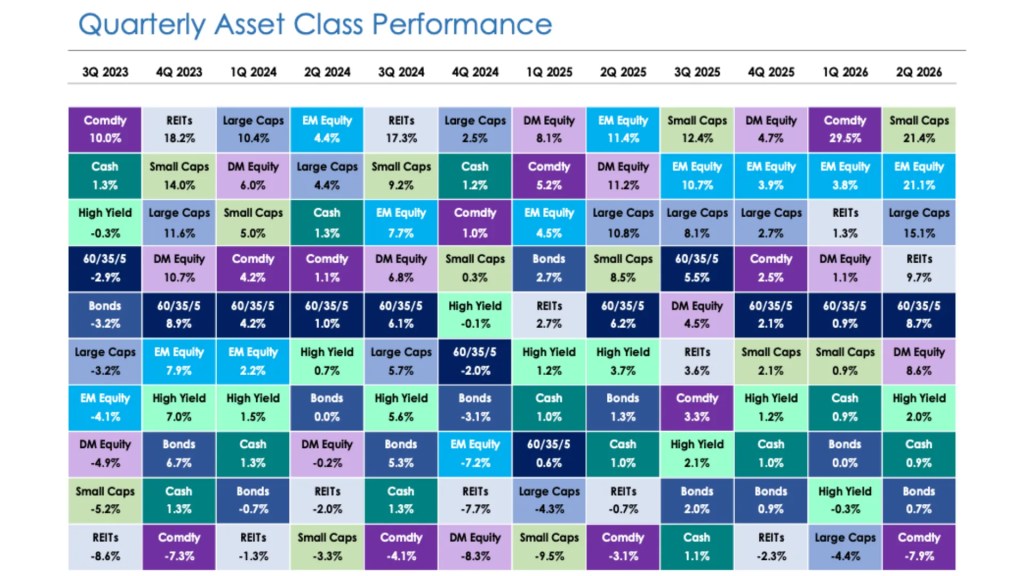
Diversification can feel like a mistake when one part of the market is doing all the work.
That's the part investors don’t always appreciate.
Diversification is easy to believe in when everything's working. It's much harder to believe in when a narrow group of stocks is carrying the market higher and the rest of your portfolio feels like dead weight.
That's when the questions start.
Why own bonds?
Why own value stocks?
Why own international stocks?
Why own anything other than the part of the market that's clearly winning?
Those are fair questions. They're also the exact questions that tend to show up right before diversification matters most.
In our portfolio work, we don’t treat diversification as a prediction tool. It's a risk-management discipline. It's not there because we know exactly which part of the market will lead next. It's there because we don’t.
Diversification Isn’t Supposed to Feel Good All the Time
The purpose of diversification isn’t to beat the hottest asset class every year.
It's not designed to make every part of your portfolio look smart at the same time. It's not designed to keep up perfectly with whatever corner of the market is leading today. And it's not designed to eliminate frustration.
In fact, a diversified portfolio almost always owns something that feels disappointing.
That's not a flaw. That's the tradeoff.
If every part of your portfolio is working at the same time, there's a good chance your portfolio isn’t as diversified as you think. You may simply own different versions of the same risk.
True diversification means owning investments that behave differently under different conditions.
Some may lead when growth stocks are in favor.
Some may help when interest rates fall.
Some may provide stability when stocks are under pressure.
Some may become useful when market leadership broadens beyond the same small group of winners.
But because those investments behave differently, they won’t all work at once.
That's what makes diversification frustrating.
It's also what makes it valuable.
Diversification doesn’t guarantee a profit or protect against loss. No portfolio strategy can do that. But it can reduce the risk that one market segment, one economic outcome, or one investment theme determines the entire result of your plan.
That distinction matters.
The Problem Starts With Comparison
The hardest part of diversification isn’t the math.
It's the comparison.
When large-cap growth stocks lead for a long stretch of time, a balanced portfolio can feel too cautious. When a handful of companies are responsible for most of the market’s gains, anything outside of those companies can feel unnecessary. When the index keeps moving higher and your portfolio is moving more slowly, discipline starts to feel like a drag.
That's usually when investors begin to second-guess the plan.
At first, it's just an observation.
Then it becomes a question.
Then it becomes frustration.
And eventually, it can become action.
That's where investors get into trouble.
Because the decision to abandon diversification rarely feels reckless in the moment. It often feels rational. It feels like responding to the evidence. It feels like finally admitting what's been obvious for a while.
Why own the laggards when the winners are right there?
But that line of thinking can quietly turn a long-term investment plan into a performance chase.
And performance chasing has a way of showing up late.
Market Leadership Doesn’t Last Forever
The problem with chasing what's working now is that market leadership changes.
It doesn’t always change quickly. It doesn’t always change when valuations suggest it should. And it doesn’t always change in a way that feels obvious ahead of time.
But it changes.
That's why diversification exists in the first place.
It's not an admission that returns don’t matter. It's an acknowledgment that the future is uncertain.
Think about a period when large-cap growth stocks have led the market for several years. In that environment, a portfolio that also owns value stocks, small caps, international equities, or high-quality bonds may lag the most visible market benchmark.
The investor may look at the portfolio and feel like too many pieces aren’t pulling their weight.
Then conditions shift.
Interest rates move.
Earnings leadership broadens.
Valuations begin to matter again.
The economy slows, reaccelerates, or changes in a way investors didn’t expect.
Suddenly, the parts of the portfolio that looked unnecessary may become the source of stability, income, or return.
That doesn’t mean every diversifying asset will work perfectly. It doesn’t mean a diversified portfolio will avoid losses. And it doesn’t mean diversification will protect against every bad outcome.
But it does mean the portfolio isn’t dependent on one narrow market outcome continuing forever.
That's the point.
A concentrated portfolio feels best when the concentrated bet is working.
A diversified portfolio can feel less exciting during narrow leadership.
But when leadership changes, the difference matters.
Concentration Risk Often Feels Best Right Before It Matters
One of the reasons diversification is so difficult is that concentration risk can feel rewarding for a long time.
That's what makes it dangerous.
When one asset class, sector, or stock keeps leading, concentration doesn’t feel like risk. It feels like confirmation. The investor feels rewarded for having more exposure to the winners and less exposure to everything else.
This can be especially challenging for investors with concentrated company stock, equity compensation, or large positions that have appreciated over many years. The position may have created meaningful wealth. It may still be a high-quality company. It may still have a strong long-term story.
I worked with a client recently who was heading into retirement with a large share of their net worth sitting in company stock. They'd watched that stock grow across their entire career. Selling any of it felt like betting against their own success story.
I told them about a group of people I met years ago when I worked in Saint Louis. Most were former employees of Wachovia, and many were approaching retirement in 2008. Like my client, a large portion of their retirement savings sat in company stock. When the financial crisis hit and Wachovia collapsed, their savings went with it. Years of disciplined saving disappeared in a matter of months, not because they'd done anything wrong, but because their financial future depended entirely on one company continuing to succeed.
That story isn’t meant to scare anyone away from company stock. It's meant to separate two different questions. The first is, “Has this position performed well?” The second is, “What happens to my retirement plan if it stops?” My client’s stock may still have a bright future. But their retirement plan shouldn’t require it to.
For a deeper look at how to evaluate whether you’re sitting on a concentrated position and what to do about it, see Don’t Keep All Your Eggs in One Basket.
But none of that eliminates concentration risk.
A great company can still become an oversized position.
A strong sector can still become overowned.
A successful investment can still become too important to the family’s financial future.
That's why diversification isn’t just an investment concept. It's a planning concept.
The question isn’t simply, “What has performed best?”
The better question is, “How much of my financial life depends on this one thing continuing to work?”
That's a different question.
And for high-net-worth families, retirees, and investors with concentrated wealth, it's often the more important one.
The Risk Isn’t Just Losing Money
The risk isn’t simply that the market pulls back.
The bigger risk is that investors make a permanent decision based on a temporary environment.
That matters because most families aren’t investing for entertainment, ego, or quarterly bragging rights.
They're investing to support a retirement income plan.
To fund education.
To manage concentrated stock exposure.
To preserve liquidity.
To reduce the risk of being forced to sell at the wrong time.
To keep their broader financial life moving in the right direction.
For those investors, the portfolio has a job.
Its job isn’t to win every short-term comparison.
Its job is to support the plan.
That means some parts of the portfolio may look unnecessary for a while. Some may lag. Some may feel boring. Some may be hard to appreciate when the market’s favorite trade is working.
But every allocation should have a purpose.
Growth assets are there for long-term appreciation.
Defensive assets are there for stability and liquidity.
Income-producing assets are there to support cash flow.
Diversifying assets are there because the future doesn’t always look like the recent past.
The question isn’t whether every piece is outperforming today.
The question is whether the total portfolio is built to survive different market environments.
Diversification Has to Be Judged Against the Plan
A diversified portfolio shouldn’t be judged only against the market’s current favorite.
It should be judged against the plan it was built to support.
That includes the investor’s time horizon, spending needs, withdrawal strategy, tax situation, liquidity needs, risk tolerance, and ability to stay invested when markets become uncomfortable.
For an accumulator, diversification may be about avoiding overdependence on one source of return.
For a retiree, it may be about managing sequence-of-return risk and maintaining enough stability to support withdrawals during difficult markets.
For an executive with equity compensation, it may be about reducing the risk that career income, company stock, and long-term wealth are all tied to the same business outcome.
For a family stewarding generational wealth, it may be about preserving flexibility across market cycles rather than maximizing exposure to the latest winner.
The right portfolio isn’t the one that looks best in hindsight.
It's the one the investor can actually live with, fund goals from, and stick with when the environment changes.
That's where diversification earns its place.
Not because it always feels good.
Because it helps keep the plan from depending on one version of the future.
Don’t Confuse Frustration With Failure
There will always be moments when diversification feels broken.
There will always be a stock, sector, asset class, or theme that makes the disciplined portfolio look dull by comparison.
And there will always be investors who are tempted to simplify the portfolio around whatever's worked best recently.
But temporary frustration isn’t the same thing as strategic failure.
Sometimes diversification feels broken because one part of the market has dominated for a long period of time.
Sometimes it feels broken because the benefit hasn’t been needed yet.
Sometimes it feels broken because the thing it's designed to protect against hasn’t happened.
That doesn’t make it useless.
It makes it easy to underappreciate.
The real test of diversification doesn’t come when the market’s current favorite is still leading. It comes when leadership changes, when expectations shift, when volatility returns, or when investors are reminded that no single trade works forever.
By then, it may be too late to rebuild the portfolio without paying a price.
So don’t judge diversification by whether it keeps up with the market’s current favorite.
Judge it by whether your portfolio can survive a change in leadership.
Because by the time diversification feels obvious again, the opportunity to stay disciplined may have already passed.

Weekly Market Update: Hot Inflation Sidelines Rate Cuts
Markets traded lower this week, though there was relative strength beneath the major equity indexes. The S&P 500 and Nasdaq both ended the week lower as the largest technology stocks sold off, while the Russell 2000 small-cap index, along with the value and equal-weight factors, posted modest gains.
Technology, Communication Services, and Consumer Discretionary were the worst-performing sectors as mega-cap names like Apple and Microsoft declined.
The eight remaining sectors finished higher, led by defensive areas of the market. Bonds gained as Treasury yields fell despite a hot inflation report, with investors expecting inflation to ease following the recent drop in oil prices.
Oil fell nearly 5% as shipping traffic through the Strait of Hormuz increased, while the VIX, a measure of expected market volatility, drifted higher as stocks declined.
Key Takeaways
Semiconductors Remain Volatile as a Crowded Trade Unwinds
The group sold off sharply Monday and Tuesday as investors unwound leverage that had built in the industry. Semiconductors have significantly outperformed the broader market this year, but the popularity cuts both ways: when sentiment turns, the moves are large in both directions. The mood shifted again Wednesday evening, when Micron, a leading memory-chip maker, reported record quarterly revenue and its shares jumped more than 15% overnight into Thursday morning.
Why it matters: AI infrastructure spending is the engine behind semiconductor companies' profits and share-price gains, and the industry has benefited from hundreds of billions of dollars in capital spending. The trade has become popular and heavily leveraged, which is why it has become so volatile.
Inflation Ran Hot in May
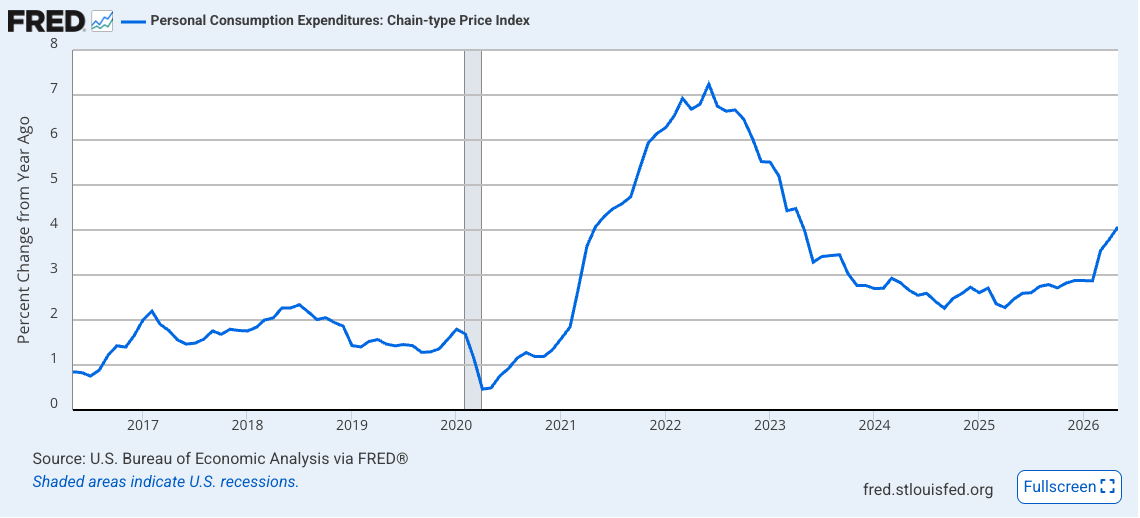
The Federal Reserve's preferred inflation measure rose 4.1% from a year earlier, its highest level in nearly three years. Higher energy prices tied to the conflict in the Middle East were the main driver, though many economists believe May may mark the peak before inflation eases over the summer. Even so, the Fed has shifted its stance with inflation still above its 2% target. After signaling earlier this year that rate cuts were likely, officials have taken cuts off the table for 2026, and markets now see a possible rate increase later this year.
Why it matters: The Fed's rate-cutting cycle looks likely to stay on pause. With the Fed now placing more weight on inflation than on growth or the job market, interest rates could stay elevated, and may even move higher, before any cuts arrive.
Energy Prices Return to Pre-Conflict Levels
Oil has now given back the entire increase tied to the Middle East conflict. U.S. crude fell to around $70 a barrel this week, its lowest level since the conflict began in late February, as tankers resume moving through the Strait of Hormuz and shipping normalizes.
Why it matters: Lower energy prices ease pressure on household budgets. They are also the main reason inflation is expected to cool in the months ahead, since the same energy spike that drove inflation to a three-year high is now reversing.
First-Quarter GDP Revised Higher
The government's final estimate of growth for the first quarter came in at 2.1%, up from an earlier reading of 1.6%. The figure covers January through March, so it predates most of the energy shock from the conflict and reflects where the economy stood earlier in the year.
Why it matters: The economy entered 2026 on firmer footing than many economists previously thought, an encouraging data point even though it measures activity before the oil supply disruption.
Business Investment Held Up in May
Orders for long-lasting manufactured goods fell 4.5% for the month, but nearly all the decline came from a drop in volatile aircraft orders following an unusually strong April. A broader measure of business investment, which strips out aircraft and defense, rose more than expected.
Why it matters: The headline looks worse than the reality. Underneath the noise, businesses continued to invest, a quietly encouraging sign for the economy and for corporate profits.

The Retirement Costs You Don't See Coming
Most retirement plans begin with one big question.
How much can I safely spend?
It’s the right question. But it’s often answered too simply.
Most retirees build their spending assumptions around the lifestyle they can see clearly. Travel. Dining out. Family support. Hobbies. Charitable giving. Home projects. Everyday living.
Those expenses matter. But the expenses that matter most aren’t always the ones you can see.
Healthcare costs can rise faster than expected. In fact, a 65-year-old couple retiring today is projected to spend roughly $345,000 on healthcare over the course of retirement, and that figure doesn’t even include long-term care.[1] Home maintenance can grow more expensive as the house ages. Insurance premiums can climb. Inflation can quietly raise the cost of the same lifestyle, one year at a time. And long-term care, even if it never arrives, can become one of the largest unknowns in the entire plan.
That’s the retirement spending blind spot.
The risk isn’t simply that you spend too much. The bigger risk is that your plan assumes spending will behave more predictably than real life usually allows.
Retirement spending isn’t one number
It’s a collection of categories, and every category behaves differently over time.
Some expenses go down. Payroll taxes disappear. Retirement contributions stop. Work-related costs decline. A mortgage eventually gets paid off.
But other expenses go up. Healthcare often becomes a larger slice of the budget as you age, and it tends to climb faster than everything else. Over the years, medical costs have tended to rise faster than general inflation, often by a few percentage points a year. Home costs arrive in lumps you can’t schedule. And inflation, while it doesn’t touch every household the same way, still raises the cost of groceries, utilities, insurance, services, travel, and the help you may eventually need.
That creates a planning problem.
A flat spending assumption feels clean. But clean isn’t the same as accurate. A single number can hide the very expenses most likely to create stress later.
That’s why retirement income planning has to go beyond a monthly spending figure.
The better question isn’t, “How much do you want to spend each year?”
The better question is, “Which parts of your spending are predictable, which parts are flexible, and which parts could surprise you?”
That distinction matters, because different expenses call for different tools.
Core living expenses need reliable income. Lifestyle spending needs flexibility. Healthcare and long-term care need contingency planning. Home repairs need reserves. Inflation-sensitive expenses need a portfolio built to protect purchasing power over time.
The goal isn’t to predict every future cost perfectly. The goal is to build a plan that can absorb the costs you can’t predict at all.
What this looks like in real life
I’ve spent a lot of time sitting with couples in the window right before and just after retirement. The plan almost always looks the same on paper. It’s the years that follow that tell the real story.
Here’s a version of a story I’ve watched play out more than once.
A couple retires in their mid-sixties. They’ve done thoughtful work. They know what they spend on travel, dining, gifts to family, utilities, groceries, entertainment, and giving. On paper, the plan works.
But the projection assumes their spending rises at a steady inflation rate and stays smooth from one year to the next.
Then real life shows up.
In a single year, their Medicare premiums increase. Prescription costs come in higher than expected. Property insurance rises. A major appliance fails. The roof needs work. And they want to help an adult child with a family expense.
None of these costs is unusual. But together, they create pressure.
And these are only the costs that arrive while both spouses are healthy. Roughly 70% of people turning 65 will need some form of long-term care at some point, and the price is real. The national median for a private room in a nursing home now runs north of $127,000 a year, and assisted living is close to $71,000.[2] A cost like that doesn’t show up in a smooth annual budget. It lands all at once.
The issue isn’t that the couple was careless. The issue is that the plan treated retirement spending as one predictable number instead of several different kinds of expenses.
A more integrated plan would separate the spending into categories.
A baseline budget for essentials. A lifestyle budget for the flexible things. A healthcare reserve for rising medical costs. A home maintenance reserve for the large and infrequent. An inflation assumption that reflects the truth that some expenses climb faster than others. And a withdrawal strategy designed to flex when spending runs high or markets run weak.
That last piece matters more than most people expect. Recent research pegs a safe starting withdrawal rate near 3.9% for someone who wants steady, inflation-adjusted spending.[3] But retirees willing to stay flexible, dialing spending up in strong years and easing off in weak ones, can support meaningfully higher withdrawals over time. The takeaway isn’t a magic number. It’s that flexibility is itself a planning tool.
The couple may still spend the same amount over time. But now the plan has structure. Now it’s clear which expenses are essential, which are flexible, and which need a cushion all their own.
That’s the difference between a retirement spending estimate and a retirement spending plan.
Plan for what you can’t see
Retirement planning isn’t just about reaching a number. It’s about understanding what that number has to support.
Healthcare, home costs, inflation, insurance, family needs, and the repairs you never schedule can all reshape your spending over time. So can the costs that arrive long after the plan is built. The higher tax bill a surviving spouse can face, for example, is one of the most overlooked expenses in retirement, and it rarely shows up in a simple monthly budget. Because costs like these rarely arrive neatly, they deserve a place in the plan of their own.
The goal isn’t to make retirement feel restrictive. The goal is to create clarity, confidence, and peace of mind.
When you know which expenses are fixed, which are flexible, and which could surprise you, you can make better decisions about withdrawals, investments, cash reserves, insurance, and the planning that protects you years from now.
So before you assume your retirement budget is complete, it’s worth asking one more question.
Have we planned for the expenses that don’t show up every month, but can still rewrite the plan?
That question matters, because retirement income should not only support the life you expect. It should be ready for the costs you don’t see coming.
This is exactly the kind of coordination we walk clients through in the Premier Wealth Blueprint. A retirement plan shouldn’t just tell you how much you can spend.
It should help you understand what your spending needs to withstand.
[1]Fidelity Investments, “2025 Retiree Health Care Cost Estimate,” 2025. newsroom.fidelity.com
[2]Genworth and CareScout, “Cost of Care Survey 2024,” 2025. carescout.com/cost-of-care
[3]Morningstar, “The State of Retirement Income: 2025,” 2025. morningstar.com

Asset Location: The Retirement Tax Mistake Hiding in Plain Sight
Most investors spend a lot of time thinking about what they own.
Stocks. Bonds. Mutual funds. ETFs. Cash. Real estate. Alternative investments.
That matters.
But for retirees and near-retirees, there is another question that can be just as important:
Where should each investment live?
Because the same investment can produce very different outcomes depending on whether it is held in a taxable account, a traditional IRA, a Roth IRA, or a trust.
That is the basic idea behind asset location.
It is not about chasing higher returns. It is about coordinating your investments with your tax situation, your retirement income needs, your estate plan, and your long-term wealth strategy.
In other words, your portfolio may be diversified. But if the right assets are sitting in the wrong accounts, your plan may not be as efficient as it could be.
What You Own vs. Where You Own It
Asset allocation answers the question, "What should I own?"
Asset location answers the question, "Where should I own it?"
That distinction matters because different account types are taxed differently.
A taxable brokerage account gives you flexibility, favorable long-term capital gains treatment, and potentially a step-up in basis at death. But it can also create annual tax drag from interest, dividends, and realized gains.
A traditional IRA or 401(k) offers tax deferral, but withdrawals are generally taxed as ordinary income. That means the account can become a future tax liability, especially once required minimum distributions begin.
A Roth IRA offers tax-free growth and tax-free qualified withdrawals, which can make it one of the most valuable accounts for long-term growth, legacy planning, and late-retirement flexibility.
So the planning question is not simply, "Which account is best?"
The better question is, "Which assets belong in which accounts, based on the role each account plays in the broader plan?"
That is where asset location stops being an investment issue and becomes a wealth management issue.
As a general rule, highly tax-inefficient investments may be better suited for tax-deferred accounts. Long-term growth assets may be attractive in Roth accounts. Tax-efficient equity investments may fit well in taxable accounts, especially when flexibility and estate planning are important.
But there is no universal answer.
The right decision depends on your income needs, your tax bracket, your withdrawal strategy, your charitable intent, your estate plan, your health, your longevity assumptions, and whether the money is intended for you, your spouse, or the next generation.
This is also where coordination between your investment strategy and your tax strategy does the quiet, compounding work that rarely shows up on a single year's statement.
What This Looks Like in Real Life
Consider a retired couple with three major account types.
A taxable brokerage account. A traditional IRA. A Roth IRA.
They own a mix of stock funds, bond funds, cash, and dividend-oriented investments.
At first glance, they look well diversified. They have growth assets, income assets, and liquidity. But when we look closer, the location of those assets may be creating unnecessary friction.
Suppose most of their bonds and income-producing investments are held in the taxable account. Each year, that income may show up on their tax return, whether they need the cash or not.
Meanwhile, their highest-growth investments may be sitting inside the traditional IRA. That growth is tax-deferred, which sounds attractive, but it may also increase future required minimum distributions and push more income into ordinary tax rates later.
At the same time, their Roth IRA may be sitting mostly in cash or conservative investments, even though they may not need that money for many years.
Nothing here is technically wrong.
But the accounts may not be working together as well as they could.
A more integrated approach might place some income-producing assets inside the IRA, where annual income is not taxed currently. The Roth IRA might hold more long-term growth-oriented assets, since qualified withdrawals can be tax-free and Roth accounts are often powerful legacy assets. The taxable account might hold more tax-efficient investments, while preserving flexibility for spending needs and potential estate planning benefits.
The portfolio did not necessarily become more aggressive.
The investments did not necessarily become more complicated.
But the structure became more intentional.
And that is the point.
Asset location is not about making the portfolio look clever. It is about making the portfolio fit the plan.
The Real Goal
Asset location is one of those planning topics that is easy to overlook, because it does not always feel urgent.
But over time, the location of your investments can influence your tax bill, your retirement income flexibility, your estate plan, and the amount of wealth ultimately available to you and your family.
The goal is not to find a perfect formula.
The goal is to make sure your investment strategy, your tax strategy, your withdrawal strategy, and your estate plan are all working in the same direction.
So if you have taxable accounts, traditional retirement accounts, and Roth accounts, it may be worth asking a simple question:
Are the right investments sitting in the right places?
That question may not sound dramatic.
But in retirement planning, small structural decisions can create meaningful long-term differences.
If you are not sure whether your portfolio is positioned as efficiently as it could be, this is exactly the kind of coordination we help clients evaluate through the Premier Wealth Blueprint, where your investment plan and your tax plan are built to work as one.
Because your investments should not just be diversified.
They should be integrated. That’s how you get clarity, confidence and peace of mind.
Weekly Market Update: Markets Pull Back as Oil Keeps Inflation in Focus
Markets fell for a second straight week, pausing the nearly two-month rally that began in late March. The market’s recent winners, especially technology, semiconductors, and growth stocks, continued to lead the decline. Weakness in mega-cap tech weighed on the S&P 500 and Nasdaq, while small caps, value stocks, and the equal-weight S&P 500 held up better.
The rotation was notable. Defensive sectors led the week, and ten of the eleven S&P 500 sectors outperformed the index. That marked a reversal from recent weeks, when technology drove most of the market’s gains.
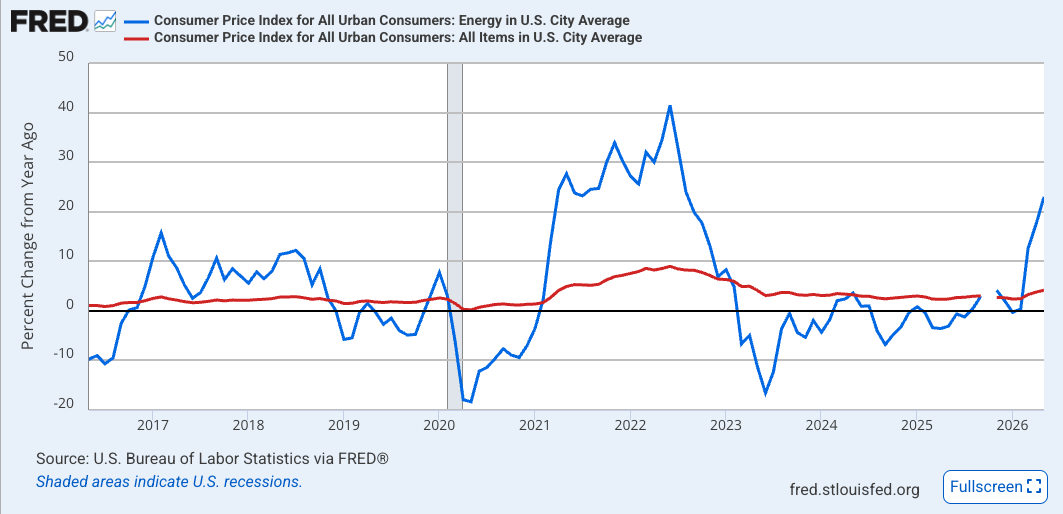
Treasury yields ended the week lower as oil prices fell on headlines pointing toward a possible diplomatic resolution, even though headline inflation came in hotter than expected. Bonds traded higher as yields declined, with longer-maturity bonds outperforming. Commodities moved lower as oil fell more than 6%, while bitcoin stabilized after falling toward $60,000 last week.
The week’s market action was less about something breaking and more about markets digesting a rally that had become increasingly narrow. The same areas that carried stocks higher are now creating most of the pressure. That does not make the pullback unusual, but it does make the market more sensitive to changes in sentiment around technology, oil, inflation, and the Fed.
The central question heading into next week is whether this remains a normal pullback after record highs, or whether higher oil prices and renewed inflation pressure force markets to rethink the path of interest rates.
Key Takeaways
A Pullback After Record Highs
The S&P 500 and Nasdaq opened June at fresh record highs, but both have given back roughly 5% over the past few weeks. Technology and semiconductor stocks have led both the recent rally and this month’s pullback, which makes the decline feel sharper at the index level than it does beneath the surface.
There are still signs of rotation rather than broad breakdown. Small caps, value stocks, and the equal-weight S&P 500 held up better, and market breadth has remained steady.
Why it matters: Pullbacks after record highs are normal and do not mean something is broken. But they are a reminder that concentrated leadership cuts both ways. The same areas that help the market on the way up can create pressure when sentiment turns.
Inflation Was Hot, But Mostly Because of Energy
Inflation climbed to a three-year high in May. Consumer prices rose 4.2% year-over-year, up from 3.8% in April, with energy accounting for more than 60% of the monthly increase. Gasoline rose about 7% during the month and roughly 40% over the past year.
The details underneath the headline were calmer. Core inflation, which excludes food and energy, slowed to 2.9% and rose just 0.2% month-over-month, slightly below expectations. Shelter inflation, one of the larger and stickier parts of the inflation basket, also continues to ease.
Why it matters: Inflation remains above the Fed’s target, but the source of the pressure matters. For now, the spike appears concentrated in fuel. The risk is that higher energy prices eventually spread into broader prices, wages, and expectations.
The Labor Market Is Still Growing, But Not Without Soft Spots
Employers added 172,000 jobs in May, more than double expectations, and the unemployment rate held steady at 4.3%. Hiring for the prior two months was revised higher by a combined 93,000 jobs.
That is a better headline than markets expected. But the labor market is not sending an entirely clean signal. Job gains were concentrated in a handful of industries, long-term unemployment remains elevated compared to a year ago, and wage growth cooled to 3.4% year-over-year.
Why it matters: The economy continues to improve after slowing in late 2025, but the data are not one-sided. The Fed has to balance a labor market that is still expanding against inflation that remains above target.
Oil Remains the Swing Factor
Oil and the Iran conflict remain the thread running through this week’s market story. Renewed military strikes and ongoing shipping disruptions in the Strait of Hormuz have kept energy prices elevated, even though oil remains below its spring peak.
The latest strikes spared energy infrastructure, which helped prevent a larger move higher, but oil remains near $90 per barrel and well above where it traded a year ago.
Why it matters: Oil is the main force pushing headline inflation higher, and it is also the variable that could pull inflation lower if tensions ease. The longer the Strait of Hormuz remains disrupted, the more pressure it puts on inflation, interest rates, and market sentiment.
The Fed Has Less Room to Maneuver
The Fed meets next week for its first meeting chaired by Kevin Warsh. Markets expect the Fed to hold rates steady at both the June and July meetings, but this week’s inflation data and the continued Middle East conflict have reshaped the outlook for later this year.
A few weeks ago, the question was when the Fed might cut rates. Now, markets are paying more attention to whether the Fed may need to raise rates again if inflation pressure persists. The market is leaning toward a potential rate increase in the fourth quarter, especially if oil prices stay elevated.
Why it matters: Interest rate expectations affect mortgages, savings yields, bond prices, stock valuations, and the broader planning environment. The Fed’s decision next week may be uneventful, but its tone and outlook could set the market’s direction for the coming months.

Will Your Spouse Pay Higher Taxes After You're Gone?
Most married couples plan for retirement as if they will always file a joint tax return.
That assumption is understandable. When you have built a life together, managed finances together, and planned for the future together, it is natural to think about retirement as a shared chapter. And for most of the retirement years, it is.
But at some point, one spouse is likely to become the surviving spouse.
And when that happens, the tax math can change quickly. The same income that felt manageable for a married couple can suddenly become more expensive when the survivor is filing as a single taxpayer. Same IRA balance. Same investment portfolio. Same household bills. Different tax brackets.
This is one of the most overlooked dimensions of retirement tax planning. And for many couples, it is one of the most important.
The Filing Status Problem No One Talks About
When both spouses are alive, a married couple benefits from the wider married-filing-jointly brackets. After one spouse dies, the survivor may still have much of the same income, but that income is now measured against the narrower single brackets.
That difference matters when income keeps coming in after one spouse is gone.
Required minimum distributions do not stop simply because a spouse dies. If the surviving spouse inherits the IRA and treats it as their own, future RMDs continue based on the survivor's age, life expectancy, and the account balance. Pension income may continue. Portfolio income, dividends, and interest may continue. The mortgage, property taxes, healthcare costs, and everyday expenses may not fall nearly as much as people expect.
But the filing status changes. The wider joint brackets disappear. And the same income that was manageable for two suddenly becomes more tax-sensitive for one.
That can push the surviving spouse into a higher tax bracket at precisely the moment life has already become more difficult. Higher Medicare premiums may follow. Depending on the income level, the surviving spouse may also find that the remaining Social Security benefit is still heavily taxed, even though one benefit has disappeared. Capital gains that were previously sheltered by lower income may now face higher rates.
So Roth conversion planning is not just about comparing today's tax rate against tomorrow's rate. It is also about asking a more personal question.
What happens to the surviving spouse?
What the Numbers Can Look Like
Consider a married couple in their late sixties with $2.5 million in traditional IRAs.
While both spouses are alive, their retirement income plan looks comfortable. They have Social Security from two earners, a mix of portfolio income, and IRA withdrawals they manage carefully to stay within a target bracket. Their overall tax picture is manageable, and with some planning, they have been able to do modest Roth conversions to gradually reduce the IRA balance.
Now assume one spouse passes away in the early seventies.
The survivor may lose one Social Security benefit, but total household income does not drop in half. The surviving spouse still has their own Social Security, their share of the investment portfolio, and may now be managing the same household IRA assets, with future RMDs measured against a single taxpayer's bracket structure. The house still costs what it costs. Healthcare is often more expensive in widowhood, not less. And the survivor may live another twenty or twenty-five years.
But now they file as single.
The same IRA distribution that was comfortable territory on a joint return may now push the survivor into a meaningfully higher bracket. Medicare premiums may rise. The Social Security benefit that remains may still be taxed heavily. The financial life that felt well-planned for two may feel more pressured for one.
A thoughtful Roth conversion strategy during the married years, even a modest one spread over a decade, could change that outcome. Lower future RMDs mean lower required income. Tax-free Roth withdrawals give the surviving spouse flexibility to manage income in any given year. And a smaller traditional IRA means less exposure to bracket compression when the filing status changes.
The Roth conversion does not eliminate the grief of losing a spouse. But it can make the financial chapter that follows significantly less complicated.
Building a Plan for Both of You
The widow's tax penalty is not just a tax issue. It is a planning issue. It is a household risk issue. And for many couples, it is a peace-of-mind issue.
A Roth conversion may or may not make sense in the current year based on today's rates and brackets. That analysis is worth doing. But it should not stop there.
The surviving spouse scenario deserves its own column in the planning conversation. What happens if one of you lives another twenty or thirty years alone? What does the RMD picture look like then? What do Medicare premiums look like? What does the tax bracket look like when the joint return is no longer an option?
The best retirement tax plan is not just built for the couple sitting across the table today.
It is built for the person who may still be managing that wealth decades from now, on their own, with no opportunity to go back and redo the decisions that were made during the window when both spouses were alive and the brackets were more forgiving.
That is the conversation worth having now, while there is still time to do something about it.
Because clarity, confidence, and peace of mind are not just goals for today. They are the foundation you are building for whoever is left standing.
Weekly Market Update: Tech Stumbles, but the Broader Market Holds Steady
Markets finished the week mixed as leadership continued to rotate beneath the surface.
The S&P 500 slipped -0.1%, while the Nasdaq declined -2.5% as investors moved away from Technology stocks. However, the weakness in the major indexes didn’t tell the full story.
Both value stocks and the equal-weighted S&P 500 outperformed, which suggests that the average stock held up better than the largest companies driving the headline indexes. Meanwhile, high-beta and momentum stocks led the market lower because of their heavy exposure to Technology, which declined -4.3% for the week.
Even so, eight of the eleven S&P 500 sectors finished higher, led by Energy and Consumer Staples. That broader participation helped offset some of the weakness in Technology.
Bonds were mostly unchanged. However, longer-dated Treasury bonds modestly underperformed as oil prices surged nearly +10% following renewed conflict in the Middle East.
Elsewhere, the VIX, a measure of expected market volatility, held steady. The U.S. dollar was little changed, while Bitcoin gained +1.0%.
Key Takeaways
Inflation Cooled Sharply in June as Energy Prices Fell
Consumer inflation declined sharply in June.
The Consumer Price Index, or CPI, fell -0.4% for the month, marking its largest monthly decline in more than six years. As a result, the annual inflation rate slowed to +3.5% from +4.2% in May.
Wholesale inflation eased as well, suggesting that some price pressures were moderating before reaching consumers.
However, much of the improvement came from energy. Gasoline prices declined nearly -10%, which pulled down both consumer prices and wholesale costs.
That distinction matters because June’s report reflects a period when oil prices were falling and were significantly lower than they are today. Since the beginning of July, the U.S.-Iran ceasefire has broken down, and crude oil has climbed back toward $80 per barrel after starting the month below $70.
Why it matters: June’s inflation improvement was real, but it depended heavily on lower energy prices that have already begun to reverse. With inflation still above the Federal Reserve’s 2% target and oil prices climbing again, the central bank has signaled that it may need to raise interest rates.
Wall Street Banks Reported Strong Second-Quarter Earnings
Wall Street banks benefited from a busy and volatile second quarter.
Banks earn fees when companies issue debt or stock, complete mergers, go public, or increase their trading activity. During the second quarter, all of those areas were active.
A wave of dealmaking and initial public offerings, including the roughly $75 billion SpaceX debut, helped drive investment banking revenue higher. At the same time, market volatility tied to the Middle East conflict and the continued AI boom supported trading revenue.
AI-related financing added another source of activity. Companies continued raising debt and equity to fund the construction of data centers and other infrastructure needed to support AI development.
As a result, Goldman Sachs reported the strongest quarter in its history. JPMorgan Chase, the nation’s largest bank, increased earnings by more than +40% compared with the same period a year ago.
Why it matters: The same active and volatile market environment that created uncertainty for investors worked in the banks’ favor. When companies raise capital and investors trade more frequently, banking fees and trading revenue tend to rise.
The Broader Market Held Steady as Technology Turned Volatile
Semiconductor stocks continued to experience sharp day-to-day swings as investors questioned the pace, cost, and potential payoff of the AI buildout.
However, that volatility hasn’t spread across the broader market.
Instead, market leadership has rotated. As investors reduced exposure to chipmakers and other Technology stocks, they moved into areas such as Financials, Industrials, Energy, and Consumer Staples.
Because of that rotation, the S&P 500 remains within 1% of its early June record despite the recent weakness in Technology.
There are also few signs of broader financial stress. The VIX remains in the mid-teens, while credit markets have stayed calm and credit spreads remain extremely tight.
Why it matters: This year’s most popular trade has become more volatile, but the weakness hasn’t pulled the entire market lower. Other sectors have begun to participate, helping offset the decline in semiconductor and Technology stocks.
Consumer Spending Continued to Rise in June
Retail sales increased +0.2% in June. That was slower than May’s revised +1.0% gain, but it was in line with expectations.
Once again, energy prices played an important role.
Lower gasoline prices reduced sales at gas stations, which weighed on the headline retail sales figure. However, those same lower energy costs also helped ease inflation and left consumers with more money to spend elsewhere.
Excluding gasoline, retail sales increased +0.7%. Online shopping contributed to the gain as consumers took advantage of promotions surrounding Amazon’s Prime Day.
Why it matters: Consumer spending drives most of the U.S. economy. June’s report suggests that spending is continuing to hold up rather than stall, particularly once the effect of lower gasoline prices is removed.